


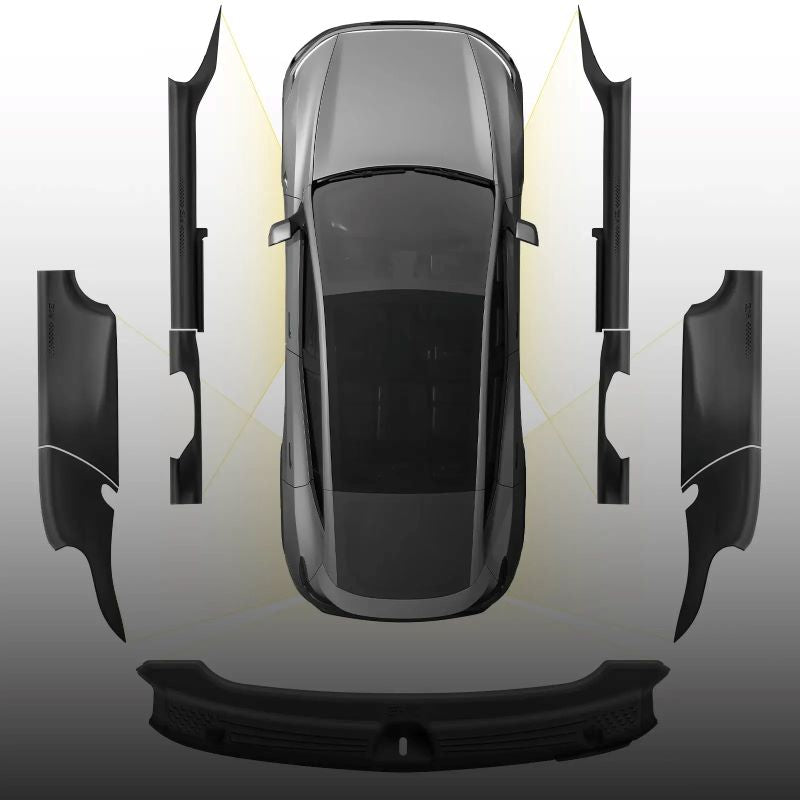
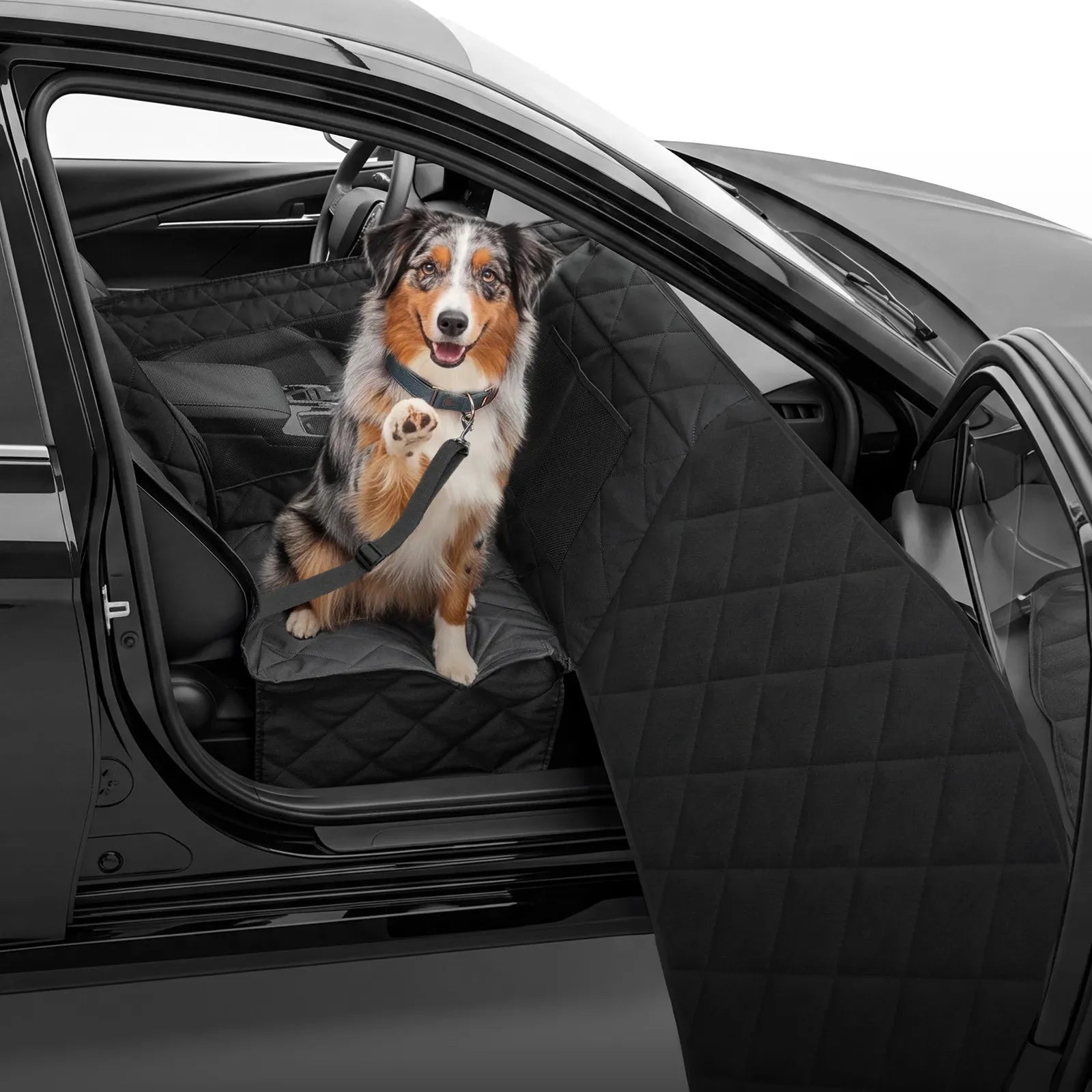
Fall can be tough on the cargo area of a family SUV. Pumpkins, apple bags, muddy boots, strollers and other seasonal gear often end up piled together behind the third row.
A lot of that cargo brings dirt or moisture with it. If the liner does not fully cover the floor, mud and water can still reach the carpet around the edges.
Before choosing a liner, it helps to know how much the shape of a SUV cargo area can change from one vehicle to another.
Universal vs. Custom-Fit Cargo Liner: What's the Difference?
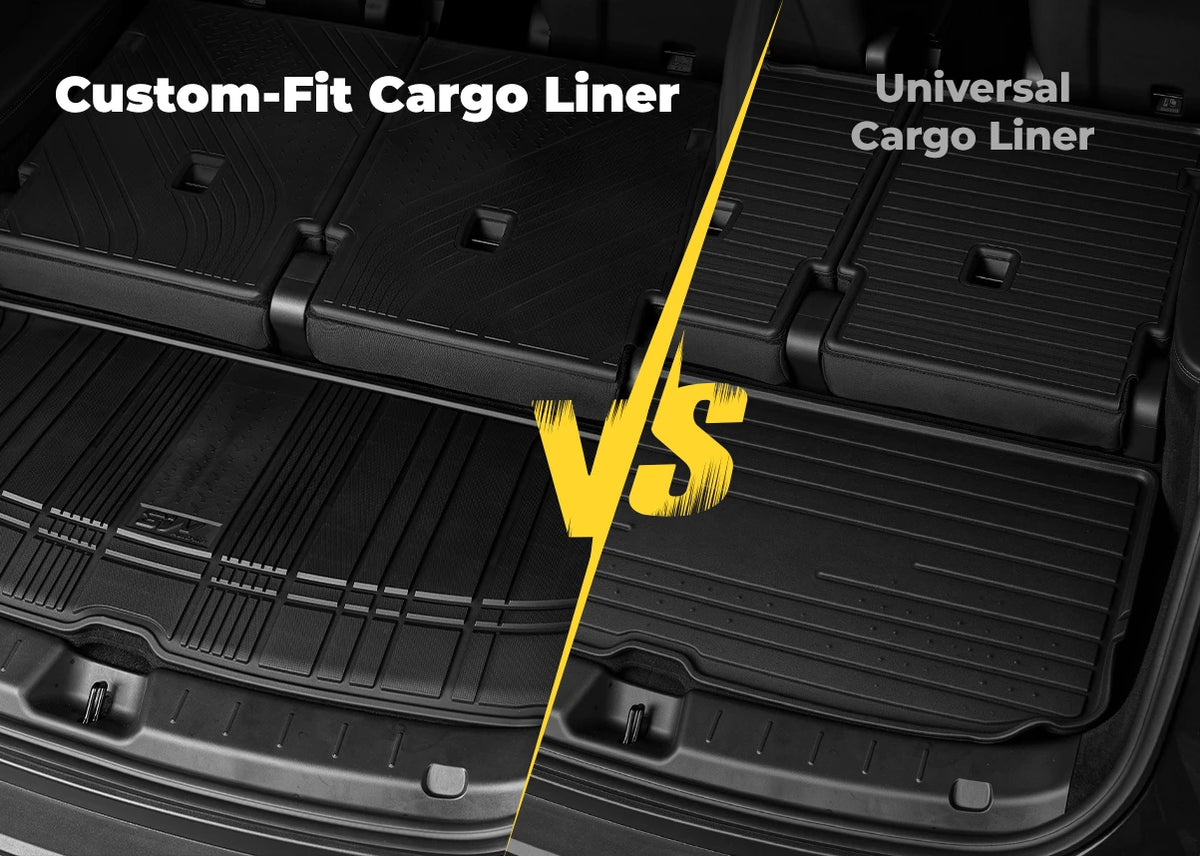
Universal liners are made to work across a range of vehicles, so the shape is necessarily more general. A custom-fit liner, on the other hand, follows the cargo area of a particular make and model.
Universal liners are often sold for broad categories such as “most SUVs” and may need to be trimmed. Custom-fit versions are matched to the vehicle's make, model, year and, in some cases, trim or seating layout ([1])([2]).
The design process is different too. We use 3D scanning to capture the shape of the cargo floor, including areas around the wheel wells, before creating a mold for the specific vehicle ([1]). We call this process VigorMold, and we use it for our floor liners, cargo liners and seat back protectors ([4]).
How the liner is made also affects the final result. With injection molding, TPE is pressed into a closed mold, helping the material keep a more consistent thickness ([1]). Vacuum forming works differently: a heated sheet is stretched over a mold, which can make some areas thinner than others ([1]).
| Feature | Universal cargo liner | Custom-fit cargo liner |
| How it is sold | By vehicle type or size range | By make, model, year, trim or seating layout |
| Shape | Based on a generic template | Based on 3D scan or OEM data |
| Wheel well fit | May leave gaps around the edges | Shaped around the vehicle's contours |
| Installation | May need trimming | Usually drops into place |
| Movement | Can shift while driving | Better held in place by the floor shape |
| Material thickness | Can vary by manufacturing method | More consistent when injection molded |
Why Does Fit Matter So Much in the Cargo Area?
A cargo liner needs to cover the edges well because that is where water, mud and loose debris tend to collect. Universal liners are more likely to leave small gaps around areas such as the wheel wells, allowing dirt to reach the carpet underneath ([1]).
A loose fit can also cause the liner to move while driving. If it shifts during a turn, the raised edges may no longer line up with the cargo floor, making them less effective at containing spills ([3]).
The shape of the liner matters just as much as the material. A liner can be water-resistant and still let liquid escape through a gap or seam. One-piece molded liners avoid this problem because they do not have glued or stitched joints that can leak ([3]).
Why Is a Custom Fit More Important in Three-Row SUVs?
Cargo space can vary a lot from one three-row SUV to another. Even vehicles in the same category can have very different dimensions behind the third row ([5]).
| Vehicle | Behind 3rd row | 3rd row folded | 2nd and 3rd rows folded |
| Mazda CX-90 (2024 - 2026) | 14.9 cu ft | 40.0 cu ft | 74.2 cu ft |
| Hyundai Palisade (2026) | 19.1 cu ft | 46.3 cu ft | 86.7 cu ft |
| Toyota Grand Highlander (2024 - 2026) | 20.6 cu ft | 57.9 cu ft | 97.5 cu ft |
Source: ([5])
Behind the third row alone, these SUVs range from 14.9 to 20.6 cubic feet. With that much variation, one universal liner is unlikely to follow the floor, side walls and wheel wells equally well in every model ([5]).
Differences can also appear within the same SUV range. The Mazda CX-90, for example, is available with 6, 7 or 8 seats, and the third-row layout can change depending on the configuration ([5]). The Hyundai Palisade also has fitment differences between gasoline and hybrid versions ([5]).
Fitment can become even more specific on models such as the Toyota Grand Highlander. Our 2024 to 2026 set is made for selected gasoline and hybrid versions, as well as the 7-seat Lexus TX, with some exclusions depending on trim and equipment such as the trunk subwoofer ([6]).
Details like subwoofer housings, spare-tire wells and third-row mechanisms can all change the shape of the cargo floor ([2]).
Car Mat vs. Cargo Liner: What's the Difference?
A car mat and a cargo liner protect different areas of the vehicle. Floor liners cover the front and rear footwells, while a cargo liner protects the space behind the seats ([4]). In a family SUV, you may need both.
A more direct comparison is between a flat trunk mat and a molded cargo liner, since they both sit in the cargo area. A trunk mat is usually a flat piece of carpet or composite material that covers the floor ([2]). A cargo liner has raised edges and follows the shape of the cargo area, helping contain spills, mud and loose debris ([4]).
| Feature | Flat trunk mat | Molded cargo liner |
| Coverage | Cargo floor only | Floor, edges and wheel well contours |
| Typical material | Carpet or thin composite | TPE or rubber |
| Spill protection | Suitable for light spills | Helps contain standing liquid |
| Factory cargo cover | Usually easy to use underneath | Raised edges may interfere on some models |
| Best for | Groceries, strollers and dry luggage | Pets, wet gear, mud and bulky cargo |
A flat trunk mat may be enough if you mostly carry groceries, strollers or dry luggage [2]. If the cargo area regularly sees muddy boots, pets, camping gear or wet items, a liner with raised edges offers more protection by keeping moisture away from the factory carpet underneath ([3]).
What Should You Compare When Choosing a Cargo Liner?
When comparing cargo liners, start with the fit rather than the brand name. A liner made for your exact vehicle should follow the cargo floor more closely than one designed for a general SUV size.
- Fit: check whether the liner was developed from a 3D scan or OEM measurements for your model and trim ([1]).
- How it is made: injection-molded liners tend to have a more even thickness, while vacuum forming can stretch the material more in some areas ([1]).
- Material: non-porous TPE or rubber keeps liquids on the surface, while carpet-backed materials can absorb moisture ([3]).
- Construction: a one-piece molded tray has no seams where water or dirt can pass through ([3]).
- Temperature range: make sure the material can handle both hot and cold conditions. Our Thorex TPE is rated from -4°F to 167°F ([7]).
- Recycled content: some of our cargo sets contain at least 50% recycled material and are GRS certified ([6]).
Independent reviews can also give you an idea of how a liner fits in real-world use. Tesla North tested our Model Y set and found that the pieces fitted closely along the edges, including the liner for the lower storage area ([8]).
What Does a Cargo Liner Leave Unprotected?
A cargo liner protects the cargo floor and the surrounding edges, but it does not cover every surface in the rear of the vehicle.
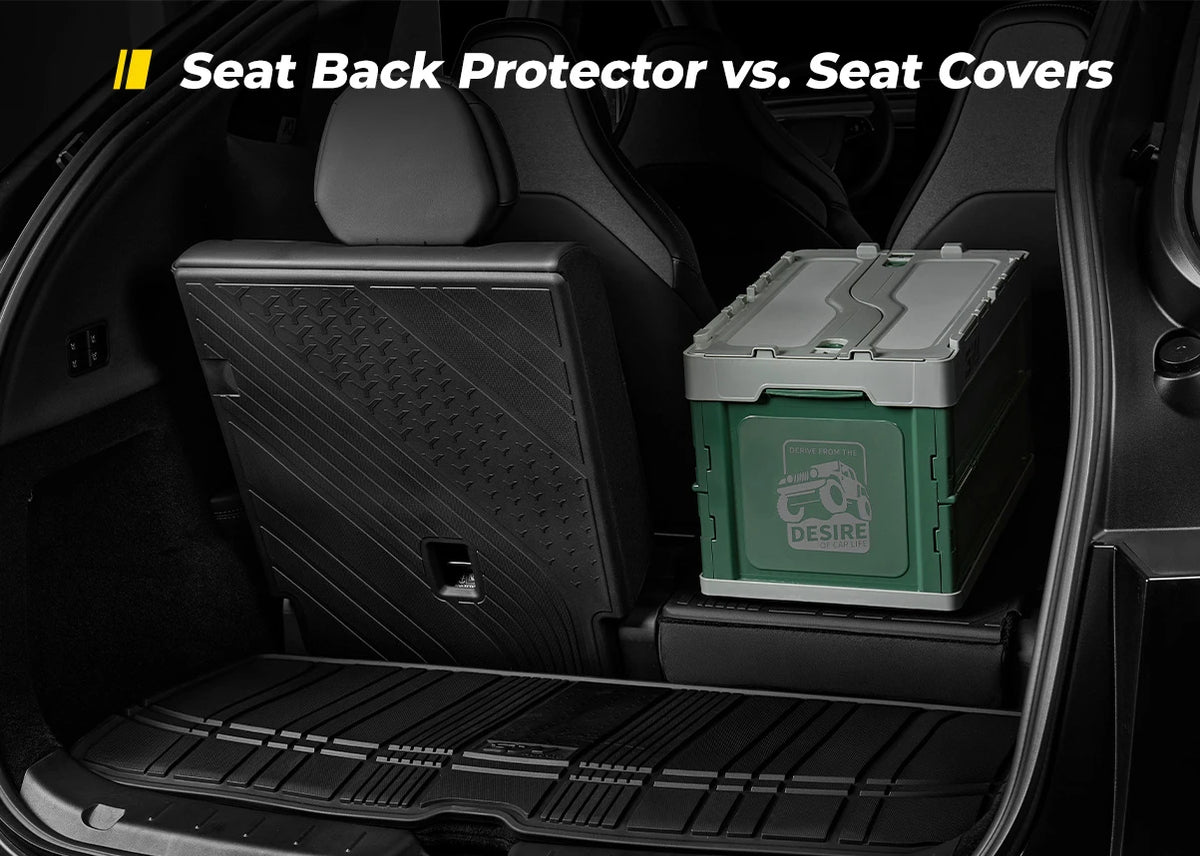
- Seat backs: when the second or third row is folded down, the back of the seats becomes part of the load floor. This area needs a separate seat back protector ([4])([7]).
- Bumper and loading edge: pets, strollers and heavy luggage can scratch the sill while being loaded. Our cargo liners do not include a bumper flap ([7]).
- Factory cargo covers: liners with raised edges may not sit as neatly under some factory cargo covers as a flat trunk mat ([2]).
- Contact with folded seats: if you use both a cargo liner and a seat back protector, the two may touch or rub slightly as the seats are folded or raised ([8]).
If you only need temporary protection, a universal liner may do the job. A rental car, for example, probably does not justify buying a liner molded specifically for that vehicle ([1]).
What to Check Before Buying a Cargo Liner for a Three-Row SUV
Before ordering, make sure the liner matches your exact vehicle. Choosing one only by SUV size or category can easily lead to gaps or a poor fit ([2]).
Frequently Asked Questions
Is a universal cargo liner good enough for a three-row SUV?
It can work for light use, but fit is often the main limitation. Cargo space behind the third row varies quite a bit between models, so a universal liner may leave gaps near the side walls or wheel wells ([1])([5]).
Car mat vs. cargo liner: which is better?
They serve different purposes. Floor liners protect the footwells, while a cargo liner covers the area behind the seats ([4]). If you want protection in both places, you may need both.
Can I trim a universal cargo liner to fit?
Yes, but trimming only changes the outer shape. It does not make the liner follow the wheel wells or other contours of the cargo floor. A loose fit can also allow the liner to shift while driving ([1])([3]).
Does a cargo liner protect the seat backs when the third row is folded?
No. Once the third row is folded, the back of the seats becomes part of the load area. That surface needs a separate seat back protector ([4]).
How do I compare cargo liner brands for an SUV?
Fit is the first thing to look at. Check whether the liner is made for your exact vehicle and how closely it follows the cargo floor. Material matters too: TPE is a practical choice for everyday use, while a one-piece molded design helps avoid gaps or seams where dirt and moisture could get through ([1])([3]).
Are custom-fit mud flaps worth it for an SUV?
It depends on where you drive. If your SUV regularly sees gravel, mud or winter road salt, a custom-fit set can offer better coverage around the wheel arches ([9]). For mostly paved-road driving, a universal set may be all you need.
References
[1] 3W - Custom-Fit vs Universal Floor Mats: 3D Scanning, Precision Fit, and Why It Matters: https://3wliners.com/blogs/car-mats/custom-fit-vs-universal-floor-mats-3d-scanning-precision-fit-and-why-it-matters
[2] 3W - Cargo Liner vs. Trunk Mat: The SUV Owner's Decision Framework: https://3wliners.com/blogs/car-mats/cargo-liner-vs-trunk-mat-the-suv-owner-s-decision-framework
[3] 3W - Why 'Waterproof' Cargo Liners Aren't All Waterproof: A Buyer's Reality Check: https://3wliners.com/blogs/car-mats/why-waterproof-cargo-liners-aren-t-all-waterproof-a-buyer-s-reality-check
[4] 3W - The 3W Product System: Floor Liners, Cargo Mats, Seat Protectors, and Truck Bed Mats Explained: https://3wliners.com/blogs/car-mats/the-3w-product-system-floor-liners-cargo-mats-seat-protectors-and-truck-bed-mats-explained
[5] 3W - Seat Back Protector for 3-Row Family SUVs: Cargo-Area Defense for the Palisade, CX-90, and Grand Highlander: https://3wliners.com/blogs/car-mats/seat-back-protector-3-row-suv
[6] 3W - Custom Floor Mats Fit 2024-2026 Toyota Grand Highlander (Product Page): https://3wliners.com/products/3w-custom-floor-mats-fit-2024-toyota-grand-highlanderinclude-hybrid-lexus-tx-tpe-material-all-weather-protection
[7] 3W - Cargo-Area Coverage Levels Compared: Cargo Mat vs Full Liner vs Bumper-Flap Liner for SUVs: https://3wliners.com/blogs/car-mats/suv-cargo-floor-mats-protection-against-mud-water-and-debris
[8] Tesla North - Review: 3W Tesla Model Y Floor Mats Full Set: https://teslanorth.com/2025/10/21/review-3w-tesla-model-y-floor-mats-full-set/
[9] 3W - Custom-Fit Mud Flaps for SUVs: What 'Custom' Actually Means When You Order Online: https://3wliners.com/blogs/car-mats/custom-fit-mud-flaps-for-suvs-what-custom-actually-means-when-you-order-online

Leave a comment
All comments are moderated before being published.
This site is protected by hCaptcha and the hCaptcha Privacy Policy and Terms of Service apply.