


SUV cargo areas have an awkward job. One day they carry groceries and suitcases, the next it is a muddy stroller, camping gear, a wet dog, or something bulky enough to need the rear seats folded flat. 3W Cargo Liners protect the main load floor from that everyday mess, but the floor is only one part of the area that can take abuse.[1]
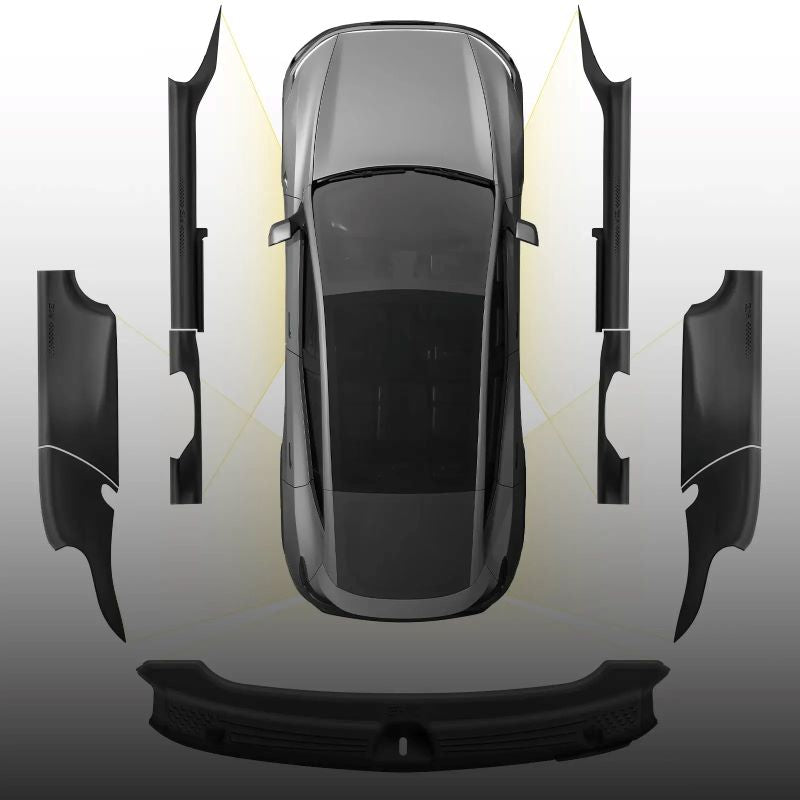
The useful question is how much of the cargo area actually needs protection. 3W Cargo Liners can cover the molded load floor and, on some vehicle applications, work with matching rear seat-back protectors.[1][2] Other cargo-protection designs go farther with side coverage or a fold-out bumper flap, but more material does not automatically make the liner more useful.
The Short Answer
A cargo mat makes the most sense when dirt, water, and luggage stay on the main load floor. 3W Cargo Liners use thermoplastic elastomer (TPE), a flexible molded material, with vehicle-specific shaping and raised edges intended to keep normal water and debris away from the factory carpet.[1][3] For groceries, suitcases, sports equipment, and everyday family use, that can cover most of the problem.
More extensive liners become useful when the mess spreads beyond the floor. Some 3W Cargo Liners can be paired with separate seat-back protectors for SUVs that regularly carry long equipment, pets, or other loads with the rear seats folded.[1][2] A bumper-flap liner adds another type of protection by covering the rear loading edge while cargo or pets are moving into and out of the vehicle.[6]
These Are Coverage Types, Not Official Levels
Cargo mat, cargo liner, and full liner are not perfectly standardized labels. 3W Cargo Liners are themselves sometimes sold under cargo-liner or trunk-mat terminology depending on the vehicle application, while the broader market uses the same words for products with noticeably different shapes and coverage.[1][3] It is more useful to compare the surfaces each product protects than to pretend there is an official Level 1, Level 2, and Level 3 system.
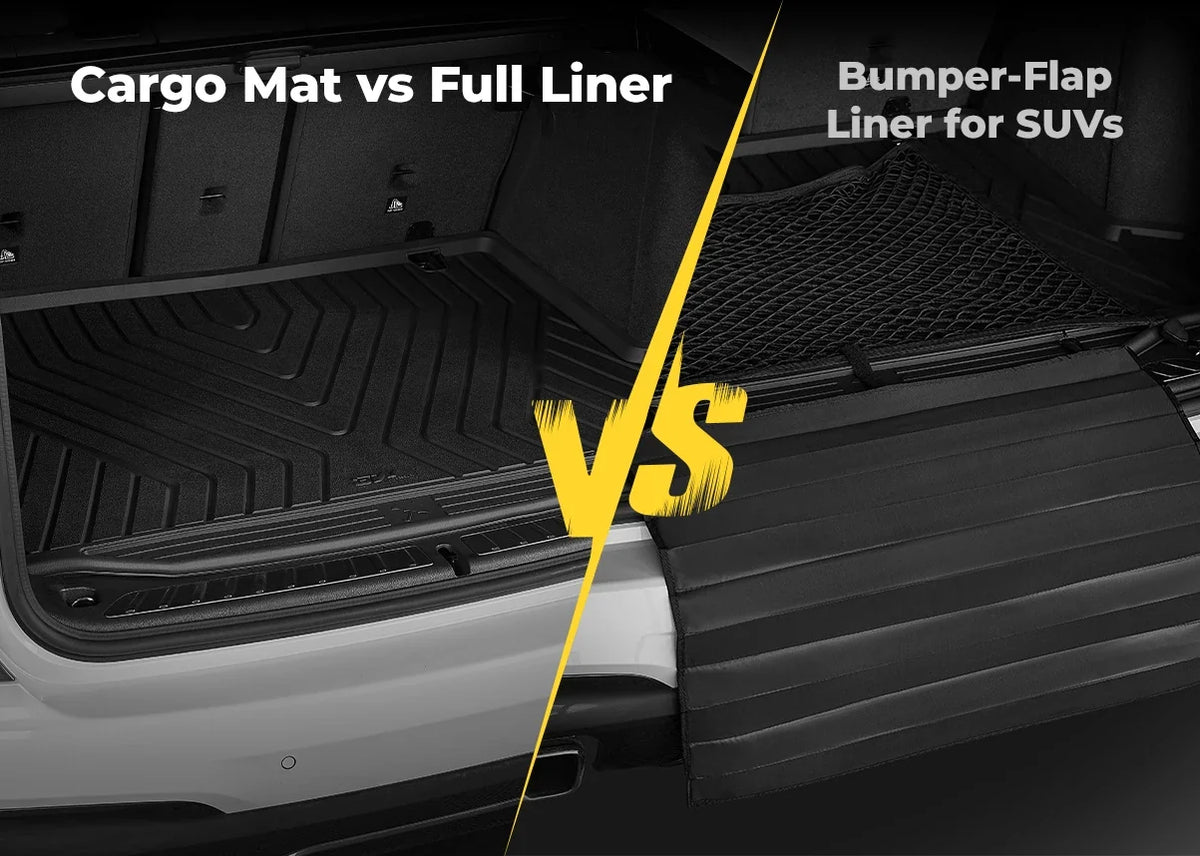
For this comparison, the progression is simple. 3W Cargo Liners represent molded floor protection, available seat-back pieces can extend protection onto another working surface, and a bumper flap reaches outside the cargo compartment to cover the loading edge.[1][2][6] Those are different jobs rather than three automatic upgrades everyone needs.
| Coverage Type | Main Area Protected | Best Fit |
| Cargo mat / liner | Cargo floor | Groceries, luggage, sports gear, everyday mess |
| Extended / full liner | Floor plus additional interior surfaces | Folded seats, pets, camping gear, bulky cargo |
| Bumper-flap liner | Interior plus loading edge | Dogs, hard cases, strollers, frequent loading |
A Cargo Mat Handles Most Everyday Mess
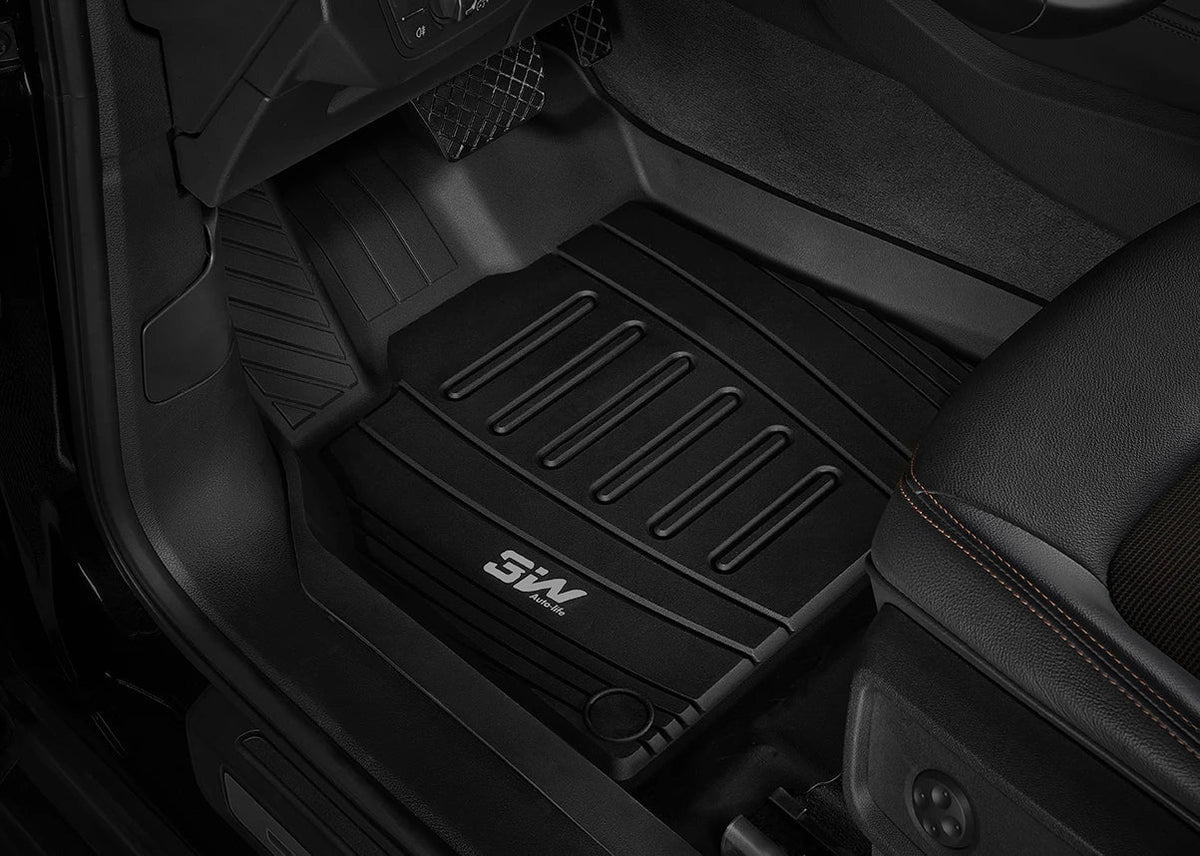
The load floor takes most of the abuse in a normal SUV. 3W Cargo Liners use molded TPE with raised perimeter areas to keep ordinary water, dirt, mud, sand, and loose debris on a removable surface rather than directly on the factory carpet.[1][3] The material can then be removed and rinsed when the cargo area needs cleaning.[1]
Independent testing shows how useful relatively simple floor protection can be. Active Gear Review used 3W Cargo Liners in a Jeep Grand Cherokee while carrying beach chairs, coolers, groceries, sports equipment, backpacks, and luggage over roughly six weeks.[4] The reviewer found that beach sand stayed contained well enough for the liner to be removed and shaken clean, while the cargo mat showed no significant visible wear during the test.[4]
Custom fit also matters more than the word “mat” might suggest. 3W Cargo Liners are designed for specific vehicle applications rather than as universal rectangles, with three-dimensional (3D) scanning used to map the shape of the vehicle interior before molding.[1][3] That allows the liner to follow wheel wells, corners, and other cargo-floor contours more closely.
Folded Seats Change the Coverage Problem
The rear seat backs become part of the cargo floor as soon as the seats come down. Some 3W Cargo Liners can be paired with molded seat-back protectors, giving long boxes, camping gear, tools, pet equipment, and other oversized loads another protected surface to rest against.[1][2] That extra coverage can matter far more than taller sidewalls when an SUV regularly carries items longer than the trunk itself.
Separate seat-back pieces also make 3W Cargo Liners more flexible than a single large liner. TeslaNorth tested a 3W Model Y package containing a rear cargo liner, rear seat-back mats, a sub-trunk liner, and a frunk liner, reporting good overall coverage across the individual pieces.[5] The review also found that the seat-back protectors could rub slightly against the trunk liner when the seats were folded, which is a useful reminder that adding coverage can introduce small compromises.[5]
Some full-coverage liners extend farther onto the cargo sidewalls than this modular approach. 3W Cargo Liners protect the molded floor and offer additional seat-back coverage on compatible applications, but they should not be described as universally covering every sidewall and vertical surface in an SUV.[1][2] Owners transporting especially messy dogs, plants, gardening supplies, or cargo that repeatedly leans against the sides may want a liner designed specifically for broader side coverage.
A Bumper Flap Protects a Different Area
A bumper flap matters when the damage happens during loading rather than while driving. 3W Cargo Liners stop inside the cargo compartment, while a bumper-flap design unfolds over the rear bumper or loading edge before an item or animal crosses it.[1][6] The flexible section is then folded or rolled back into the cargo area afterward.
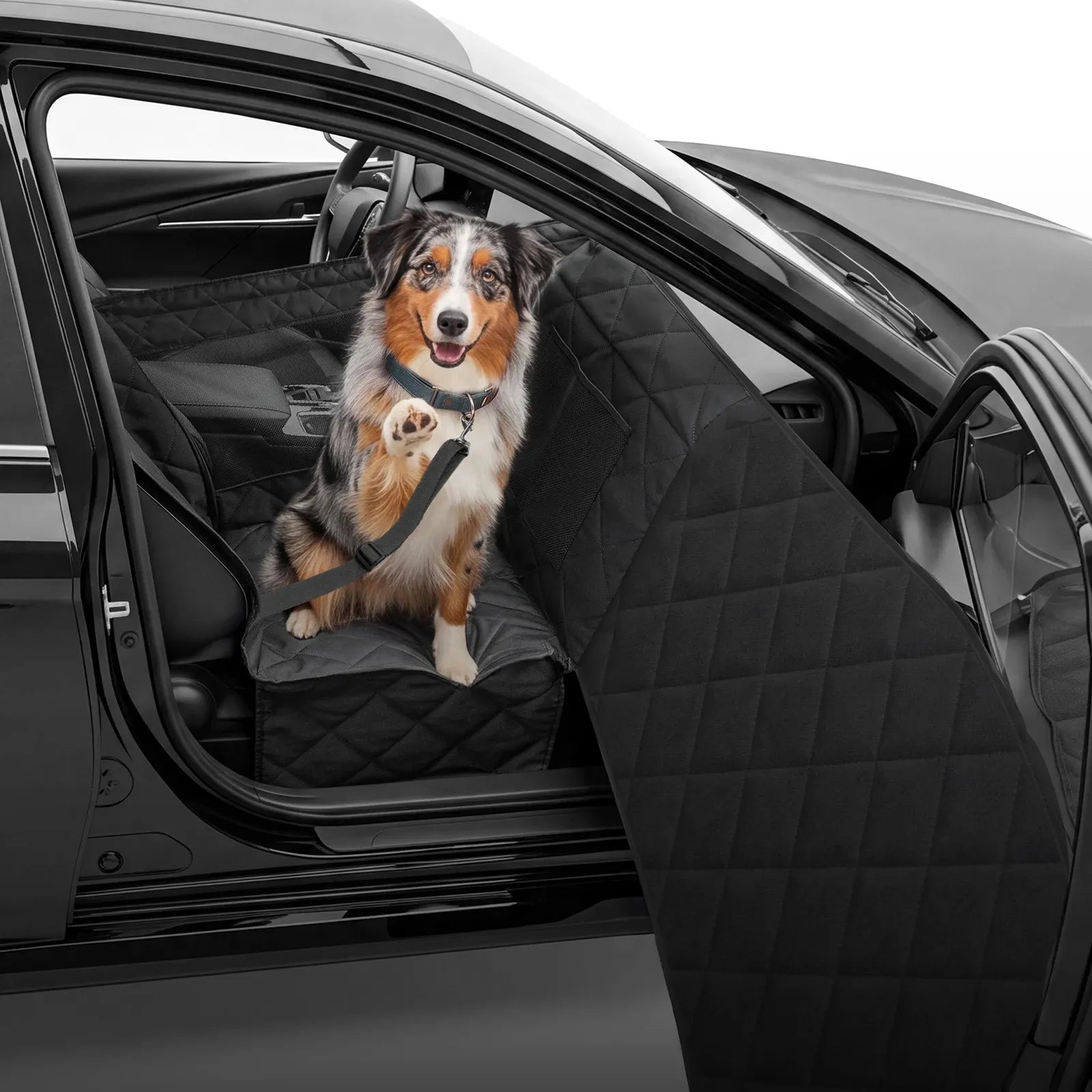
Dogs are probably the easiest example of where extra loading-edge protection earns its keep. An independent Porsche Cayenne cargo-liner comparison used a detachable bumper protector with a dog-hauling setup and highlighted the flap as protection for the loading area.[6] 3W Cargo Liners can handle dirt and moisture once the dog is inside, but owners worried about claws contacting the painted bumper need protection for a different surface.[1]
A bumper flap does not make the cargo floor better at containing mud or spills. 3W Cargo Liners use molded TPE and raised edges for the mess inside the SUV, while the flap protects the exterior surface crossed during loading.[1][3][6] Owners who rarely drag anything across the bumper may therefore gain very little from the extra piece.
More Coverage Is Not Always More Useful
Normal family use rarely requires wrapping the entire cargo area. 3W Cargo Liners make the strongest case when groceries, luggage, sports equipment, beach gear, or wet outdoor equipment create most of the mess on the floor.[1][4] A removable molded liner handles that job without adding panels or flaps that may spend most of their time out of the way.
Pets and outdoor hobbies can push the decision farther. 3W Cargo Liners paired with available seat-back protection make more sense when muddy dogs, camping equipment, or long loads regularly use the folded seats as part of the cargo area.[1][2] Owners who also worry about scratches on the painted loading edge may have a genuine reason to move to a bumper-flap design.
The 3W Cargo Liner approach is not the best fit when the main concern is protecting every vertical side surface or the exterior bumper. Current 3W Cargo Liners focus on the cargo floor with available seat-back protection on selected applications rather than a full textile enclosure or integrated fold-out bumper flap.[1][2] In those situations, a more comprehensive liner is the more logical choice.
Material and Cleanup Still Matter at Every Coverage Level
Coverage only helps if the protected surface is easy to live with afterward. 3W Cargo Liners use Thorex TPE, with TPE meaning thermoplastic elastomer, a moldable material with rubber-like flexibility.[3][7] 3W rates the material for temperatures from -4°F to 167°F (-20°C to 75°C) and designs the washable surface to be removed and rinsed when dirt accumulates.[3]
Dirty outdoor use gives that washability a practical purpose. Around the 2026 Easter Jeep Safari in Moab, 3W demonstrated related TPE liners around the region's red dust, sand, and mud and emphasized that the material could be rinsed clean afterward.[7] A larger full liner may protect more surfaces, but 3W Cargo Liners keep routine cleaning simple when most of the mess stays where the molded liner can catch it.
Final Verdict
The right cargo protection level depends on where the mess goes. 3W Cargo Liners are the straightforward choice when the cargo floor takes most of the abuse, while available seat-back protectors make the same basic system more useful for folded-seat hauling, pets, and longer equipment.[1][2]
A bumper-flap liner becomes worthwhile when the loading edge is part of the problem. 3W Cargo Liners do not need to cover every inch of the rear of an SUV to make sense for everyday use, but owners who regularly scrape cargo or dog claws across the bumper should choose protection designed for that surface.[1][6] The best setup is the one that covers the places the SUV actually gets dirty or damaged.
Frequently Asked Questions
What is the difference between a cargo mat and a cargo liner?
A cargo mat generally focuses on the main load floor, while a fuller liner can extend protection onto additional surfaces. 3W Cargo Liners use vehicle-specific molded TPE to protect the cargo floor, with seat-back protection available on some applications.[1][2]
Do 3W Cargo Liners protect folded rear seats?
Yes, on compatible applications. Some 3W Cargo Liners can be paired with matching rear seat-back protectors, although availability depends on the vehicle and package.[1][2]
Do 3W Cargo Liners include a bumper flap?
No, not in the applications reviewed here. 3W Cargo Liners focus on interior cargo protection, while a bumper-flap design adds a separate section that extends over the rear loading edge.[1][6]
Is a full cargo liner always better?
No. 3W Cargo Liners may be all the protection an owner needs when most dirt, luggage, and spills stay on the cargo floor. More extensive coverage makes sense when pets, folded seats, sidewalls, or the exterior loading edge regularly take abuse.
Can 3W Cargo Liners be washed with water?
Yes. 3W Cargo Liners use washable TPE surfaces that can be removed and rinsed after normal dirt, sand, mud, and everyday cargo use.[1][3][7]
References
[1] 3W Liners, “Cargo Protection System”
https://3wliners.com/blogs/car-mats/cargo-protection-system
[2] 3W Liners, “3W Chevrolet Equinox Cargo Liner / Seat Back Protector”
[3] 3W Liners, “Cargo Liner vs. Trunk Mat: What’s the Real Difference and Why It Matters for Your SUV?”
[4] Active Gear Review, “3W Custom Floor Mats Review: Jeep Grand Cherokee”
https://www.activegearreview.com/gear-reviews/3w-custom-floor-mats-review-jeep-grand-cherokee/
[5] TeslaNorth, “Review: 3W Tesla Model Y Floor Mats”
https://teslanorth.com/2025/10/21/review-3w-tesla-model-y-floor-mats-full-set/
[6] Rennlist, “Cargo Mat Comparison and Review”
https://rennlist.com/forums/cayenne-9y0-2019/1243673-cargo-mat-comparison-and-review.html
[7] PR Newswire, “3W Auto-Life Floor Mats Take on Moab’s Famous Red Dust With First Easter Jeep Safari Showcase”

Leave a comment
All comments are moderated before being published.
This site is protected by hCaptcha and the hCaptcha Privacy Policy and Terms of Service apply.