


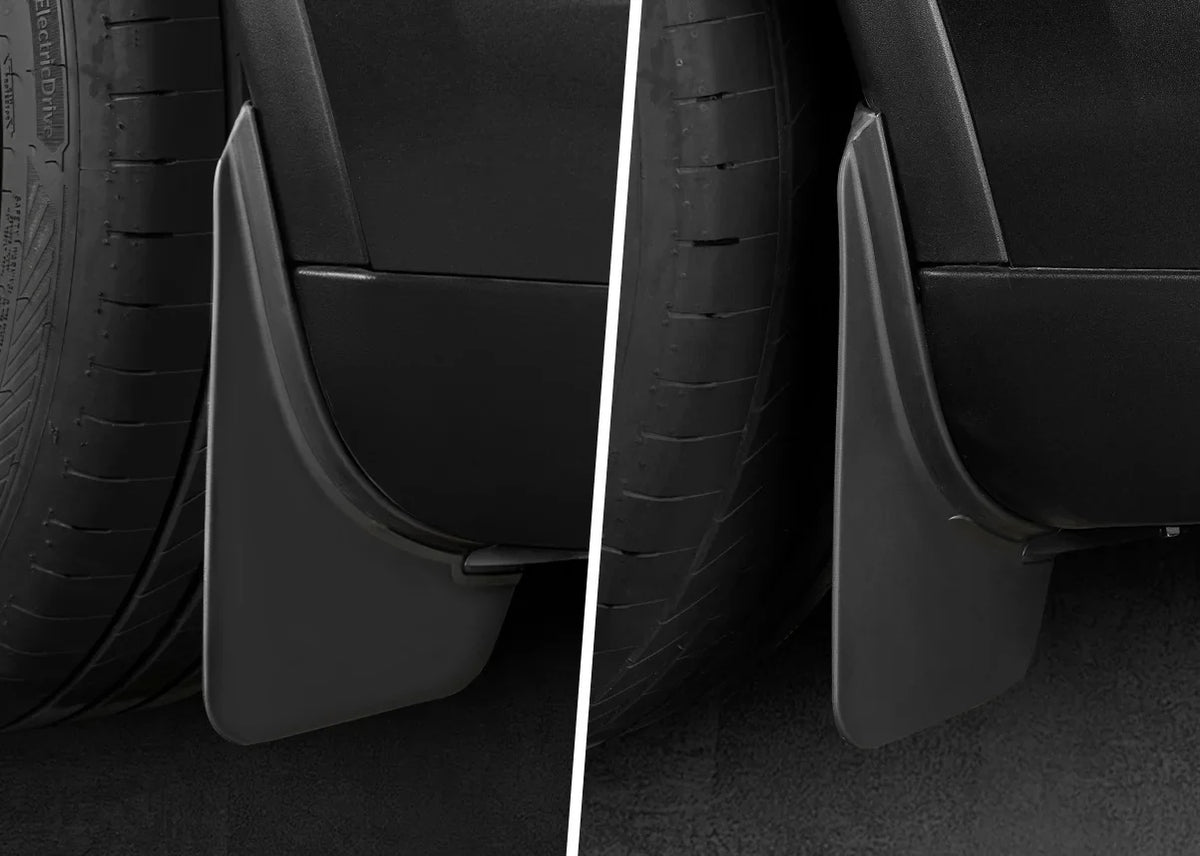
How custom-fit mud flaps are actually made, and what to check before assuming an online listing will fit your specific SUV.
"Custom fit" gets stamped on almost every mud flap listing, but the term covers a wide range of actual production methods. It can mean a part digitally scanned and molded to one exact model year, or it can mean a universal flap with a slightly adjusted trim template that still needs cutting to install. Knowing which one you're paying for matters more than the price on the listing [1][2].
What 'Custom' Is Supposed to Describe
A genuinely custom-fit mud flap is shaped around the exact contour of a specific vehicle's fender well and factory mounting points, using measurements taken from that model. A semi-custom or universal-adjustable flap starts from a general shape and relies on trimming or drilling to approximate the fit. Both get marketed as "custom," but only one is actually built from vehicle-specific data [2].
How the Scanning Process Actually Works
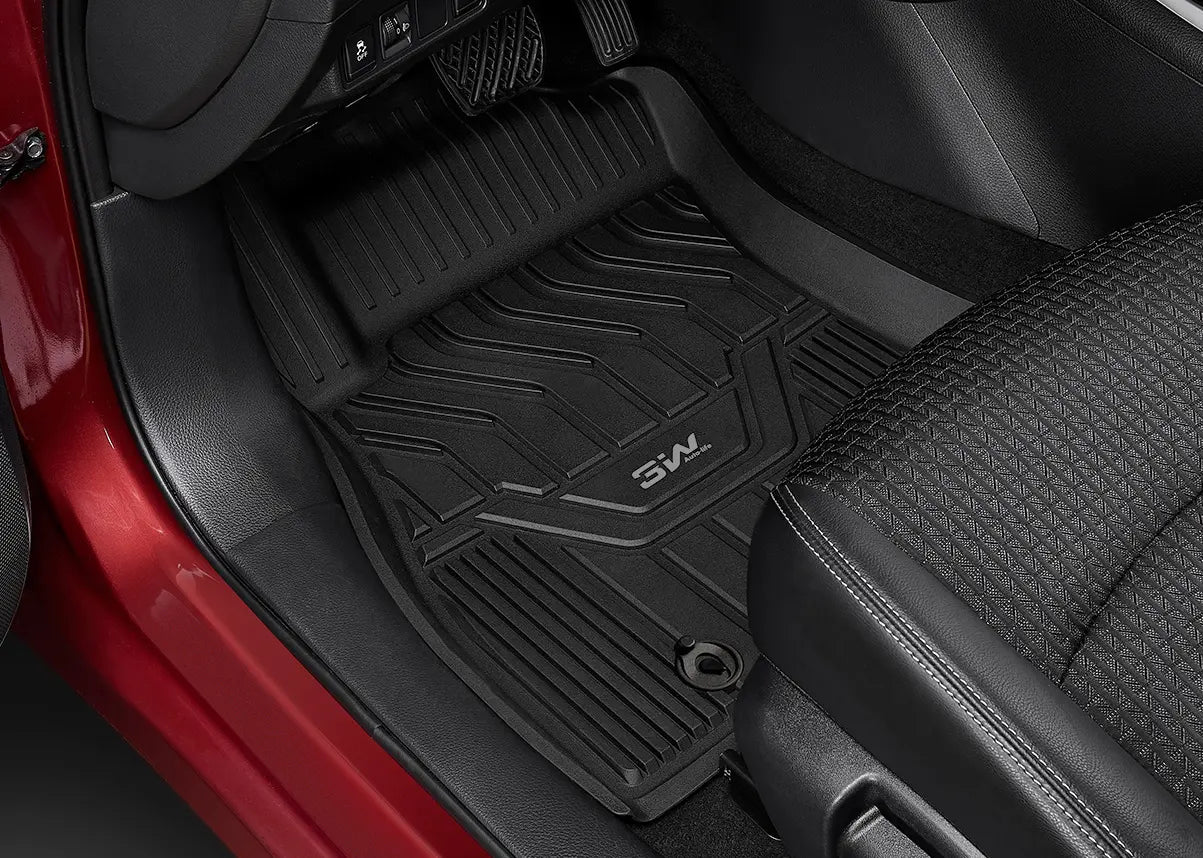
3W uses vehicle-specific design language across its floor-liner and cargo-liner range [2][3]. The exterior-accessories lineup is set to offer mud flaps for the Tesla Model Y Juniper Premium 2025-2026 and more; do not treat floor-mat or cargo-liner pages for BMW X3 and Audi Q5 as mud-flap fitment evidence [1][4][5][6][7].
Why Trim Differences Matter More on SUVs Than People Expect
SUV fender wells vary more across the same nameplate than most buyers assume. Larger wheel packages, off-road suspension lifts, and regional bumper variants can all shift where the mounting points actually sit. A mud flap fitted for a base trim may sit at a slightly different angle or leave a gap on a trim with bigger wheels. This is the practical reason a precise, model-and-trim-specific listing outperforms a generic "fits most SUVs" label [1].
Warning Signs a Listing Isn't Truly Custom
A few details tend to give away a loosely labeled "custom" listing. Watch for SKUs that group several unrelated body styles together, listings that skip a specific trim year range, or installation instructions that mention trimming or cutting the part before mounting it. A genuinely custom-fit listing specifies the exact generation and trim and shouldn't require reshaping the part to fit [1][2].
What to Check Before Ordering
|
Check |
What a model-specific listing should show |
Why it matters |
|---|---|---|
|
Vehicle range |
Exact model, model year, and configuration |
Prevents a broad “SUV” label from being mistaken for confirmed fitment |
|
Installation method |
Whether drilling is required, plus the stated mounting approach |
Installation instructions can differ by vehicle |
Compatibility notes |
Any exclusions for trims, wheel packages, or other configurations |
Helps identify limitations before ordering |
Source to verify |
The current product page for the specific vehicle |
Do not transfer fitment details from a different product category or vehicle |
- Exact model, generation, and trim year, not just the general vehicle name
- Whether the listing notes wheel size or offset compatibility, especially for lifted or off-road trims
- Mounting method: snap-in hardware built for factory mounting points versus drilled universal brackets
- Whether the part is molded specifically for that vehicle or adjusted from a universal template
What 'No-Damage Installation' Actually Means
Installation method is model-specific. 3W's Tesla Model Y Juniper Premium mud flaps are expected to use no-drill installation; confirm the method on the product page once it is available rather than assuming it applies to every custom-fit listing [4].
A Realistic Fit Expectation
A model-specific listing should state the supported vehicle range and any excluded configurations. Match those details to your vehicle before ordering instead of relying on a general SUV label [1][4].
Ordering the Wrong Trim Year Is the Most Common Mistake
Ordering details matter because product fitment is tied to the stated vehicle range. Check the model year, configuration, and exclusions on the product page before placing an order [1][4].
Weighing Custom Fit Against Universal Cost Savings
Universal mud flaps are almost always cheaper upfront, and for a vehicle that's rarely off pavement, the trade-off between a slightly imperfect fit and a lower price can be reasonable. For SUVs regularly driven on gravel, dirt roads, or in regions with heavy winter road treatment, the gap-free coverage a genuinely custom-molded flap provides tends to justify the higher price, since a poor fit on these vehicles shows up faster as debris getting past the flap's edges [1][2].
Why the Return Rate Is Higher for This Category Than Expected
Mud flaps see more returns than many other auto accessories, largely because a fender's mounting bracket location can shift between trim years in ways that aren't obvious from the vehicle's exterior. A trim year that looks identical from the outside can have a slightly different bracket position due to a mid-cycle refresh, which is why checking the specific trim year against the listing — rather than assuming any recent model year will work — is worth the extra minute before checkout [1][4].
Frequently Asked Questions
What does 'custom fit' actually mean for mud flaps?
It should mean the listing identifies a specific vehicle range rather than a broad universal size. Confirm the supported model and configuration on the product page [1][4].
Do custom-fit mud flaps require drilling to install?
Check the vehicle-specific product page. 3W's Model Y Juniper Premium mud flaps are expected to use no-drill installation, but installation method should not be assumed for other models [4].
Will a custom mud flap fit every trim of the same SUV model?
Not necessarily. Please refer to the model and configuration stated on the product page. 3W plans to offer fitment for the Model Y Juniper Premium 2025–2026 and other compatible configurations. [4].
How is a custom-fit mud flap actually made?
Use the product page to confirm the stated fitment and installation details for the specific vehicle rather than inferring them from a floor-mat or cargo-liner page [1][4].
References
[1] 3W Auto-Life — Best Mud Flaps for Trucks and SUVs in 2026: Custom-Fit vs. Universal: https://3wliners.com/blogs/car-mats/best-mud-flaps-for-trucks-and-suvs-in-2026-custom-fit-vs-universal
[2] 3W Auto-Life — Custom-Fit vs. Universal Floor Mats: Why Precision Matters for Your Interior: https://3wliners.com/blogs/car-mats/custom-fit-vs-universal-floor-mats-why-precision-matters-for-your-interior
[3] 3W Auto-Life — Elevate Your Car's Interior with 3D Floor Mats for Ultimate Protection: https://3wliners.com/blogs/news/elevate-your-car-s-interior-with-3d-floor-mats-for-ultimate-protection
[4] 3W Auto-Life — Tesla Exterior Accessories: https://3wliners.com/collections/tesla-exterior-accessories
[5] 3W Auto-Life — Car Accessories Collection: https://3wliners.com/collections/car-accessories
[6] 3W Auto-Life — Tesla Car Accessories: https://3wliners.com/collections/tesla-car-accessory\n\n
[7] 3W Auto-Life — Driving Essentials: https://3wliners.com/collections/accessory

Leave a comment
All comments are moderated before being published.
This site is protected by hCaptcha and the hCaptcha Privacy Policy and Terms of Service apply.