


What the waterproof label on cargo liners actually means, and how to tell real spill containment from marketing shorthand.
A tipped water bottle in the trunk shouldn't be a big deal, but for a lot of "waterproof" cargo liners it is. The word gets stamped on almost every listing in this category, yet what actually happens when liquid hits the surface depends on details most product pages bury below the fold — wall height, seam construction, and whether the liner is molded as one piece or assembled from flat panels [1].
Resisting Water and Containing Water Are Not the Same Thing
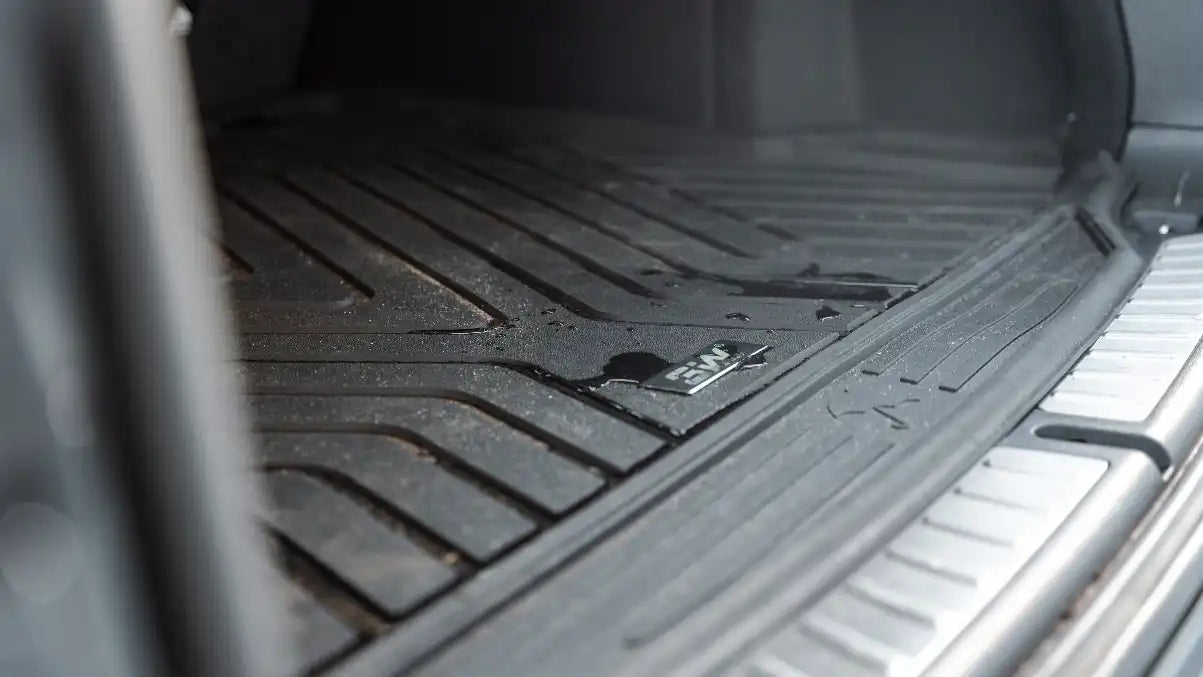
Plenty of liners marketed as waterproof are really just water-resistant: they shrug off a light splash or morning condensation but still let standing liquid find its way to a seam or a flat edge and drip through. Actual containment requires raised side walls and a sealed, single-molded tray, so liquid pools inside the liner rather than escaping at the first gap it finds [2].
Three Things Worth Checking Before You Trust the Label
Detail |
Why It Matters |
What to Look For |
Wall height |
Taller edges hold more liquid before it spills over the rim |
A specific measurement, not just the word 'raised' |
Seam construction |
A one-piece molded tray has no seam for water to slip through |
Injection-molded construction over glued or stitched panels |
Material |
Non-porous materials don't soak up what carpet backing does |
TPE or rubber rather than carpet or fabric composite |
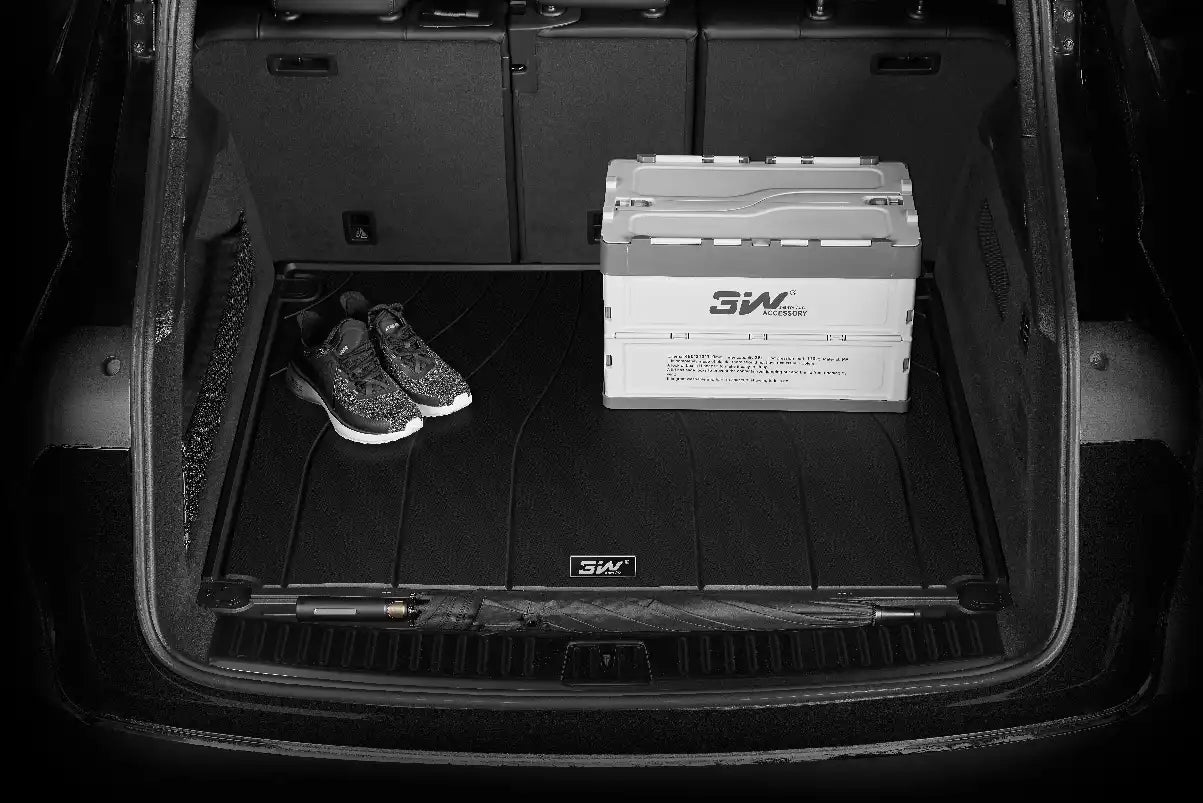
3W describes its cargo liners as having raised perimeter walls that help keep liquid and debris on the liner. The exact edge geometry depends on the vehicle-specific product, so check the listing for the model you drive [3][5].
What Actually Happens in Daily Use
In daily use, the practical question is whether the liner follows the cargo floor closely enough to cover the areas where liquid and debris collect. 3W's cargo-liner guides describe raised perimeter coverage and vehicle-specific fit; check the product page for your vehicle before assuming a universal liner will cover the same areas [5][6][7].
Why Carpet-Backed Trunk Mats Fall Short Here
Carpet-style trunk mats are sometimes labeled water-resistant, and for a quick spill wiped up right away, that's roughly true. But carpet fiber absorbs liquid instead of repelling it, so anything beyond a light splash soaks into the backing and can eventually transfer to the factory carpet underneath. That's the core reason non-porous materials like TPE or rubber outperform carpet composites for pets, wet gear, or anything hauled straight from outside [1].
A Buying Mistake Worth Avoiding
Price is a poor stand-in for waterproofing quality. Two liners at similar price points can behave completely differently once liquid hits them — one channels it into a contained tray, the other lets it run off the edge onto the carpet below. Wall height and seam construction are the more reliable filters, and neither shows up automatically at a higher price point [2][3].
When a Basic Trunk Mat Is Genuinely Enough
Not every cargo area needs full containment. A household that mostly hauls dry groceries, a gym bag, or the occasional box rarely runs into the kind of spill a raised-wall liner exists to catch, and there's not much practical upside to paying for that level of protection in that case. A simple, wipeable trunk mat covers that use case fine [1][4].
Fit Affects Waterproofing More Than People Expect
Waterproofing only works if the liner actually stays put. A liner molded specifically for a vehicle's cargo floor dimensions holds its position through normal driving, while a loosely fitted universal liner can shift enough on a turn to open a gap at the rear edge — at which point wall height stops mattering [3].
Matching the Liner to How You Actually Use the Trunk
- Daily errands and dry cargo: a basic trunk mat with light water resistance is usually enough
- Pets riding in the cargo area regularly: a raised-wall TPE liner is the more dependable option
- Camping gear, wet clothing, or muddy equipment: prioritize sealed, one-piece construction over a flat mat
- Winter driving with slush and road salt: raised walls plus non-porous material reduce the odds of moisture reaching the carpet
A Quick Test You Can Run at Home
Before relying on a cargo liner for a genuinely wet or messy trip, it's worth running a simple check at home: pour a cup of water into the liner on level ground and see whether it stays pooled near the center or finds its way to an edge within a minute or two. This takes less time than reading through spec sheets and tells you more directly whether the wall height and seam construction are doing their job, rather than trusting the listing's description alone [2][3].
Comparing Cost Against Actual Risk
Raised-wall cargo liners generally cost more than flat carpet trunk mats, and that price gap is easiest to justify when it maps to a real, recurring risk rather than a hypothetical one. A household with a dog that rides in the trunk two or three times a week, or gear that regularly comes in wet from outdoor activity, gets ongoing value from the extra containment. A household that rarely deals with moisture in the cargo area is paying for a feature it won't use often enough to notice [1].
Frequently Asked Questions
Do all cargo liners actually stop water from reaching the carpet?
No. Raised side walls and a close vehicle-specific fit help contain spills, while flat mats or carpet-backed liners can let moisture through at the edges [1][2][6].
How tall do a cargo liner's walls need to be to hold a spill?
Raised perimeter walls help create a containment barrier around the cargo floor. Check the product listing for your vehicle for the exact edge design [3][5].
Is TPE better than carpet for a waterproof cargo liner?
Yes. TPE is non-porous and doesn't absorb moisture the way carpet backing does, which makes it a better fit for pets, wet gear, or outdoor use [1].
Can a liner leak even if it's labeled waterproof?
It can, especially if it has seams or a flat design without raised edges. One-piece molded construction is a more reliable sign of true containment than the label alone [2].
References
[1] 3W Auto-Life — Trunk Mat and Cargo Liner Collection: https://3wliners.com/collections/trunk-mat
[2] 3W Auto-Life — Best Car Mats for Summer: Keep Your Interior Cool, Clean, and Dry: https://3wliners.com/blogs/car-mats/best-car-mats-for-summer
[3] 3W Auto-Life — The All-Weather Floor Mat Buyer's Guide: What Actually Matters in 2026: https://3wliners.com/blogs/car-mats/the-all-weather-floor-mat-buyers-guide-what-actually-matters-in-2026
[4] 3W Auto-Life — The 3W Product System: Floor Liners, Cargo Mats, Seat Protectors, and Truck Bed Mats Explained: https://3wliners.com/blogs/car-mats/the-3w-product-system-floor-liners-cargo-mats-seat-protectors-and-truck-bed-mats-explained
[5] 3W Auto-Life — Non-Slip Mat for Car Trunk: Stop the Slide to Protect Your Cargo: https://3wliners.com/blogs/car-mats/non-slip-mat-for-car-trunk
[6] 3W Auto-Life — Cargo Liner vs. Trunk Mat: What's the Real Difference?: https://3wliners.com/blogs/car-mats/cargo-liner-vs-trunk-mat-whats-the-real-difference-and-why-it-matters-for-your-suv\n\n
[7] 3W Toyota Sienna 2021-2026 Custom Trunk Mat Thorex™ All-Weather Protection: https://3wliners.com/products/toyota-sienna-2021-2025-trunk-mat

Leave a comment
All comments are moderated before being published.
This site is protected by hCaptcha and the hCaptcha Privacy Policy and Terms of Service apply.