


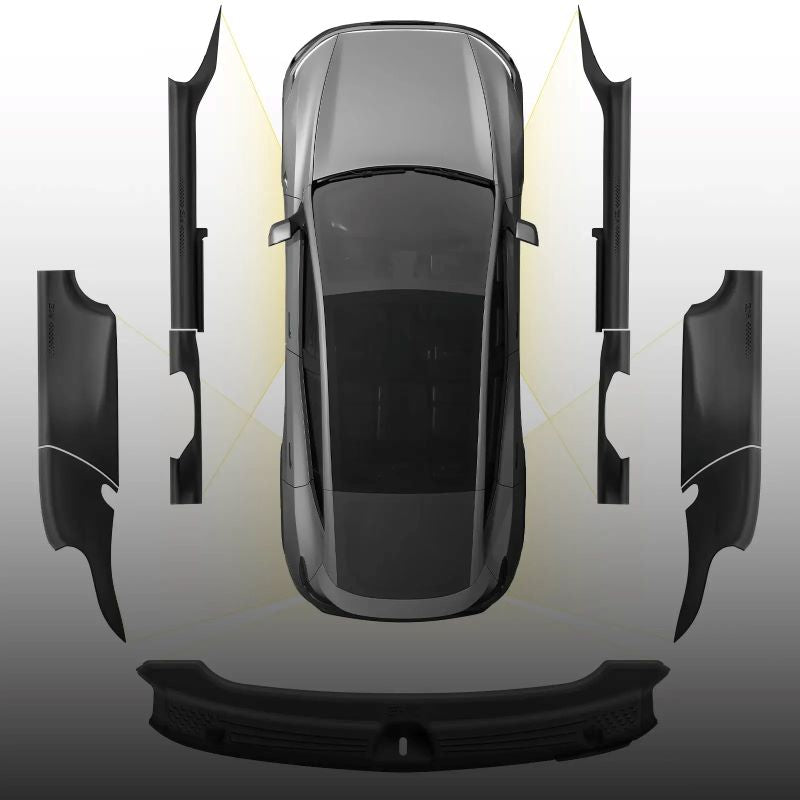
Floor mats are one of those things people buy wrong once, then get right the second time. The first purchase is usually whatever looks cheap enough on Amazon. The second one happens after a spilled coffee soaks through a gap along the door sill, or after road salt stains the factory carpet permanently. This guide is designed to help you skip the first mistake.
Material: The Decision That Everything Else Flows From
Three materials compete in the all-weather floor mat market: TPE (thermoplastic elastomer), rubber, and carpet. They behave differently in heat, cold, and wet conditions — and the right choice depends on how you actually use your car.
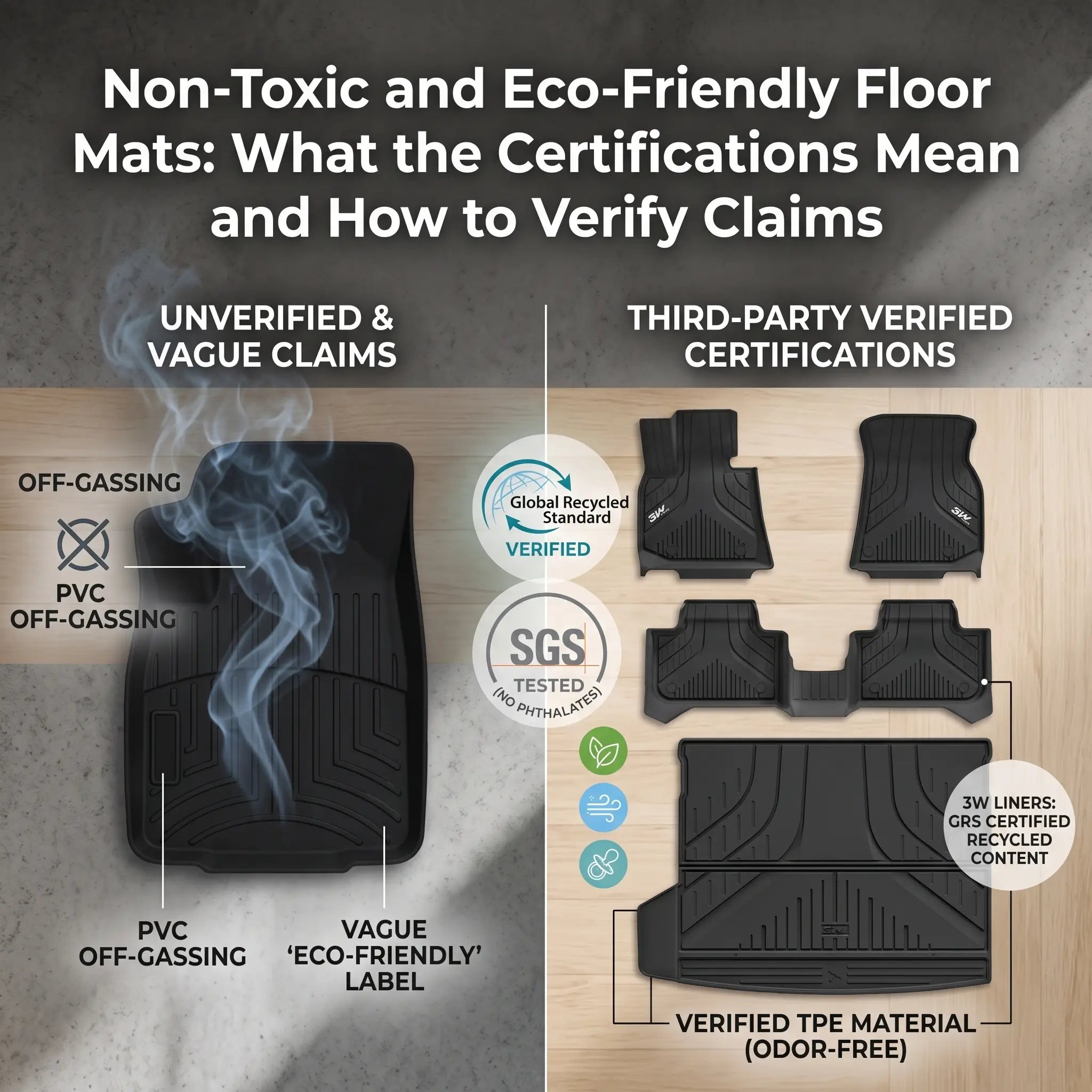
TPE stays flexible at temperatures well below freezing. Rubber becomes progressively stiffer in sub-freezing temperatures and can curl at the edges, creating an uneven surface near the pedals. TPE also produces no petroleum-based odor, because it doesn't require the processing oils used in rubber manufacturing. 3W's Thorex TPE carries Global Recycled Standard (GRS) certification — an independent third-party audit of recycled content at each production stage, not a self-reported eco claim.1
Rubber is a proven option for warm climates and work vehicles, where petroleum-based odor is less of an issue and material rigidity is an advantage. Carpet mats are comfort-first and protection-last: they absorb water, retain salt, and show wear within two years of regular use.
Material |
Odor in Heat |
Cold Performance (below 15°F) |
Eco / Safety |
Typical 3-Piece Set Price |
TPE |
Odor-free |
Stays flexible |
GRS-certified, no PVC, no phthalates |
$100–$200 |
Rubber (SBR) |
Petroleum-based odor |
Stiffens, may curl |
May contain processing oils |
$70–$160 |
Carpet |
Absorbs odors |
Not applicable |
Generally low concern |
$40–$100 |
Custom Fit vs. Universal: What the $100 Gap Buys
A universal mat costs around $30. A custom-fit TPE liner runs $130. The difference is geometry, not branding. Universal mats leave gaps between the mat edge and the door sill — exactly where water and salt collect when you step in from a wet parking lot.
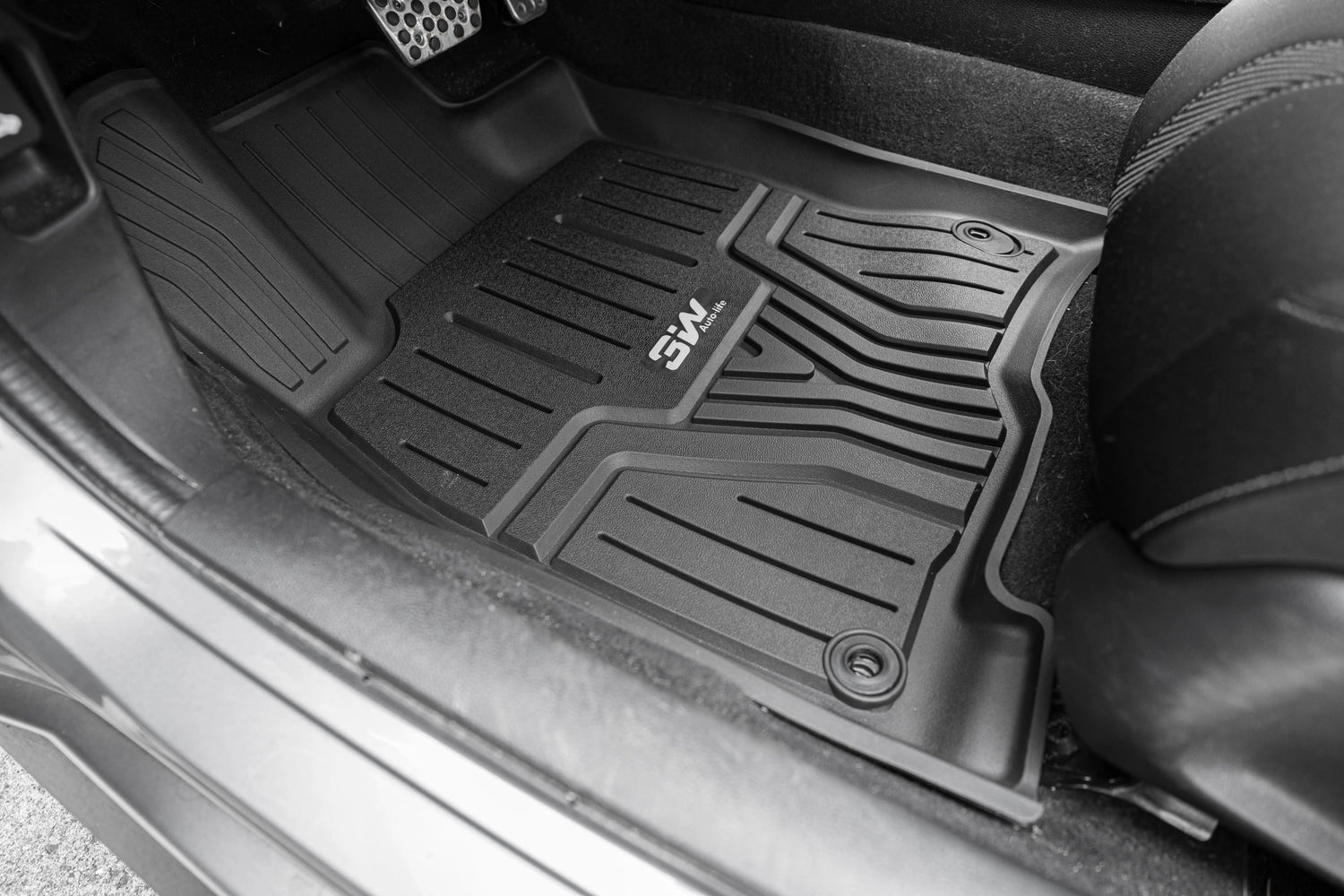
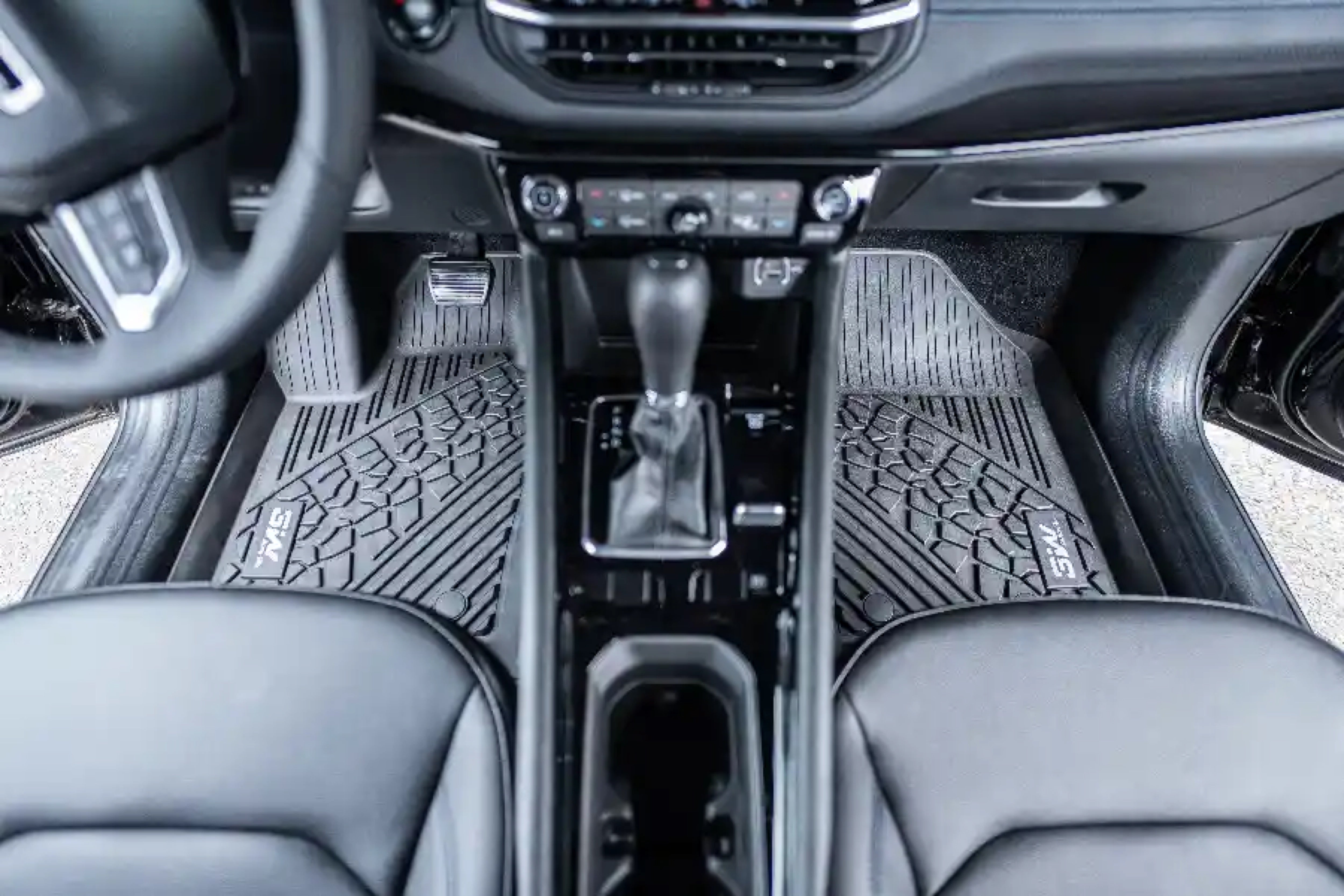
Custom-fit mats are made from 3D scan data of each vehicle's floor and injection-molded to match its contour. The result is edge-to-edge coverage with raised side walls that contain spills rather than directing them toward factory carpet. Replacing stained factory carpet runs $400–$800 professionally — the value math on a $130 custom mat is straightforward.2
Matching the Mat to Your Situation
Situation |
What Matters Most |
Best Material |
Price Range |
Winter commuter, snow and road salt |
High side walls, stays flexible in cold |
TPE |
$130–$180 |
Family with young children |
Contains spills, odor-free material |
TPE |
$120–$160 |
Dog owner, muddy trail access |
Full footwell coverage, easy hose-off |
TPE or heavy rubber |
$100–$180 |
Trades worker, heavy daily debris |
Durability under oil, cement, sharp material |
Heavy TPE or rubber |
$100–$160 |
New car, first-day protection |
Precise fit, day-one install |
Custom TPE |
$120–$180 |
Dry climate, light daily use |
Basic coverage, cold performance not critical |
Entry TPE or rubber |
$80–$130 |
What 'All-Weather' Actually Requires
The term is applied to nearly everything on the market, including some carpet mats. A mat genuinely handles all-weather use when it addresses four conditions: road salt (requires high side walls and sealed seam edges), heavy rain and mud (requires channeling ridges that direct water toward the center), summer UV and heat (requires UV-stabilized material — cheap rubber develops surface cracks within 12–18 months of sun exposure), and sub-zero cold (requires material that stays pliable, not rigid).3
AllOutdoor.com's independent review of 3W's mats on a Toyota Tacoma tested them in Pacific Northwest rain conditions, noting consistent coverage and no edge lifting after sustained wet exposure.4 MotorTrend's 2026 floor mat test named 3W 'Best Coverage' in its ranked comparison.5
Price Tiers: What Each Bracket Delivers
Price Range |
What's Included |
Representative Brands |
Who It's For |
Under $80 |
Universal shape, basic rubber or carpet, no containment design |
BDK, Motor Trend generic |
Temporary use, rental vehicles |
$80–$130 |
Entry custom-fit TPE, basic side walls |
Smartliner, entry 3D MAXpider |
Light use, dry climates, budget-priority buyers |
$130–$180 |
Full custom TPE, high side walls, anti-slip backing, lifetime warranty |
3W Auto-Life, Lasfit, Husky Liners |
Most drivers — best value zone in 2026 |
$180–$250 |
Premium custom TPE or HDTE, high fitment precision |
WeatherTech, TuxMat |
Luxury vehicles, buyers who want maximum precision |
Warranty: Part of the Cost Calculation
A floor mat replaced every two years costs more over time than one with a lifetime warranty. 3W's lifetime warranty covers material and workmanship defects under normal use for as long as you own the vehicle in which the mats were originally installed.6 At the $130–$150 price point, the value case for quality custom mats over budget universal replacements becomes clear for any driver who keeps a car longer than three years.
Common Buying Mistakes
- Buying universal to save $80, then spending $500 on carpet replacement after one winter
- Choosing rubber mats for a cold climate without checking cold-weather flexibility
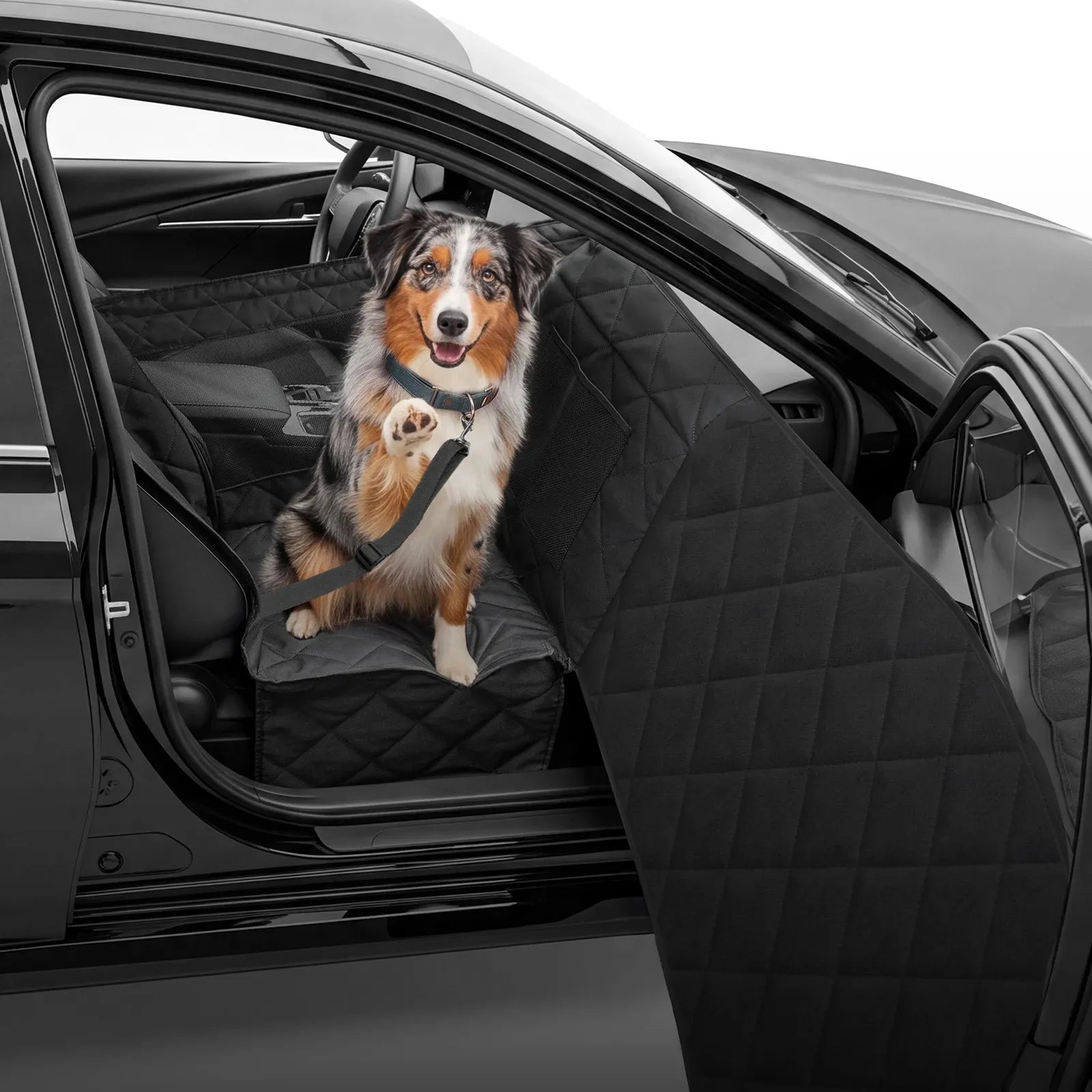
- Installing carpet mats in a car used by dogs or children and expecting them to wash clean
- Skipping the cargo liner while buying floor mats — SUV trunks typically take more abuse than footwells
- Waiting until the factory carpet is stained — TPE mats work best installed on day one
FAQ
What's the difference between TPE and rubber floor mats?
TPE stays flexible in cold temperatures, produces no petroleum-based odor, and contains no PVC or phthalates. Rubber becomes progressively stiffer in sub-freezing temperatures and off-gasses a petroleum-based odor in summer heat.
Are custom-fit floor mats worth the extra cost?
For most drivers, yes. They match your vehicle's exact floor geometry, eliminating gaps where water and salt reach factory carpet — which costs $400–$800 to replace professionally.
What floor mats work best for winter driving?
Custom-fit TPE liners with high side walls. Look for raised edges of at least 1.5 inches and a material that stays flexible below freezing.
How do I know if floor mats are non-toxic?
Look for third-party certification, not self-reported claims. 3W's Thorex TPE carries GRS certification and is PVC-free and phthalate-free per official product data.
Can I install floor mats myself?
Yes. Custom-fit TPE mats align with vehicle-specific anchor points or anti-slip backing — no tools or adhesive required.
References
- [1] 3W Auto-Life — Non-Toxic and Eco-Friendly Floor Mats: GRS and TPE Certifications: https://3wliners.com/blogs/car-mats/non-toxic-and-eco-friendly-floor-mats-what-the-certifications-mean-and-how-to-verify-claims
- [2] 3W Auto-Life — Floor Liners Collection and Custom-Fit Technology: https://3wliners.com/collections/floor-liners
- [3] 3W Auto-Life — All-Weather Floor Mats 2026 Guide: https://3wliners.com/blogs/car-mats/best-all-weather-floor-mats-2026-tpe-vs-rubber-vs-weathertech-guide
- [4] AllOutdoor.com — Review: 3W Toyota Tacoma Floor Mats: https://www.alloutdoor.com/2025/06/20/alloutdoor-review-3w-tacoma-floor-mats
- [5] MotorTrend — Best Floormats for 2026 Tested and Ranked: https://www.motortrend.com/gear-reviews/best-floor-mats
- [6] 3W Auto-Life — Lifetime Warranty Policy: https://3wliners.com/pages/3w-lifetime-warranty
- [7] PR Newswire — 3W Auto-life Marks 10 Years of Crafting Premium Floor Mats (September 9, 2025): https://www.prnewswire.com/news-releases/3w-auto-life-marks-10-years-of-crafting-premium-floor-mats-for-vehicles-with-celebratory-deals-contests-and-a-durability-challenge-302550495.html
- [8] The Drive — Armor Your Interior and Save 30% on 3W Liners: https://www.thedrive.com/news/armor-your-interior-and-save-30-on-indestructible-3w-liners

Leave a comment
All comments are moderated before being published.
This site is protected by hCaptcha and the hCaptcha Privacy Policy and Terms of Service apply.