


Many budget drivers wonder whether custom-fit floor mats are worth the trouble. Some think that a cheap universal mat may deliver somewhat equivalent protection. If you care about keeping the factory carpet clean, dry, and stain-free for years, the best custom-fit floor mats earn their price tags fast.
Unlike one-size-fits-most mats, a true custom-fit liner comes from a digital scan of your exact vehicle. Therefore, it hugs every curve of your footwell, rather than leaving gaps at the edges. This insightful guide explores the factors that set the best custom-fit car floor mats apart from the rest.
You'll also know how manufacturers actually build those mats. Then, we'll proceed to how four popular brands – WeatherTech, Husky Liners, SMARTLINER, and 3Wliners compare on material, coverage, and price. You'll know exactly what to look for in the best custom fit car floor mats 2026 has to offer.
What Are the Best Custom Fit Floor Mats?
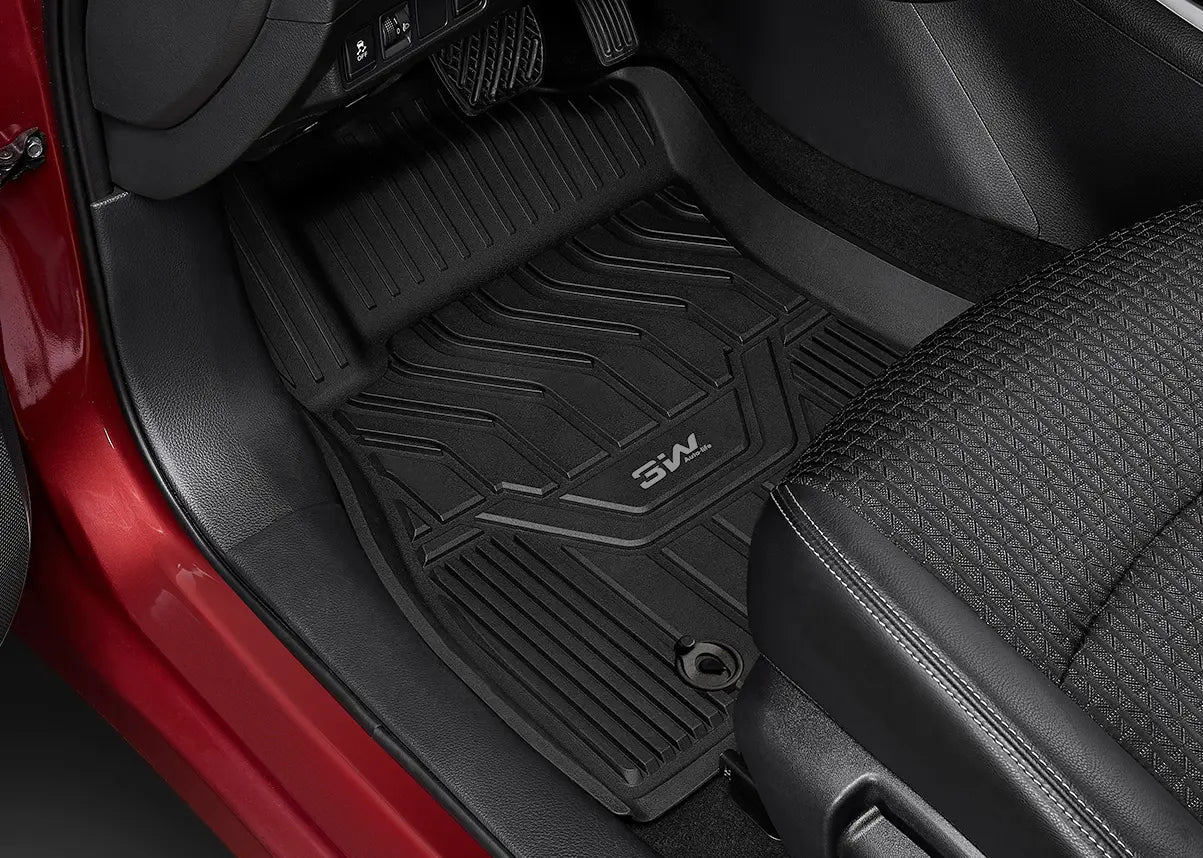
Custom-fit floor mats are liners molded to match a vehicle's floor geometry. It's not a generic shape trimmed to fit several models. Brands develop them from a 3D scan of the actual footwell. Thus, the raised edges, pedal cutouts, and anchor points line up exactly with your car, truck, or SUV.
That pitch-perfect precision is why custom-fit floor mats outmatch flat rubber or carpet mats. A factory-made mat or a universal one aims to serve different floor shapes simultaneously, based on estimation. In contrast, Evoq Owners Club confirms that a custom mat is designed for a single vehicle.
And the difference shows up every time you track in snow, spill coffee, or haul muddy gear. Your custom liner's raised walls will catch the mess right at the edge of the carpet. Smart owners have gravitated toward custom fit floor mats for another good reason: they protect the vehicle's resale value.
Universal vs Custom Fit: Why and Where Generic Floor Mats Fall Short?
Universal mats are cheaper up front, but they lose on almost every practical measure. A generic mat sizes to a rough small, medium, or large category. So, it either leaves gaps around your footwell or requires you to trim it at home.
Summary Comparison: Custom Fit vs Universal Floor Mats
|
Feature |
Custom Fit Floor Mats |
Universal Floor Mats |
|---|---|---|
|
Complete Coverage |
Molded to the exact footwell shape |
Leaves gaps at edges and corners |
|
Improved Safety |
Fixed anchor points keep the mat away from pedals |
Trimming errors can leave loose material near the accelerator |
|
Sliding or Bunching |
Factory retention hooks hold the mat in place |
Mat can shift underfoot during hard braking |
|
Better Pedal Protection |
Contoured cutouts follow pedal geometry |
Flat design offers minimal pedal-area protection |
|
Cleaner Appearance |
Seamless, factory-look fit |
Visible gaps and mismatched edges |
|
Easy Maintenance |
Lifts out in one piece for a quick hose-down |
Multiple loose pieces can shift during cleaning |
However, it doesn't render universal mats absolutely useless. They're still a reasonable stopgap for a rental car or a vehicle you plan to sell soon. For a detailed comparison of custom-fit and universal-fit options, read our guide: Custom-Fit vs. Universal-Fit Car Floor Mats.
What Makes the Best Custom Fit Car Floor Mats in 2026?
Not every mat labeled "custom fit" delivers the same quality. The best custom fit car floor mats share specific features, ranging from how they're measured to what they're made of.
Precision Fit Through 3D Laser Scanning
Look for a brand that scans real vehicles with 3D laser-scanning technology rather than approximate blueprints. That scan data is what makes the mat line up with your actual floor.
Tall Perimeter Walls for Better Spill Containment
Tall perimeter walls can effectively contain a spill. Check the sidewall height listed on the product page. Taller walls mean more time for melted snow or a knocked-over drink to reach the carpet.
Textured Debris Channels
Textured channels molded into the surface trap gravel, sand, and mud below shoe level. And it keeps grit from grinding into the material every time you get in and out.
Waterproof TPE and TPR Materials
The best materials, TPE, TPR, and similar rubber-like plastics, don't absorb liquid the way carpet does. Therefore, any spillage should remain stuck on the surface until you dump it out.
Anti-Slip Retention System
Factory retention hooks combined with textured backing keep the mat from creeping forward under braking. It provides pedal safety and reasonable pedaling comfort.
Tool-Free Drop-In Fit
A properly molded liner should drop into place over the factory anchor points. You shouldn't need any trimming, stretching, or guesswork during its lifetime.
Long-Season Durability
Dense, injection-molded, top-tier material can better resist cracking and warping across seasons. It's more or less the direct opposite of a thin, flexible universal mat.
Low Odor, Eco-Friendly Build
Quality TPE and TPR liners are almost odorless, with no noticeable smell even under scorching summer heat. Meanwhile, cheaper rubber blends can emit a strong smell for weeks after installation.
Floor Mat Precision Fit: How 3D Laser Scanning Guarantees a Glove-Like Fit
3D laser scanning distinguishes a custom mat from one that uses the word "custom" in its marketing. A laser scanner captures the floor surface in three dimensions – every ridge, slope, anchor point, and corner angle. It converts measurements into a precise digital model to define the mold.
The digital model remains crucial for areas where a mat has to do the trickiest fit. It primarily includes the left-foot footrest (dead pedal) and the tight zone directly under the brake and accelerator. A scan captures the exact angle to make the console match the floor and the retention clip anchors.
Precision molding reproduces those exact contours, wrapping the finished liner around the pedal area without narrowing pedal travel or bunching up underfoot. It's also a safety concern, as the NHTSA documented crashes caused by floor mats that eventually shifted into the path of the pedals.
Injection-Molded vs Thermoformed Truck Floor Mats
Injection molding produces a denser, more structurally consistent mat that holds its shape over years of use. At the same time, thermoforming remains faster and cheaper to tool, but it can lead to potential thickness inconsistencies at the edges.
How Injection-Molded Floor Mats Are Manufactured (Like 3W)
Injection molding involves molten material (for example, TPE in 3W liners) being pumped under high pressure into the two-part mold built from the laser scan. Manufacturers cool the mold to separate the two halves and automatically trim excess material. Productive Plastics says the same mold makes each mat identical with consistent thickness for large-scale production runs.
How Thermoformed Floor Mats Are Manufactured
The Rodon Group defines thermoforming as a process in which a flat sheet of plastic is heated until it becomes pliable. Then, the sheet is pressed or vacuum-formed over a single-sided mold. It's a faster, yet less expensive, process common in lower-cost universal mats and smaller production runs. Less control over thickness means the sheet can stretch thinner in deep corners.
Summary Comparison: Injection-Molded vs Thermoformed Floor Mats
|
Factor |
Injection-Molded |
Thermoformed |
|---|---|---|
|
Precision Fit |
Very high (mold built from laser scan data) |
Moderate (single-sided mold, less edge control) |
|
Structural Consistency |
Uniform thickness across the mat |
Can thin out in deep corners |
|
Durability |
Denser material resists cracking and warping |
More prone to edge curling over time |
|
Texture Quality |
Sharp, repeatable detailing for grip and debris channels |
Softer, less defined surface texture |
|
Best for |
High-volume, long-run precision production |
Smaller batches, faster prototyping |
Best Custom Fit Car Floor Mats Compared
Every chosen brand comes with a genuine custom-fit product. Therefore, the real decision comes down to feel, coverage extras like metal pedal shields, and how each brand's pricing fits your budget for your specific vehicle.
Comparison: Top Custom-Fit Floor Mats (WeatherTech vs Husky Liners vs SMARTLINER vs 3W)
|
Brand |
Material |
Coverage |
Edge Height |
Cleaning |
Warranty |
Price Range |
|---|---|---|---|---|---|---|
|
WeatherTech |
HDTE/TPE |
Full footwell, laser-measured |
Tall raised wall |
Lift out, rinse over door sill |
Lifetime (limited) |
$$ |
|
Husky Liners |
ProCore + DuraGrip rubberized thermoplastic |
Full footwell, 3D laser-scanned |
FormFit raised edge |
Flexes for easy debris release |
Lifetime |
$$$ |
|
SMARTLINER |
Low-density polyethylene blend |
Edge-to-edge, laser-scanned |
Raised lip |
Hose off or damp-cloth wipe |
Lifetime (limited) |
Budget-friendly |
|
3Wliners |
Thorex™ TPE (injection-molded) |
Custom-scanned, full footwell |
Raised lip, metal pedal shields on select fits |
Rinse or wipe with water |
Lifetime |
Competitive mid-tier |
3Wliners balances every feature at competitive pricing, offering broad vehicle coverage, including EVs.
How to Install Your Custom-Fit Floor Mats in Minutes
Installing a properly molded, custom-fit floor mat takes less time than vacuuming. There's no cutting or trimming involved; align the mat with your factory anchor points and press it into place.
- Remove any existing mats or items from the footwell.
- Vacuum or wipe the floor to clear loose debris and moisture.
- Locate the factory retention clips or anchor posts built into the floor.
- Orient the new mat so the retention post holes line up with the floor clips.
- Press the mat flat and snap each retention post firmly into the floor clip.
- Press the raised edges firmly against the sill and center console.
- Check that no edge overlaps the pedals before you drive.
Custom-Fit Floor Mats for Every Vehicle Type – Cars, Trucks, SUVs, EVs
A custom-fit floor mat must address a different problem depending on what you drive. A sedan's flat, compact footwell needs a slim profile. In comparison, an EV's raised battery floor calls for entirely different fitment.
Sedans and Compact Cars
Compact cabins leave little room to spare. Get the best mats for sedans with a slim profile that closely follows the contours of the footwell. And it shouldn't add bulkiness that eats into legroom or pedal clearance.
Trucks and Full-Size Pickups
Trucks need full front-and-rear set coverage that accounts for a deeper footwell and a raised center hump. The same goes for crew cabs, a second row that sees just as much mud and gear traffic as the front.
For F-150, F-250 Super Duty, and Ranger drivers, the priority is full front-and-rear coverage with raised sidewalls that handle work-boot debris and snowmelt. 3W Ford floor mats and cargo liners line includes crew-cab second-row sets built around the raised center hump.
SUVs and Crossovers
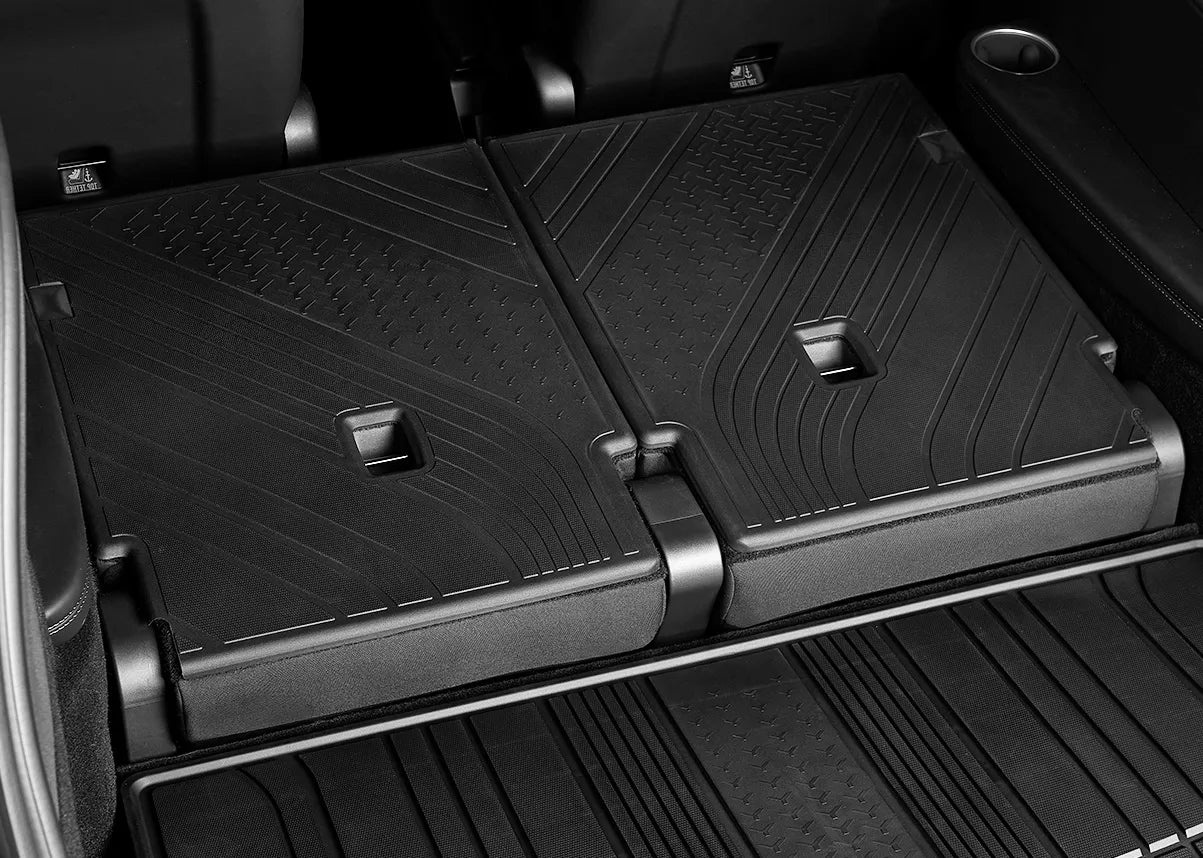
SUVs and crossovers benefit from a larger coverage area with raised sidewalls to contain mud, snow, and spills. It's particularly important for third-row models that haul kids, pets, and cargo in the same week.
Electric Vehicles (EVs)
EV floors have height and contour changes due to the battery pack. No mat for a gas model will fit an EV counterpart. Getting the fit right requires the fitment data scanned from the EV itself.
3W offers custom-fit floor mats for every vehicle type: sedans, trucks, SUVs, and EVs. And each one has been scanned and molded specifically for that model. The Tesla lineup includes the Model 3, Model Y, Model S, Model X, and Cybertruck, with dedicated floor, trunk, and seat-back liners built from Thorex™ TPE. Find your set by selecting your make, model, and year in 3W's vehicle-specific collections.
Conclusion
Investing in a top-notch vehicle floor mat means long-term protection, consistent comfort + safety, and superior resale value. And you're to figure out the best available option from 3W, Husky Liners, WeatherTech, and SMARTLINER. Each brand brings unique strengths, though the right fit depends on how you drive, where you drive, and the lifestyle you lead.
Weigh features, performance, and pricing to secure peace of mind every time you step into your car. And that's where 3Wliners custom-fit floor mats outshine others for the most part. Enter your vehicle details, find the best purchase, and keep your ride sharp + fresh for years to come.


Frequently Asked Questions (FAQs)
1. Are custom-fit floor mats worth the money?
Yes, for most daily drivers. The higher upfront price buys full footwell coverage, a secure anchored fit, and a long-lasting material. Such features are rarely available on cheaper alternatives, such as a universal mat.
2. Can I use the same custom-fit mat in a different vehicle?
No. A custom-fit mat is molded for one specific make, model, and year. Therefore, a set built for one vehicle won't line up correctly with another, even a similar-looking model from the same brand.
3. Does 3W make custom floor mats for my vehicle?
3W covers a wide range of sedans, trucks, SUVs, and EVs, including Tesla, Toyota, Ford, and many other popular makes. Check 3W's homepage by entering your exact make, model, and year to confirm the exact fitment.
4. How long do custom-fit floor mats last?
A quality injection-molded liner in TPE or a similar rubber-like plastic lasts several years with basic rinsing and wiping. The built-in material resists cracking and staining that shortens the life of cheaper mats.

Leave a comment
All comments are moderated before being published.
This site is protected by hCaptcha and the hCaptcha Privacy Policy and Terms of Service apply.