


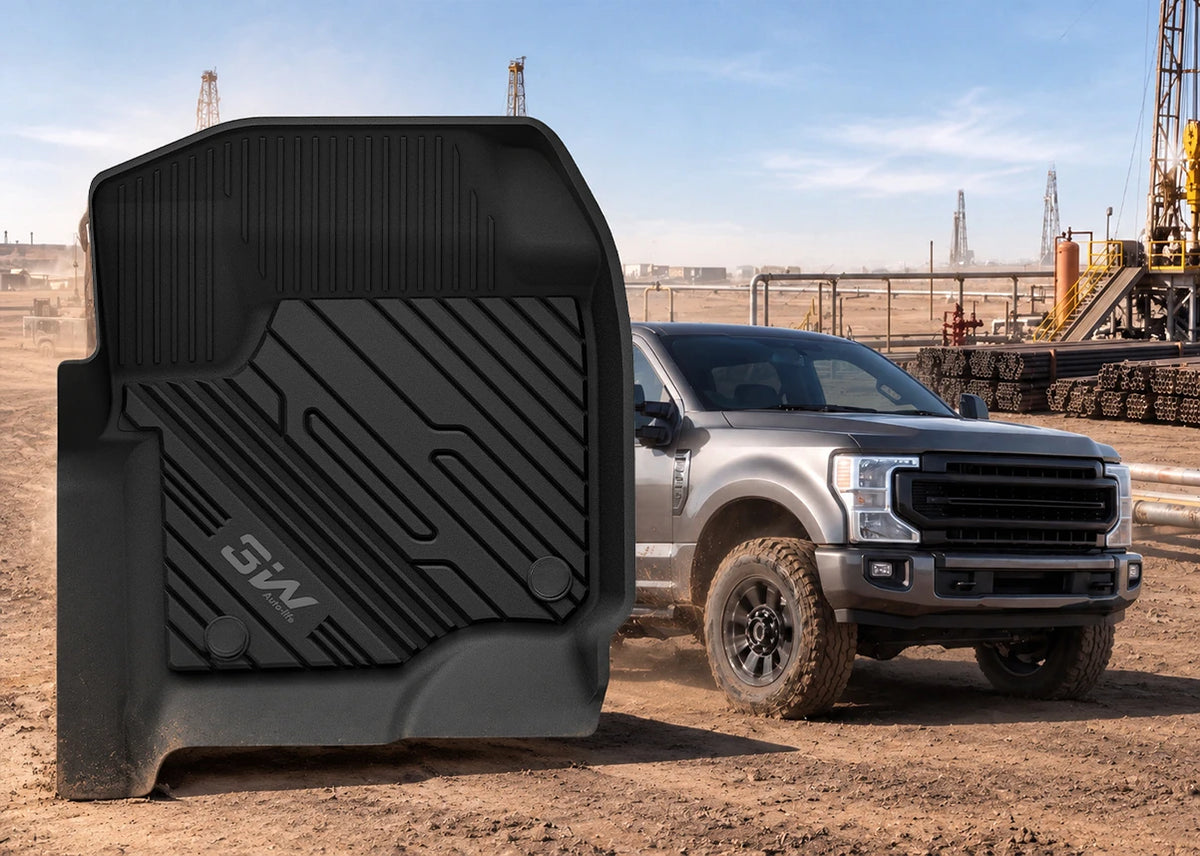
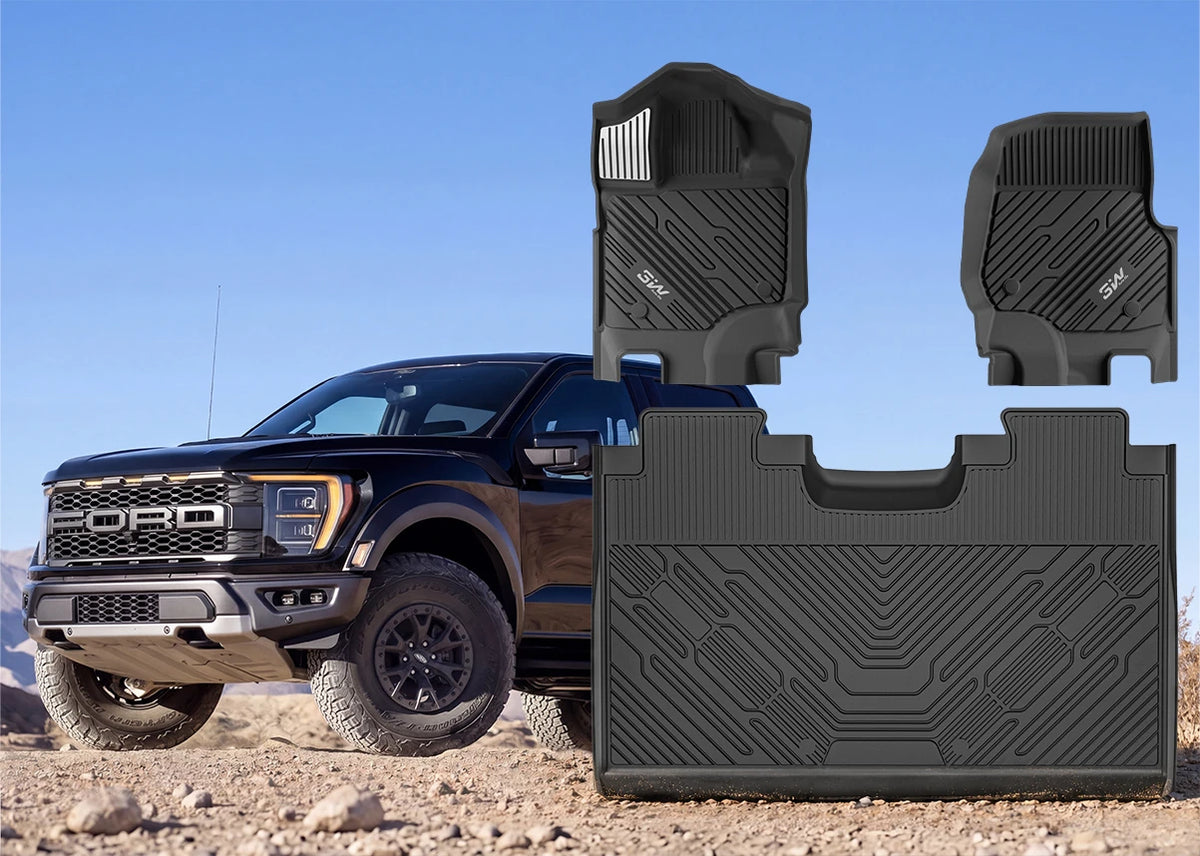
The best floor mats for oil field trucks are custom-fit, all-weather floor liners with a non-porous surface, raised edges, and secure vehicle-specific retention. For drilling crews, frac operators, roughnecks, and well-servicing technicians, these features help manage the mud, sand, dust, and everyday liquid residue tracked into the cab during long shifts.
Oil field trucks face a different cleaning challenge from ordinary commuter vehicles. Workers may climb into the cab after walking across muddy well pads, dusty access roads, sand-handling areas, and equipment staging zones. Repeated entry and exit can quickly transfer debris from work boots to the driver's footwell, passenger floor, and rear seating area.
3W Thorex™ TPE Floor Liners offer a practical option for workers who want vehicle-specific interior protection. TPE (thermoplastic elastomer) is a flexible material with a non-porous surface that helps keep ordinary dirt and liquid residue from soaking into the liner itself. The removable design also makes routine cleaning easier than dealing with contaminants embedded in carpet fibers. [1][2]
What Makes Oil Field Truck Floor Contamination Different?
Oil field trucks encounter a combination of mud, abrasive particles, moisture, and worksite residue that can accumulate quickly during a typical shift. Understanding these contaminants helps drivers choose floor protection that matches their actual working conditions.
Drilling Mud and Well-Site Sludge
Drilling mud is one of the most common contaminants workers may track into a truck cab. Depending on the drilling operation, drilling fluids can contain water, clay-based materials, weighting agents, salts, and other additives.
When mud-covered boots enter the vehicle, residue can collect around the driver's footwell, floor channels, and door-side carpet. Once it dries, the material may become harder to remove from fabric surfaces.
A non-porous TPE floor liner provides a more practical cleaning surface than carpet for ordinary mud contamination. Loose material can be removed first, followed by rinsing and cleaning with a mild automotive cleaner when necessary.
Frac Sand and Fine Industrial Dust
Frac sand and other fine particles can accumulate inside trucks used by hydraulic fracturing crews. These materials are commonly carried into the cab on boot treads, work clothing, and equipment.
Repeated foot movement can grind abrasive particles against carpet fibers and make the interior harder to clean. A removable TPE liner provides a separate surface where sand and dust can collect before being removed with a vacuum, brush, or water rinse.
For workers who regularly visit sand-handling areas, coverage around the driver's footwell is particularly important.
Oil, Grease, and Everyday Fluid Residue
Oil field workers may encounter petroleum residue, grease, and other automotive fluids around production equipment and maintenance areas. Small amounts of residue can transfer from footwear to the vehicle floor, leaving stains and unpleasant buildup.
A non-porous floor liner makes ordinary surface cleanup easier than cleaning absorbent carpet. However, resistance to routine automotive oils should not be interpreted as universal resistance to crude oil, concentrated solvents, or every chemical used at a well site.
Workers should follow site-specific contamination procedures and consult the relevant safety data sheet (SDS) when hazardous substances are involved.
Frequent Entry and Exit During Long Shifts
Repeated entry and exit is another reason oil field trucks need practical interior protection. Every trip between the cab and a rig site can introduce another layer of dust, mud, and debris.
A removable floor liner makes it easier to manage accumulated dirt between shifts, particularly on the driver's side, where work boots create the most frequent contact.
How TPE Floor Liners Help Protect Truck Interiors
TPE floor liners help manage everyday oil field dirt through a combination of non-porous surface construction, molded coverage, and removable installation. These features make routine interior maintenance more convenient for workers who regularly encounter muddy and dusty conditions.
Non-Porous Surface: Keep Everyday Dirt on the Liner
A non-porous surface helps prevent ordinary liquid residue from soaking into the liner material. Instead of penetrating carpet fibers, mud and moisture generally remain on the TPE surface until they are cleaned.
For example, when a worker tracks wet soil into the cab, the residue can collect on the liner rather than directly contacting the factory carpet. This makes routine cleanup more straightforward.
The distinction is important: a non-porous surface does not guarantee that every spill will remain contained. Actual performance depends on the amount of liquid, liner coverage, edge height, and installation.
Raised Edges: Help Contain Mud and Moisture
Raised edges help keep everyday dirt and liquid residue within the floor liner's footprint. This is particularly useful when contamination collects near the door sill, transmission tunnel, or passenger-side footwell.
Unlike a flat universal mat, a vehicle-specific liner is shaped around the contours of the vehicle's interior. This helps provide more complete coverage in areas where debris commonly accumulates.
3W Thorex™ TPE Floor Liners are designed for specific vehicle interiors rather than a one-size-fits-all fit. Buyers should still check the coverage and dimensions shown on the individual product page because edge height and coverage can vary by vehicle application. [1]
Flexible TPE Material for Everyday Handling
TPE combines flexibility with the practical surface characteristics required for automotive floor protection. This makes it suitable for a removable liner that may need to be lifted, cleaned, and reinstalled regularly.
3W identifies its Thorex™ material as having an odor-performance temperature range of -4°F to 167°F. This specification should be understood within the manufacturer's stated material claims rather than as a guarantee of identical performance under every operating condition. [2]
What Chemical Resistance Does—and Does Not—Mean
3W describes its Thorex™ TPE material as resistant to chemicals, oils, and spills. This is relevant to routine automotive contamination and everyday maintenance. [2]
However, industrial chemical exposure is different from ordinary road grime. Concentrated acids, solvents, biocides, frac fluids, and well-treatment chemicals may affect materials differently depending on their formulation, concentration, temperature, and contact time.
A floor liner should never replace chemical-resistant footwear, personal protective equipment, spill-control materials, or site-specific safety procedures. If a hazardous substance enters the vehicle, follow its SDS and the employer's cleanup instructions.
What to Look for When Buying Truck Floor Mats for Oil Field Work
The best truck floor mats for oil field workers should combine accurate vehicle fitment, adequate coverage, easy cleaning, and secure installation. Material alone does not determine whether a liner is suitable for a demanding work environment.
Custom Fit for the Exact Truck Configuration
Vehicle fitment should be the first consideration when buying floor liners for a work truck. A liner designed for the wrong model year or cab configuration may leave exposed carpet or fail to align with the factory retention points.
Before ordering, check:
- Model year and vehicle generation.
- Make and model.
- Cab configuration, such as Regular Cab, Double Cab, Crew Cab, or SuperCrew.
- Whether the product covers the first row, second row, or both.
- Compatibility with the vehicle's factory retention system.
For example, a Ford F-150 SuperCrew and a Ford F-150 Regular Cab do not have identical interior floor layouts. The same applies to different cab configurations of the Chevrolet Silverado, Ram 1500, and Toyota Tundra.
Always verify the exact fitment listed on the product page rather than choosing a liner based on the truck model name alone.
Raised Edges and Footwell Coverage
Raised edges help contain everyday dirt and liquid residue within the liner area. For workers who frequently enter the cab with muddy boots, coverage around the driver's footwell is particularly important.
Check whether the liner covers areas where debris commonly accumulates, including the outer footwell, transmission tunnel, and passenger-side floor.
A properly designed liner should also avoid interfering with the accelerator, brake pedal, or other vehicle controls.
Secure Retention and Anti-Slip Design
A floor liner must remain properly positioned during driving. Look for a product designed to work with the vehicle's original floor anchors and retention points.
This is especially important for oil field workers who may wear heavy work boots with deep tread patterns. A shifting or curled liner can create a driving hazard.
Never install a new liner over an existing floor mat. Remove the original mat, use the designated retention points, and confirm that the liner does not obstruct pedal movement before driving. [3]
Easy Removal and Routine Cleaning
Removable liners are easier to maintain because workers can take them out of the cab to remove accumulated mud, dust, and loose particles.
A non-porous surface can reduce the effort required for ordinary cleanup. However, heavily contaminated liners may still require mild detergent, a soft brush, and additional rinsing.
Warranty and Long-Term Ownership
Warranty coverage is another factor worth checking before purchasing floor liners. 3W offers a Lifetime Warranty for qualifying material and workmanship defects under normal use. [4]
The warranty is limited to the original purchaser and the original vehicle of installation. It excludes normal wear, accidents, chemical contamination, misuse, and improper maintenance. It is also non-transferable.
For oil field workers, this distinction matters: a lifetime warranty should not be interpreted as protection against damage caused by industrial chemicals or unusually harsh worksite exposure. [4]
TPE vs. Rubber vs. Carpet: Which Material Is Better for Oil Field Trucks?
TPE is a practical choice for oil field trucks when easy cleaning, flexible handling, and custom-fit coverage are priorities. Rubber and carpet can still suit other needs, but each material has different maintenance requirements.
| Buying factor | TPE Floor Liners | Rubber Floor Mats | Carpet Floor Mats |
| Mud and dirt cleanup | Non-porous surface is easy to wipe or rinse | Depends on surface texture and compound | Dirt can become embedded in fibers |
| Liquid residue | Helps prevent ordinary liquids from soaking into the liner | Depends on material and design | Absorbs moisture more readily |
| Fine dust and sand | Can be removed from the surface | May collect in textured areas | Can become embedded in fibers |
| Flexibility | Flexible, depending on formulation and temperature | Varies by rubber compound | Flexible fabric construction |
| Odor maintenance | 3W states Thorex™ has no odor within its stated temperature range | Varies by formulation and use | Can retain odors when contaminated |
| Cleaning | Removable and washable | Depends on design and material | Often requires vacuuming or extraction |
| Best use case | All-weather protection and frequent routine cleaning | Basic utility protection | Appearance and everyday dry-weather use |
TPE: A Balanced Option for Frequent Cleaning
TPE floor liners are well suited to drivers who regularly bring mud, moisture, and dust into their vehicles. Their non-porous surface makes routine cleanup more straightforward, while custom-fit designs help protect more of the factory floor.
3W Thorex™ TPE Floor Liners are an option for truck owners who want vehicle-specific coverage and a removable surface that can be rinsed and cleaned.
The brand's 2026 Easter Jeep Safari announcement also highlighted its custom-fit TPE floor mats in Moab's dusty off-road environment, where mud, sand, and red dust are common cleaning challenges. This provides a relevant real-world use case for everyday dirt management, although it is not an industrial chemical-resistance test. [5]
Rubber: Performance Depends on the Compound
Rubber floor mats are available in different formulations, thicknesses, and surface designs. Some are designed for heavy-duty utility use, while others prioritize affordability and basic protection.
It would be inaccurate to say that all rubber mats absorb hydrocarbons, swell, or crack under oil field conditions. Their performance depends on the rubber compound and the specific substances they encounter.
When comparing rubber and TPE, consider whether the mat is vehicle-specific, how easily it can be cleaned, whether it stays in place, and whether the manufacturer provides relevant material information.
Carpet: Better for Appearance Than Heavy Worksite Contamination
Carpet mats can provide a more finished interior appearance and may be suitable for vehicles used mainly for commuting.
However, they are less convenient when workers regularly track wet mud, sand, and liquid residue into the cab. Removing embedded dirt and moisture from carpet typically requires more effort than rinsing a removable non-porous liner.
For trucks that regularly visit active rig sites, carpet is generally less practical as the primary floor-protection surface.
How to Clean Truck Floor Liners After a Rig-Site Shift
Routine cleaning helps prevent accumulated mud, dust, and residue from becoming harder to remove. For oil field workers, the appropriate cleaning method depends on the type of contamination and whether the material is safe to handle.
Step 1: Remove Loose Dust and Sand
Start by removing loose particles before adding water. Shake the liner gently or use a suitable vacuum to collect dry sand and dust.
Removing loose abrasive material first helps prevent it from being dragged across the surface during wet cleaning.
Step 2: Remove the Floor Liners
Take the liners out of the vehicle using the recommended removal method. Check that the vehicle's floor anchors and surrounding carpet are free from accumulated debris.
Do not pull aggressively on retention clips or fastening points. Follow the manufacturer's installation and removal instructions.
Step 3: Rinse and Clean Ordinary Dirt
For routine mud and dust, rinse the liner with water and use a mild automotive cleaner if necessary. A soft brush can help remove dried residue from textured areas and corners.
3W's cleaning guidance recommends removing loose grit first, using mild cleaning products, and avoiding aggressive high-pressure washing that may affect the surface texture. [3]
Do not use strong solvents, concentrated degreasers, or industrial cleaning chemicals unless the manufacturer specifically confirms that they are compatible with the material.
Step 4: Dry Before Reinstallation
Remove excess water and allow the liner to dry before reinstalling it. Check the underside and the vehicle floor for trapped moisture or debris.
Once the liner is clean and dry, position it correctly and reconnect the factory retention points. Confirm that it is secure and that the pedals move freely.
Important: Do Not Treat Chemical Contamination as Ordinary Dirt
A small amount of ordinary road grime is different from a spill involving concentrated acids, biocides, solvents, or well-treatment fluids.
If a hazardous substance enters the cab, do not assume that water alone will make the liner safe. Follow the relevant SDS, site procedures, and employer instructions. If necessary, arrange professional decontamination or replacement of contaminated materials.
Which Truck Floor Mats Fit Popular Oil Field Work Trucks?
The correct floor liner depends on the truck's model year, cab configuration, and interior floor layout. Oil field workers should verify those details before choosing a product.
Ford F-150
The Ford F-150 is commonly used for worksite transportation, field inspections, and service duties. Buyers should distinguish between Regular Cab, SuperCab, and SuperCrew configurations because their floor layouts differ.
For a 3W Ford F-150 floor liner, confirm the supported model years and cab configuration on the product page. Do not assume that a liner designed for one generation or cab style will fit another.
Chevrolet Silverado 1500
The Chevrolet Silverado 1500 is used across a range of personal, commercial, and worksite applications. Its Regular Cab, Double Cab, and Crew Cab versions have different interior dimensions.
When selecting a Silverado floor liner, check both the model year and cab configuration. If the truck is used by a multi-person crew, consider whether second-row coverage is needed as well.
Ram 1500
Ram 1500 owners should verify the exact cab style and model year before purchasing a liner. Crew Cab and Quad Cab interiors are not interchangeable by default.
A vehicle-specific liner can provide better coverage around the footwell and floor contours than a universal mat, provided the correct fitment is selected.
Toyota Tundra
Toyota Tundra buyers should check whether the product supports the exact model year and CrewMax or Double Cab configuration. Some product listings are limited to specific cab styles or model-year ranges.
For trucks used on dusty or muddy work sites, front and rear coverage can help reduce the amount of debris that reaches the factory carpet.
Fitment reminder: Always use the vehicle selector and compatibility notes on the relevant 3W product page. If the truck has an unusual trim, aftermarket interior modification, or a configuration not listed, confirm compatibility with the manufacturer before ordering.
Are 3W Thorex™ TPE Floor Liners Suitable for Every Oil Field Application?
3W Thorex™ TPE Floor Liners are a practical option for routine truck-interior protection, but they are not suitable for every type of industrial contamination or worksite requirement.
They may be a good fit for workers who:
- Regularly track ordinary mud, dust, sand, and road debris into the cab.
- Want a vehicle-specific alternative to universal floor mats.
- Prefer a non-porous surface that can be removed and cleaned.
- Need front-row or second-row coverage for a work truck.
- Want to reduce routine cleaning of the factory carpet.
They may not be the right solution when:
- The vehicle regularly carries or encounters bulk hazardous chemicals.
- Concentrated acids, solvents, or well-treatment fluids may spill directly into the cab.
- The employer requires certified chemical-resistant flooring or specialized containment equipment.
- The truck's interior has been modified and the available liner fitment cannot be confirmed.
- The primary requirement is protection against heavy mechanical damage rather than ordinary dirt and liquid residue.
For these situations, workers should follow site safety requirements and select protection specifically rated for the chemicals and hazards involved.
Conclusion: Choose Floor Liners That Match the Reality of Oil Field Work
The best floor mats for oil field trucks should make everyday mud, dust, sand, and liquid residue easier to manage without compromising fitment or driving safety. Custom-fit TPE floor liners offer a practical combination of non-porous surface protection, removable construction, and vehicle-specific coverage.
3W Thorex™ TPE Floor Liners are worth considering for oil field workers who want to reduce routine carpet contamination and simplify cleaning after a long shift. Their value comes from practical interior protection—not from replacing industrial chemical safeguards or guaranteeing resistance to every substance found on a rig site.
Before buying, confirm the exact truck fitment, check the liner's coverage and retention system, and review the manufacturer's care and warranty terms. For workers who regularly return from muddy or dusty job sites, a properly fitted and regularly cleaned floor liner can make maintaining a work truck's interior much easier.
Frequently Asked Questions
1. What are the best floor mats for oil field trucks?
Custom-fit TPE floor liners are a practical choice for oil field trucks because their non-porous surfaces are easier to clean than carpet when exposed to ordinary mud, dust, and liquid residue. The best option should also match the truck's exact model year and cab configuration.
2. Can TPE floor mats handle drilling mud?
Yes. TPE floor liners have a non-porous surface that makes ordinary drilling mud easier to remove than from carpet fibers. Remove loose debris first, then rinse and clean the liner according to the manufacturer's care instructions.
3. Are TPE floor mats resistant to crude oil and diesel?
3W describes its TPE material as resistant to oils and spills, but this should not be interpreted as a guarantee against every crude oil, fuel, or petroleum-based chemical exposure. For substantial contamination, check material compatibility and follow the relevant safety procedures.
4. Will frac sand damage TPE floor liners?
Ordinary sand and dust can generally be removed from a TPE surface by brushing, vacuuming, or rinsing. However, repeated contact with abrasive particles can still cause surface wear over time, so regular cleaning is recommended.
5. Can I use a pressure washer to clean 3W TPE floor mats?
It is better to follow the manufacturer's recommended cleaning method and use standard water pressure with mild cleaner when necessary. Avoid aggressive pressure washing or harsh chemicals that may affect the liner's surface.
6. Do I need custom-fit floor mats for a Ford F-150 or Chevrolet Silverado work truck?
Yes. Choosing a vehicle-specific liner is recommended because different model years and cab configurations can have different floor shapes and anchor locations. Check the product's compatibility information before ordering.
References
[1] 3W Liners – Floor Liners Collection. https://3wliners.com/collections/floor-liners
[2] 3W Liners – Official FAQ: Thorex™ TPE Material, Temperature Range, and Product Information. https://3wliners.com/pages/faq
[3] 3W Liners – How to Clean Floor Mats Properly: Step-by-Step for TPE, Rubber, and Cargo Liners. https://3wliners.com/blogs/car-mats/how-to-clean-floor-mats-properly-step-by-step-for-tpe-rubber-and-cargo-liners
[4] 3W Liners – 3W Lifetime Warranty: Coverage, Exclusions, and Claim Process. https://3wliners.com/pages/3w-lifetime-warranty
[5] PR Newswire – 3W Auto-Life Floor Mats Take on Moab's Famous Red Dust with First Easter Jeep Safari Showcase (March 25, 2026). https://www.prnewswire.com/news-releases/3w-auto-life-floor-mats-take-on-moabs-famous-red-dust-with-first-easter-jeep-safari-showcase-302724969.html
[6] PR Newswire – 3W Auto-life Marks 10 Years of Crafting Premium Floor Mats for Vehicles With Celebratory Deals, Contests, and a Durability Challenge (September 9, 2025). https://www.prnewswire.com/news-releases/3w-auto-life-marks-10-years-of-crafting-premium-floor-mats-for-vehicles-with-celebratory-deals-contests-and-a-durability-challenge-302550495.html

Leave a comment
All comments are moderated before being published.
This site is protected by hCaptcha and the hCaptcha Privacy Policy and Terms of Service apply.