




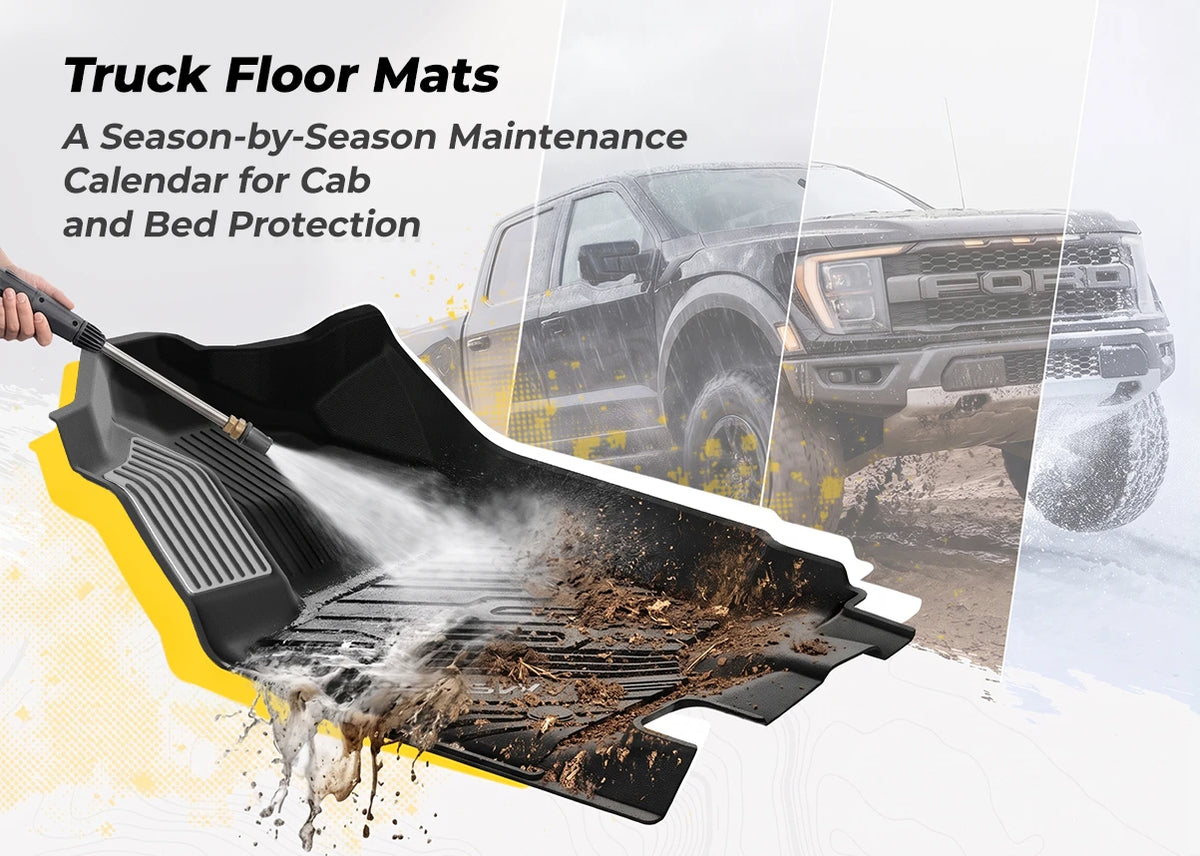
Most truck owners clean their floor mats exactly once: when the dirt becomes impossible to ignore. By that point, road salt has already spent three months crystallizing into carpet fibers, spring meltwater has saturated the padding beneath the driver's footwell, and a summer's worth of construction-site dust has ground itself into the weave like sandpaper. Reactive cleaning — waiting until the mats look bad — is the reason factory carpet in a three-year-old work truck often looks worse than the exterior paint.
A seasonal maintenance routine flips the script. Instead of deep-cleaning once a year when the damage is already done, you spend five to ten minutes per season addressing the specific threats that each weather pattern brings. This calendar walks through what your truck cab mats and truck bed mats need in spring, summer, fall, and winter — and how choosing the right material makes every season's cleanup faster.
Why a Seasonal Routine Outperforms Reactive Cleaning
Floor mat damage is cumulative and seasonal. Winter road salt does not stain carpet on contact — it dissolves into brine, seeps through mat gaps, and crystallizes as it dries, mechanically abrading carpet fibers over weeks. Summer UV exposure does not melt a floor mat — it slowly degrades the polymer structure, making the material brittle by the time autumn arrives and the first freeze-thaw cycle cracks it open.
A seasonal maintenance schedule addresses each threat in the window when it is most active. Spring is for removing salt residue and inspecting for winter damage. Summer is for preventing UV degradation and abrasive dust buildup. Fall is for pre-winter inspection and organic-stain treatment. Winter is for weekly salt-and-slush removal before brine has time to migrate. Each season's task takes minutes. Skipping a season means paying for it later in carpet replacement or premature mat failure.
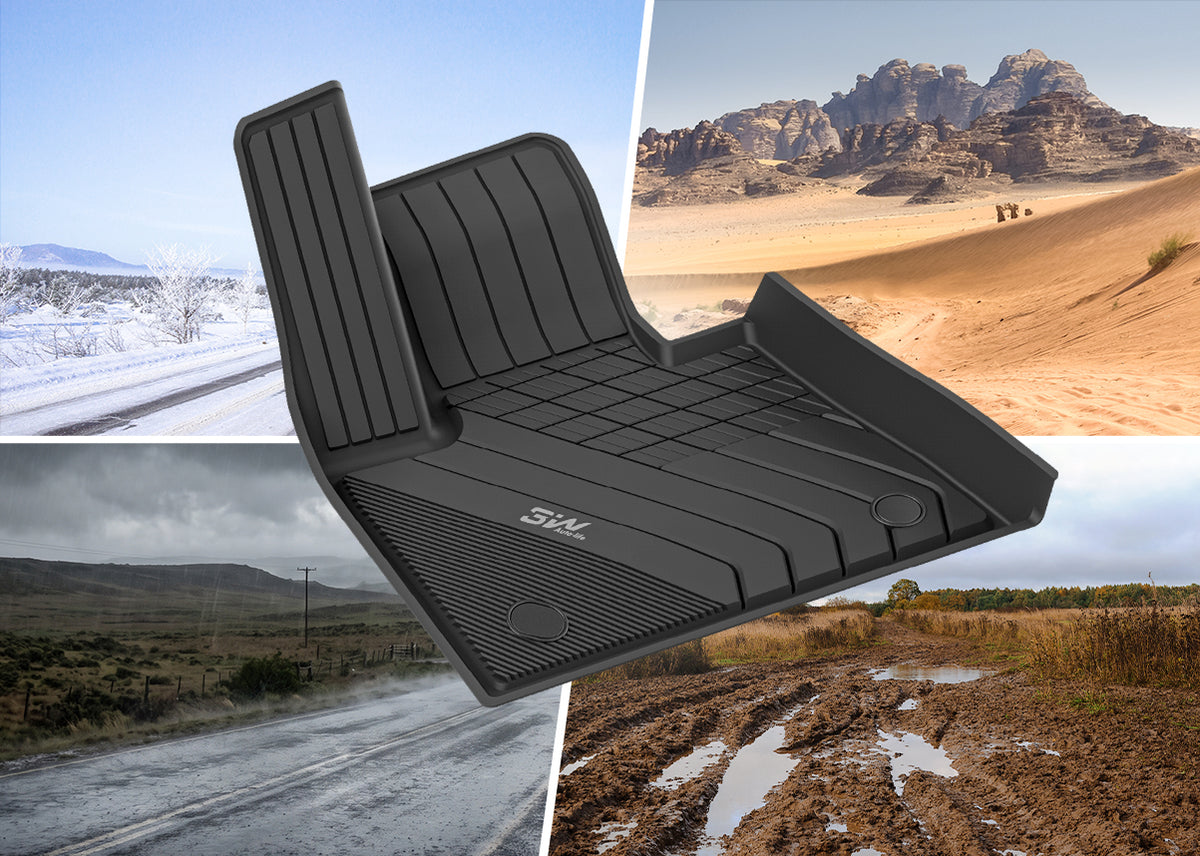
The material underfoot determines how much work each season requires. TPE (thermoplastic elastomer) — the material used in 3W truck floor mats and truck bed mats — stays pliable from −13°F to 175°F, does not absorb moisture, and can be hosed off directly with no drying time [1]. Rubber mats stiffen in winter and off-gas in summer. Carpeted mats absorb everything and need extraction cleaning. The material choice determines whether seasonal maintenance is a five-minute rinse or an hour-long ordeal.
Spring: Mud Season — Deep Clean After the Thaw
Spring is the dirtiest season for truck interiors. Melting snow mixes with thawing ground to create mud soup, and every jobsite, trailhead, and gravel road turns into a slurry that boots track directly onto the floor mat. Simultaneously, the salt residue that accumulated over winter — invisible when dry — reactivates with spring moisture and becomes corrosive brine.
What to Do
Pull both front and rear cab mats completely out of the truck. Hose them down on a driveway or yard surface — TPE mats shed mud with water pressure alone, no scrubbing required for surface dirt [1]. Inspect the mat surface for any cracks, splitting, or deformation that may have developed during winter freeze-thaw cycling. Pay particular attention to the areas around retention-post holes and along raised perimeter edges — these are the highest-stress points.
While the mats are out, inspect the carpet underneath. Look for salt staining (white crystalline residue), moisture rings, or areas where the carpet pile appears flattened or degraded. If salt staining is present, vacuum the affected area thoroughly before reinstalling the mats. Salt left in carpet fibers will continue to abrade the material even after the visible stain fades.
For 3W truck bed mats, spring means clearing out any debris — leaves, gravel, construction waste — that accumulated under the mat over winter. The 3D-scanned TPE bed mats are designed to be lifted out for cleaning, but debris trapped underneath for months can trap moisture against the bed surface, accelerating corrosion on steel beds [2].
How Often
Every two weeks during the spring thaw period (typically March through May in most of the US). After a heavy rainstorm that follows a snowmelt, pull the mats that same weekend — delayed salt removal is the #1 cause of premature carpet damage in work trucks.
Summer: Heat, Dust, and UV Management
Summer's threats are less visible than winter salt, but they compound over time. Direct sunlight through the windshield subjects cab mats to surface temperatures well above ambient air — a closed truck cab in Phoenix can hit 130°F internally, and the floor mat surface exposed through the side window can exceed 150°F. TPE mats rated to 167°F handle this without deforming [1]. Lower-grade rubber and plastic mats can soften, warp, or develop a sticky surface film at these temperatures.
Dust and fine sand — kicked up from gravel roads, construction sites, and dry trailheads — settle into the mat's tread channels and, over weeks of foot traffic, grind against both the mat surface and any carpet fibers exposed at the edges.
What to Do
A weekly quick rinse keeps summer maintenance under control. Pull the cab mats, give them a thirty-second hose-off, shake off the excess water, and reinstall — the entire process takes under five minutes per vehicle with single-layer TPE mats [1]. For bed mats, sweep or hose out accumulated dust and sand. The 3W truck bed mats include textured tread channels that trap loose debris, but those channels need to be cleared periodically or the debris itself becomes abrasive under heavy cargo.
Check the mat surface for signs of UV bleaching or fading. Minor color shift is cosmetic and does not affect function. But if the mat surface feels tacky, brittle, or shows visible cracking along the raised edges, it may be approaching the end of its service life — and fall is the right time to replace it, before winter salt puts a degraded mat to the test.
How Often
Weekly during the peak summer months (June through August), especially if the truck is regularly parked outdoors. For trucks kept in covered parking or used primarily on paved roads, every two weeks is sufficient.
Fall: Pre-Winter Inspection and Organic Debris
Fall is the preparation season — the last chance to address mat damage before road salt, slush, and freeze-thaw cycles stress every weak point to failure.
What to Do
Pull all cab mats and perform a detailed inspection. Check every retention-post hole for elongation or tearing — a mat that has stretched around its anchors will creep forward under braking, and NHTSA has documented accelerator pedal entrapment incidents caused by unsecured or incompatible floor mats [3]. Verify that each factory retention clip engages firmly and seats flush.
Treat any organic stains — wet leaves, acorn tannins, pine sap — before they set. TPE mats resist most organic staining, but leaves left to decompose in the footwell for weeks can leave behind acidic residue that etches into lighter-colored mats. A mild all-purpose cleaner and a stiff-bristle brush remove organic stains from TPE without damaging the surface [1].
For bed mats, remove all leaf litter and organic debris that has collected along the bed walls and under the mat edges. Wet leaves trapped between the mat and the truck bed hold moisture against the surface for weeks — on a steel bed, this creates a corrosion cell.
Wet leaves trapped between the mat and the truck bed hold moisture against the surface for weeks, and on a steel bed that is how corrosion starts. 3W's own maintenance guidance is to remove the mat regularly and wash away the dirt and liquids that collect underneath, and to keep both the mat and the bed dry — so a season's worth of trapped organic material is something no mat can compensate for [2].
How Often
At least one thorough fall inspection in late October or early November, timed before the first significant snowfall. For trucks that park under trees or operate on wooded job sites, add a quick leaf-clear every two weeks through November.
Winter: Road Salt, Slush, and Freeze-Thaw Survival
Winter is the highest-stakes season for floor mat maintenance. Road salt — primarily sodium chloride and calcium chloride — dissolves in melting slush to form a brine that seeps through any gap in floor mat coverage. As the brine dries inside the warm cab, salt crystals form inside carpet fibers, mechanically shredding them from the inside out. This damage is irreversible: once carpet fibers are abraded by crystallized salt, no amount of steam cleaning restores the original texture or color.
What to Do
A weekly hose-off is the minimum viable winter maintenance routine. Pull the mats, spray them down — cold water works fine; the goal is to dissolve and flush salt before it dries — and then let the cleaned mat dry completely before you reinstall it, exactly as 3W's own winter guidance recommends. TPE does not absorb water, but 3W's instruction is still to reinstall the mat dry, so that nothing is left trapped against the carpet or against the bed floor [1][2].
After any heavy snowstorm or extended period of road-salt application, check the mats within 48 hours. The sooner salt residue is removed, the less time it has to migrate into the carpet. Pay extra attention to the driver's footwell, the area around the accelerator and brake pedals, and the door-sill edges — these are the highest-traffic zones and the most common entry points for slush.
For bed mats in winter, clear snow and ice before it freezes into a solid layer. A frozen sheet of ice covering the bed mat makes the truck bed unusable until it thaws and, more importantly, its expansion during freeze cycles can stress the mat-to-bed interface. TPE bed mats resist cracking in sub-freezing temperatures, but ice bonded to the mat surface makes loading cargo hazardous [2].
How Often
Weekly throughout the winter salt season (typically November through March in northern states). In regions with mild winters and minimal road-salt use, every two weeks is adequate. For trucks operated in the Upper Midwest, Northeast, or any area where road salt is applied more than 20 times per winter, consider a mid-week quick-rinse in addition to the weekend cleaning.
Cab Mats vs. Bed Mats: Different Jobs, Different Care
Cab floor mats and truck bed mats face different threats and require slightly different maintenance approaches — even when made from the same TPE material.
|
Surface
|
Primary Threats
|
Cleaning Method
|
Inspection Focus
|
Replacement Signal
|
|
Cab floor mats
|
Salt brine, mud, boot grit, spilled liquids
|
Hose off, wipe down, reinstall — under 5 minutes
|
Retention-post holes, raised edge integrity, tread depth
|
Cracks at anchor points, permanent deformation, non-functional retention clips
|
|
Truck bed mats
|
Cargo abrasion, UV exposure, chemical spills, trapped moisture
|
Lift out, hose or sweep, clear debris underneath
|
Underside moisture damage, surface gouges, UV fading
|
Deep gouges exposing bed surface, warping that prevents flat lay, cracking at wheel-well contours
|
Deep gouges exposing bed surface, warping that prevents flat lay, cracking at wheel-well contours
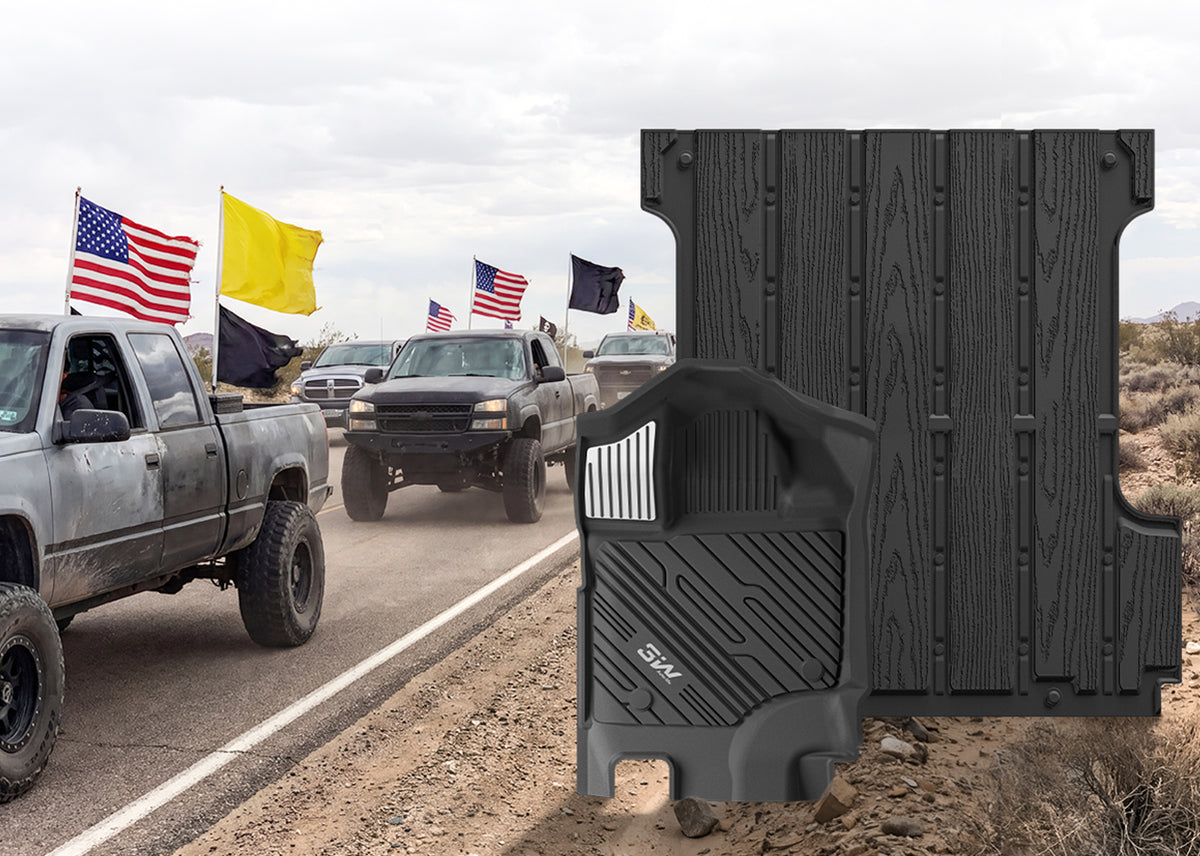
The 3W truck bed mats use a 3D-scanned TPE construction that conforms to wheel wells and bed contours without trimming, fitting truck beds from 4.5 feet to 6.8 feet depending on the model [2]. Unlike drop-in plastic bed liners, a TPE bed mat is a single custom-molded piece with no cavity to trap standing water underneath — but debris still has to be cleared seasonally, because 3W's own maintenance tip is to remove the mat and wash away what collects underneath, and to keep both the mat and the bed dry to prevent rust. Select models include four complimentary cargo stabilizers that lock into the mat to keep loads from shifting [2].
Select models include four complimentary cargo stabilizers that lock into the mat to keep loads from shifting.
When Mats Need Replacement, Not Just Cleaning
A maintenance calendar prolongs floor mat life, but it does not make mats immortal. Know the signs that a mat has reached end-of-service.
Deep cracks or splits at stress points. Surface-level scuffs are cosmetic. Cracks that penetrate through the full thickness of the material — especially around retention-post holes or along the raised perimeter walls — mean the mat can no longer contain liquid reliably. Replace it before the next winter salt season.
Permanent deformation. A mat that has warped, curled, or developed a memory-set wave from heat exposure will not return to its original shape. Gaps created by deformation are entry points for salt and water that no amount of cleaning can compensate for.
Non-functional retention. If the factory anchor clips no longer engage securely — whether because the mat's retention holes have stretched or the clips themselves have worn — the mat becomes a safety liability.
The Custom Floor Mats carry the 3W Lifetime Warranty, which covers defects in material and workmanship, non-normal cracking or tearing not caused by external trauma, retention-device failure, and significant fitment issues — for as long as you own the vehicle the mats were originally installed in [1][3]. The warranty is non-transferable and applies only to the original purchaser and the original vehicle of installation, and it excludes normal wear and tear (fading, natural discoloration, minor scuffing, surface abrasion), accidents including fire, chemical contamination and pet damage, and misuse [3]. Seasonal inspection is therefore a diagnostic step rather than a free-replacement trigger: if a mat shows non-normal cracking or a failed retention device, the warranty applies, while gradual fading, scuffing, and abrasion remain the owner's cost.
Frequently Asked Questions
How often should I clean my truck floor mats?
Every one to two weeks during winter and spring, every two weeks during summer and fall. The frequency increases when road salt is actively applied or when the truck regularly operates on mud, gravel, or construction sites. TPE mats clean in under five minutes with a hose and no drying time, so the labor cost of weekly cleaning is negligible [1].
What removes salt stains from truck floor mats?
Cold water and a stiff-bristle brush remove salt residue from TPE mats before it crystallizes. For salt that has already dried, a mixture of warm water and white vinegar (4:1 ratio) dissolves the mineral deposits without degrading the TPE material. Avoid abrasive scrubbers and solvent-based cleaners — they can micro-etch the mat surface and create texture that traps future salt more aggressively.
Do truck bed mats need the same maintenance as cab mats?
Not exactly. Bed mats face less salt exposure but more UV, cargo abrasion, and debris accumulation underneath the mat. Hose off the bed mat surface monthly and lift it out to clear trapped debris seasonally — fall and spring are the minimum. The 3W truck bed mats are removable and hose-off cleanable, but the underside needs periodic inspection for moisture trapped against the truck bed [2].
Are rubber or TPE floor mats easier to maintain through all four seasons?
TPE floor mats are easier to maintain year-round. Rubber mats stiffen in cold weather — making winter hose-offs slower and less effective — and off-gas a chemical odor during summer heat [1]. TPE stays flexible to −4°F, tolerates direct sun exposure to 167°F without warping, and releases mud and salt with water pressure alone. An independent SlashGear comparison of all-weather floor mat brands found that more than 80% of verified 3W buyers gave the mats a five-star rating, with reviewers specifically noting better fit and material quality compared to higher-priced alternatives [3].
How do I protect my truck carpet from mud during hunting and off-road season?
Pull your mats and hose them off immediately after returning from muddy terrain — the longer mud sits, the more moisture migrates into the carpet underneath. For extended off-road trips, a double-layer mat with a removable carpet insert over a waterproof TPE base provides an extra absorption barrier: the carpet top captures initial mud and moisture, while the TPE base prevents anything from reaching the factory carpet. A single-layer TPE mat with raised perimeter walls provides equivalent liquid containment for pure mud and water exposure [1].
Reference
[1] 3W: All-Weather Thorex™ Floor Mats for Ford F-150 SuperCrew (2015–2026): 3wliners.com/products/3w-all-weather-floor-mats-fit-ford-f150-supercrew-cab-2015-2025-with-original-folding-under-seat-storage-box
[2] 3W: Truck Bed Mats Collection — TPE Bed Protection for Pickup Trucks: 3wliners.com/collections/bed-mats-for-pickup-trucks
[3] SlashGear: Affordable WeatherTech Floor Mat Alternatives (January 6, 2026): slashgear.com/1749159/affordable-weathertech-floor-board-alternatives/
[4] 3W: 3W Lifetime Warranty: 3wliners.com/pages/3w-lifetime-warranty

Leave a comment
All comments are moderated before being published.
This site is protected by hCaptcha and the hCaptcha Privacy Policy and Terms of Service apply.