


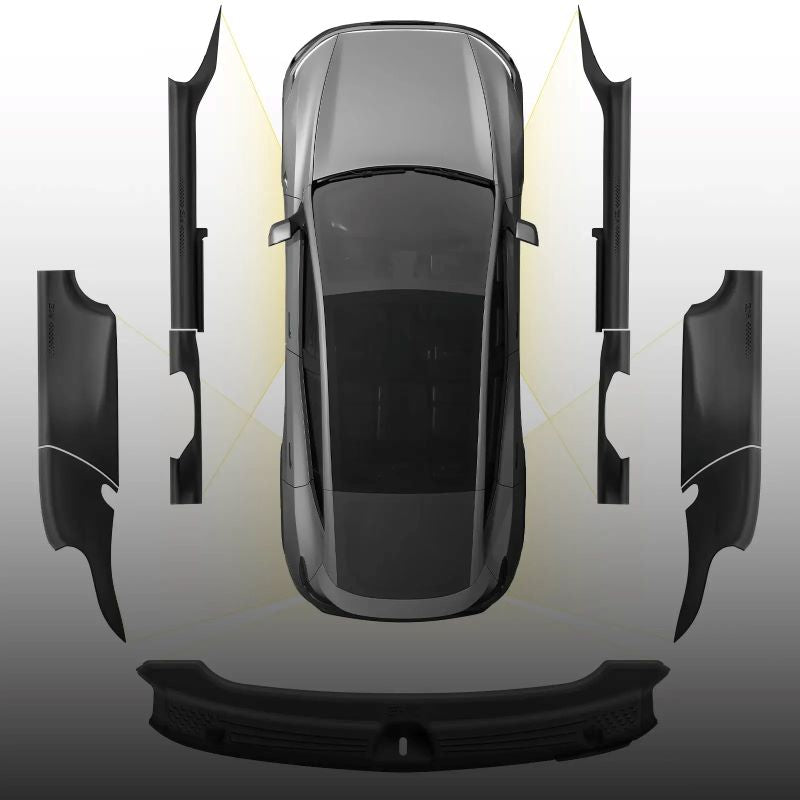
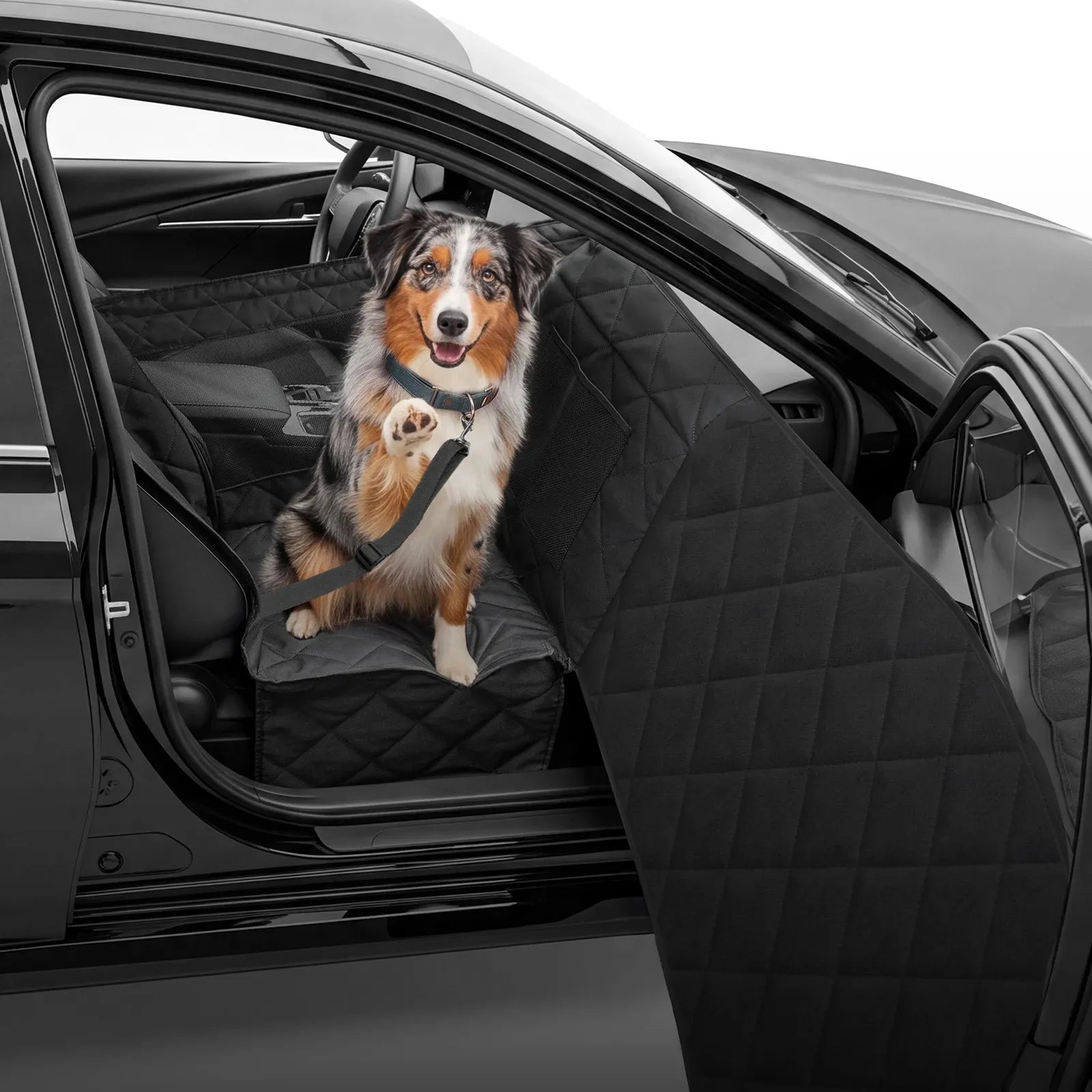
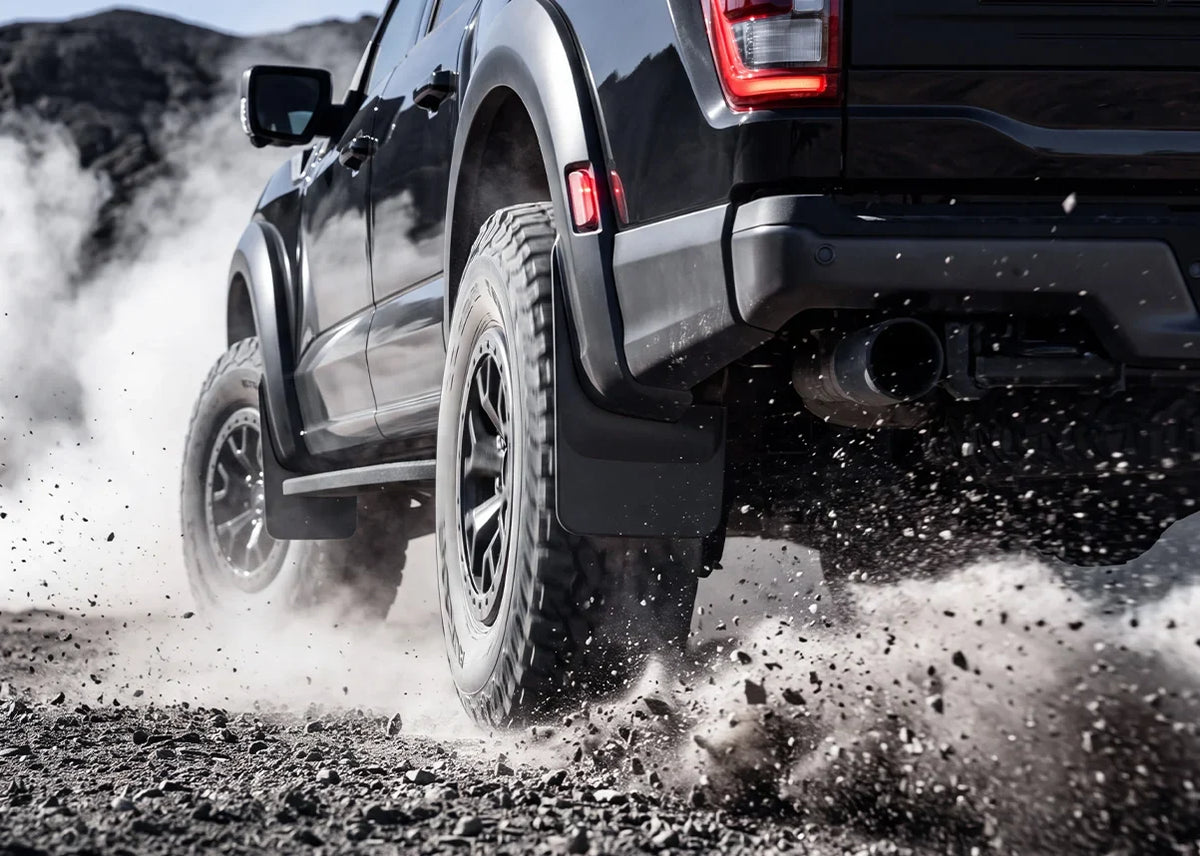
The rocker panels rust from the inside out. Road salt, gravel, and water pummel the undersides of your fenders every day; by the time you notice bubbling paint, the damage is significant. Restoring all corroded rocker panels at a body shop can cost between $800 and $2,500 per vehicle [3].
Mud flaps on work trucks can block splashes from reaching the metal. They consist of thin sheets attached to each wheel well that stop stone, mud, and water thrown up by the wheels as they turn [2]. Their main function is to provide effective protection and help reduce maintenance costs for fleets.
This guide covers how mud flaps work, which types suit which vehicles, and which options from 3W make sense for work trucks, fleets, and modern EVs.
What Mud Flaps Actually Do, and Why That Matters for Fleets
Mud flaps help keep vehicles clean by managing debris that can cause costly repairs to key areas on commercial vehicles, such as rocker panels and fender wells.
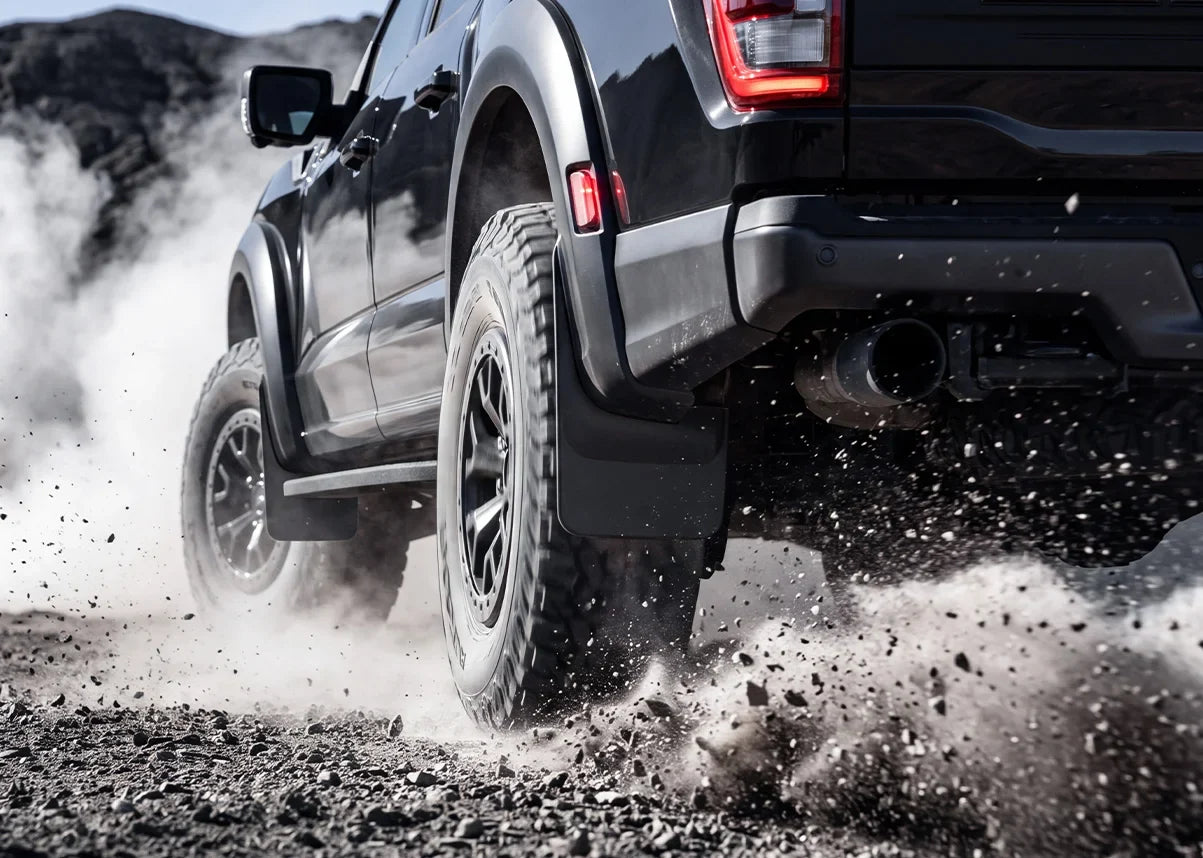
As a vehicle tire rotates, it acts as a catapult, picking up any road debris and launching it along a tangent - generally backward and upwards towards the vehicle bodywork or the one behind it [2].
The Rocker-Panel Problem
The rocker panel runs underneath each wheel well down near the doors and lines up directly with the path created by both sets of tires. The recurring impact from road salt when driving on wet or snow-covered roads causes intense corrosion much sooner than you might think [2]. A mud flap creates a barrier to limit the amount of damaging spray directed at that location.
Good-quality mud flaps for work vehicles help reduce exposure to corrosive spray, especially on vehicles driven frequently over roads treated with salt during winter months. Purchasing effective mud flaps for the entire fleet at once can lead to significant savings over purchasing individual sets.
Debris Protection Beyond Mud
Loose road materials, including gravel, stones, metal fragments, dried tar, and freshly resurfaced road paint, exit a rear tire in a tangential trajectory [1][2]. Good-quality mud flaps can prevent most of them from damaging the rear of the vehicle, including chipping or denting the bodywork near the rear wheels. Heavy-duty truck mud flaps, made from thick rubber or plastic, can absorb impacts that could damage your car's paint job and fender liners.
Protecting the Vehicle Following Behind
Many US states have rules and regulations for commercial truck and trailer mud flaps because unprotected rear tires can send objects flying toward other motorists at high speed [2].
Motorhomes, commercial vehicles, and trucks with trailers are areas of particular concern because their rear axle is far from the vehicle's main body. Installing a good-quality mud flap on your trailer's rear axle can help protect against cracked windscreens on the vehicles you follow, a concern for all commercial vehicle fleets.
How to Choose the Right Mud Flap Material for Your Vehicle
Material choice is among the most often overlooked decisions when purchasing mud flaps - yet it will determine how well the flap operates in the conditions your vehicle really faces every day. Each material type features a different balance between flexibility, rigidity, temperature resistance, and weight.
Rubber and Rubber-Composite: The All-Season Default
Rubber and rubber composite mud flaps are the most common option for light trucks, SUVs, and commercial vehicles. Rubber stays flexible right down to about -40°F (-40°C) without cracking or splitting - something to consider if your vehicle is parked outside during winter months [1]. Standard rubber flaps are also easy to trim with a utility knife, making them adaptable to many vehicle widths without a custom mold.
However, the primary disadvantage of plain rubber at high speeds is 'sail' - the flap deflects horizontally within the airstream, resulting in reduced debris coverage. Rubber composite flaps address this issue by adding stiffening ribs molded into the material or weighted bottom strips that keep the flap hanging vertically even at high speeds [1]. If your vehicle spends considerable amounts of time traveling at motorway speeds, then you might want to look for composite rubber rather than regular, flexible rubber.
Polyurethane and TPE Blends: Lightweight and Weather-Stable
Polyurethane (PU) and thermoplastic elastomer (TPE) - a rubber-like engineered polymer - mud flaps present a lighter alternative to traditional rubber whilst retaining excellent flexibility over a wide range of temperatures [2]. TPE specifically will resist UV degradation better than standard rubber, so the flap holds its shape and color after several years of direct sunlight exposure - rather than becoming brittle or faded out.
TPE and PU flaps are the material of choice for custom-fit sets on SUVs and passenger trucks - mainly because they hold a molded shape very precisely without having the weight penalty associated with very thick rubber. A well-made TPE flap sits perfectly flush against the fender contour and remains there - a very important quality consideration for vehicles where the mud flap must follow a curved fender line as opposed to hanging below a flat rear panel [2].
Sheet Metal: Stainless Steel and Aluminum for On-Road Fleets
Sheet metal mud guards - offered in stainless steel or aluminum - represent a completely different category from rubber or polymer flaps. They're extremely rigid rather than flexible, meaning they retain their position at all speeds without any possibility of sail. A stainless steel mud guard on a very clean commercial vehicle gives a truly professional appearance that's perfect for client-facing fleets [1].
However, the trade-off is that rigidity becomes a major problem if the truck ever leaves the hard surface. A stiff metal guard that digs into soft ground or gets caught on a curb edge may damage its mounting fittings or bend in ways that a rubber flap simply wouldn't do [1]. Sheet metal guards are best suited to vehicles that operate exclusively on paved roads - urban delivery trucks, regional service vans, and those commercial rigs always driven on-road.
Mud Flaps for SUVs and Trucks: Custom Fit vs Universal
Most SUVs and light commercial vehicles benefit from custom-fit mud flaps, which provide better coverage than universal types. SUV mud flaps must match the vehicle's ground clearance, Fender Contour, and Factory Mounting-Point Position. A Universal flap resized to match a custom-fit mud flap often leaves gaps at the fender edge, which a specifically designed kit covers.
Why Fit Precision Matters More Than Price
Flaps with gaps at the fender edges create opportunities for debris to escape and go under the Mud Flap entirely. Vehicle-specific mud flaps, created from 3D-scanned fender details, sit perfectly at the edge, and the side parts align with tire width[2]. Good coverage without excess cutting and no gaps provide a clean appearance where the flap meets the Fender.
MUD flaps for SUVs and trucks with original mounting points eliminate the need to drill new holes in the fender liner. Every additional hole in a fender liner could lead to water entering through that hole- any concealed moisture underneath the panel contributes to rust issues, which mud flaps were intended to keep at bay!
What to Avoid: Warning Signs in Lower-Quality Mud Flaps
Only heavy-duty mud flaps can provide a good level of protection. Look out for several indicators that can help identify flaps that fail to deliver an adequate level of protection:
- Flap width is narrower than the rear tire contact patch, resulting in the least protection for the outer tread edge.
- Flexible rubber flaps lack mounting weights or stiffening ribs, allowing them to blow away and lose effectiveness after reaching 60 mph.
- Zinc-plated rather than stainless steel equipment leads to quick corrosion at points where the mud flaps are attached, shortening their lifespan before they degrade.
- Brittle plastics cracking due to frost is found on the majority of cheap universal mud flaps that are unfit for use in cold weather conditions [1].
A broken or failed mud flap, whether because it is dislodged, develops cracks, or loses a mounting point, provides zero protection. Investing in higher-quality mud flaps made from materials suited to your operating conditions is always more economical than the costs of repairing damaged vehicles at a body shop [3].
Where to Buy Mud Flaps for Work Trucks and Fleets
Choosing where to buy good-quality mud flaps matters, whether you're looking for quality flaps or reliable suppliers. If you work with vehicles in your business, ask any potential supplier about specific vehicle compatibility and whether they have a clear returns policy for fitting issues.
Before making a purchase, ensure that:
- Check the width of the mud flap compared to the actual contact patch of your rear tire, not just its wheel diameter
- Find out whether the installation kit includes any drilling required or simply uses existing mounting points
- See what material the mud flaps are made from rubber/ composite and TPE blends that flex in cold weather; less expensive plastics that crack below 0°C.
- For commercial vehicles, find out what minimum mud flaps are required by law in your state, taking into consideration your vehicle's Gross Vehicle Weight Rating (GVWR)
Frequently Asked Questions
Do mud flaps for work trucks actually reduce rocker-panel rust?
Yes. Mud flaps block road salt, water, and gravel from damaging the rocker panel. Having to deal with full rocker panel rust repairs at a body shop can be expensive - costing $800 to $2,500 per vehicle [4]. Good-quality mud guards can help minimize these issues at a fraction of that cost!
What are the best mud flaps for work trucks in heavy commercial service?
The best mud flaps for work trucks in severe commercial use come in thick rubber or rubber composite designs with enough width to cover the full rear tire shoulder and bottom weightings to prevent 'sailing' at highway speeds [1]. Stainless steel mounting hardware ensures the fixing points don't corrode before the mud flaps wear out.
Are mud flaps for SUVs different from truck mud flaps?
Yes. SUV mud guards must accommodate lower ground clearance and tighter fender curvatures than heavy trucks. A universal mud guard cut to fit leaves gaps at the edges. A custom-fit one replicates the exact contours of the fenders, requiring no cutting or drilling work [2]
Can I install mud flaps without drilling into the bodywork?
Yes, if your vehicle already has pre-installed factory attachment points. Universal mud flaps for trucks require 1/8" pilot holes to be drilled through the fender liner; this is a standard installation approach [1]
Do I need mud flaps on a trailer as well as on the truck?
Yes. Several states require mud guards on trailers independent of those on the towing vehicle. A trailer's rear axle can be far from the rear fender line, so unprotected trailer tires can splash debris directly onto following vehicles. Check your state's commercial trailer regulations against your trailer's Gross Vehicle Weight Rating (GVWR).
References
[1] AmericanTrucks, Best Mud Guards & Flaps Tech Guide (material types, skirts, installation tips). https://www.americantrucks.com/best-mud-guards-flaps-at-tech-guide
[2] 3Wliners, What are Mud Flaps? (information about debris protection, corrosion, choosing the right size, and how to install them). https://3wliners.com/blogs/car-mats/what-are-mud-flaps-for
[3] ThePricer.org, The Cost of Replacing Rocker Panels and Cab Corners ($800-$2,500+ per vehicle for comprehensive rocker panel rust repair jobs). https://www.thepricer.org/rocker-panels-and-cab-corners-replacement-cost/
[4] NTEA, Overview of Commercial Vehicle Mud Flap Laws (Details about respective state laws based on Gross Vehicle Weight Rating)

Leave a comment
All comments are moderated before being published.
This site is protected by hCaptcha and the hCaptcha Privacy Policy and Terms of Service apply.