


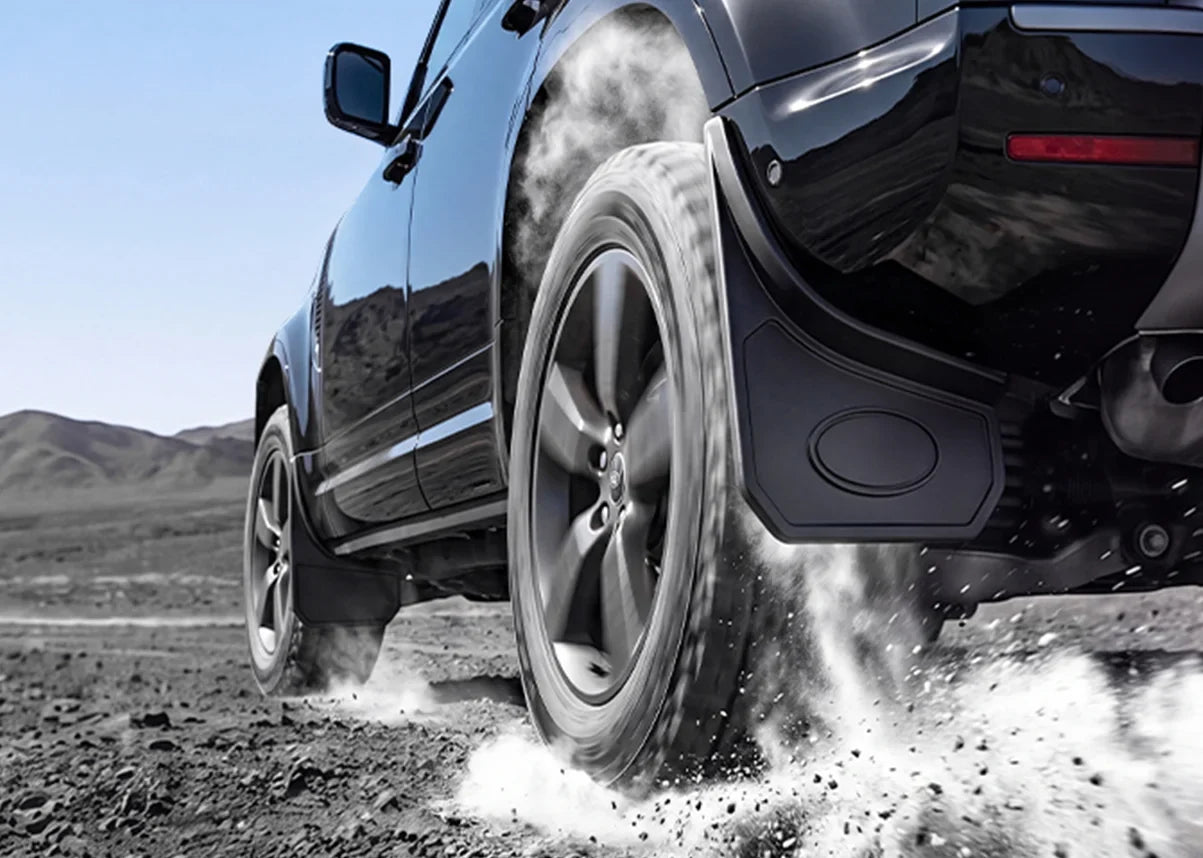
When you think about protective gear for vehicles, mud flaps may not come to mind. What are mud flaps for, really? In simple terms: they're thin panels mounted behind each wheel that block the rocks, mud, and road spray your tires throw as they spin.
It sounds almost too simple, which is exactly why so many drivers never think about them. They only come to mind after you spot a fresh chip in your paint or rust bubbling up along a rocker panel.
This insightful article explains what mud flaps are. We'll also cover why you should get a set, the different types, how to size and install them, and how custom-fit options compare to universal ones. It'll let you know why this unglamorous little accessory isn't negligible.
What Are Mud Flaps?
Mud flaps are thin, flexible panels mounted low behind each wheel well. They're positioned to catch debris before it flies up into your bodywork or the vehicle behind you (German PURJE). They're one of the cheapest, simplest upgrades you can make. And yes, they're worth having on almost any vehicle.
What Are Mud Flaps for Cars, Specifically?
A mud flap sits just behind the front and rear wheels on a car. It remains mounted to the factory fender or wheel-well lip. The objective is simple: block spray, protect paint, keep the undercarriage cleaner. However, a car's lower height and tighter clearances mean the flap has to be sized to avoid scraping on speed bumps or steep driveways.
Why Most Drivers Overlook Them Until Damage Appears
Mud flaps rarely get attention until something goes wrong. Most owners think of them after receiving a rock chip on the door, a rusty streak along the rocker panel, or a neighbor complaining about mud sprayed across the windshield.
By then, the damage they were meant to prevent has already happened. That's the real case for installing them early: they're cheap insurance against a repair bill that's anything but cheap.
A Brief History: From Basic Rubber Strips to Engineered Polymer Systems
Early mud flaps were little more than flat rubber strips bolted on as an afterthought. They were somewhat functional but prone to flapping loose, cracking in the cold, and looking like what they were: an add-on.
Modern options use engineered polymers and rubber-composite blends to hold their shape at highway speed. They can resist cracking in freezing weather and follow the exact contour of a specific vehicle's fender.
The Physics: How Mud Flaps Actually Work
A spinning tire acts like a launcher. Its tread grabs loose material off the road surface and flings it outward and upward through centrifugal force. A mud flap works by physically blocking that spray path before the debris builds up speed.
Why Rotating Tires Launch Debris
As a tire rolls forward, its tread pattern grips whatever is sitting on the pavement. It can be loose gravel, sand, standing water, road salt, mud, etc. That material gets carried with the tire's rotation until it reaches a releasing point. At that release point, it moves fast, propelled by the same rotational force that's turning your wheel.
The Tangential Exit Path: Where Debris Leaves the Tire
A Medium article confirms debris doesn't fly straight up; it leaves the tire along a tangential path. It means debris shoots off roughly in the direction the tread was moving at the moment of release.
For material picked up near the tire's bottom-rear, that path sends it backward and upward. That sends it directly toward the wheel well, the rocker panel, and whatever vehicle happens to be following behind.
How a Properly Positioned Mud Flap Redirects Debris Downward
A mud flap mounted right behind the tire intercepts that tangential spray before it gains enough height and speed to do real damage. It doesn't stop debris from being thrown in the first place; nothing can.
Still, it dramatically reduces how much of it reaches your paint, undercarriage, or the car behind you. Think of it as a redirect: it takes debris and sends it back down toward the pavement, where it would have flown up and out.
Reasons Why You Need Mud Flaps
Mud flaps solve several real-time problems at once. They protect against paint damage, corrosion, road safety issues, cleaning frequency, resale value, legal compliance, and even personalization.
Protect Automotive Paint from Rock Chips and Scratches
Every chip that reaches your paint is a spot where rust can eventually start. So, blocking that debris in the first place protects the finish underneath, not just the surface look.
Prevent Corrosion from Road Salt, Water, and Winter Brine
Salt spray thrown up from wet winter roads is one of the fastest ways to start corrosion on rocker panels and wheel wells. Mud flaps significantly reduce how much reaches those areas.
Shield Other Drivers from Flying Debris
Rocks and spray kicked up by your tires can crack the windshield or paint of the vehicle following behind you. That's why commercial trucks are so often required to run them.
Reduce Cleaning and Washing Frequency
Less mud and grime sprayed onto your body panels and undercarriage means less time spent washing. It also means less buildup in hard-to-reach areas.
Preserve the Resale Value
A car with clean paint and an undamaged rocker panel simply appraises higher at trade-in than one covered in chips and corrosion spots.
Stay Compliant with State and Commercial Vehicle Laws
Many states set specific mud flap requirements for commercial trucks and larger vehicles. Running the wrong setup or none at all can guarantee you a ticket during a roadside inspection (NTEA).
Customize Your Vehicle's Appearance
Beyond protection, mud flaps come in different colors, logos, and styles. They give you a straightforward way to add a bit of personality to an otherwise purely functional part.
Types of Mud Flaps (By Design)
Mud flaps fall into four categories: OEM factory guards, universal rubber flaps, rally-style flaps, and vehicle-specific custom-fit kits. Each one trades off differently on cost, coverage, and fit.
Summary Comparison: Different Mud Flap Types
| Type | Coverage | Fit | Best For |
| OEM Factory Splash Guards | Conservative, basic | Exact factory fit | Stock daily drivers |
| Universal Rubber Flaps | Wide, adjustable | Trimmed to fit | Heavy-duty & commercial use |
| Rally-Style Flaps | Extra-large, extends past fender | Semi-universal, bolt-on | Off-road & motorsport-inspired builds |
| Vehicle-Specific Custom-Fit Kits | Precision-matched to fender contour | No drilling, factory mounting points | Owners who want an OEM look with real protection |
Softer rubber flexes easily and absorbs impact well but can deflect out of the debris path at highway speed. Meanwhile, rigid plastic holds its shape at speed but tends to turn brittle and crack in cold weather. Polyurethane and TPE-style blends are flexible enough to absorb a hit and rigid enough to stay in position (Car Throttle).
Sizing Guide: How to Choose the Right Size Mud Flaps
Tire width, not wheel diameter, determines the right mud flap size. That calculation changes the moment you lift your vehicle, widen your track, or size up your tires. Get the step wrong, and you'll end up with a flap that leaves gaps or drags on the ground.
Tire Width is the Key
A mud flap needs to be at least as wide as your tire's contact patch. Anything narrower leaves the outer edge of the tread completely unprotected.
Wheel Offset and Lift Height Change the Spray Arc
A wheel spacer pushes the tire outward past the factory fender line. A suspension lift increases how high debris can be thrown. Both issues shift the pattern the factory guard was originally designed around.
Coverage Geometry must Match the Outer Tire Shoulder
The flap's outer edge should line up with or extend slightly past the tire's outer shoulder. Otherwise, debris thrown from the outer edge will miss the flap.
Stock vs Lifted vs Wider Tire Setups Change Everything
A stock-height vehicle with stock-width tires can usually run a standard-size flap. However, a lift, spacer, or wider tire setup usually requires an XL or oversized flap to maintain the same level of coverage.
Custom-Fit vs Universal Mud Flaps: Which Is Better?
Custom-fit mud flaps offer precision alignment, a factory-integrated look, and no-drill installation. In contrast, universal flaps offer more flexibility and a lower price for unusual or heavily modified setups. Neither is objectively better, as the right pick depends on your vehicle and your priorities.
| Factor | Custom-Fit | Universal |
| Precision Fit | Matched to exact fender contour | Approximate, often needs trimming |
| Installation | No drilling, factory mounting points | May require drilling or trimming |
| Appearance | Factory-integrated look | Visible aftermarket look |
| Cost | Higher | Lower |
| Flexibility | Limited to available vehicle fitments | Fits a wide range of vehicles and builds |
Custom-Fit Mud Flaps for SUVs and Trucks: Top Considerations
SUV and truck fender wells vary more across the same model than most owners expect. When you're shopping for custom-fit SUV mud flaps, double-check the exact trim, model year, and modifications against the product listing from 3W.
Which Is Right for Your Vehicle?
Some vehicles are stock or close to it, with a custom-fit kit available for your exact model. Such options are better long-term choices with no drilling, factory mounting points, and a finish that looks like it came with the car.
Meanwhile, some vehicles are heavily modified, lifted, or running a tire size well outside stock. In that case, a universal XL flap may offer more real-world coverage, even if the fit is less precise.
3Wliners currently offers custom-fit mud flaps for Tesla in Europe. The product is exclusively built from 3D scans of the factory geometry for a no-drill, factory-integrated fit, with additional vehicle fitments planned.
How to Install Mud Flaps (Step-by-Step)
Installing mud flaps is a quick DIY job for most vehicles and takes 15 to 30 minutes with basic tools. You won't need any special mechanical skill or complex tools.
- Clean the Wheel Well Thoroughly: Dirt and grease at the mounting surface can prevent hardware from seating properly. Wipe the area down before you start.
- Test-Fit and Align with Factory Mounting Points: Hold the flap in place against the fender and confirm it lines up with the existing holes or clips before securing anything permanently.
- Secure with Stainless Hardware and Torque Evenly: Tighten each mounting point gradually and evenly rather than fully tightening one side first. It helps the flap sit flat instead of warping slightly.
- Test Drive and Re-Check After 50 Miles: Vibration and heat cycling can loosen hardware slightly after the first few drives. Give everything a quick re-tighten once you've put some miles on it.
Conclusion
Mud flaps deliver a lot of practical value for a rather small-scale investment. Daily drivers get straightforward paint and undercarriage protection, whereas off-roaders and lifted trucks benefit from oversized or custom-fit coverage. Meanwhile, commercial fleets often need them just to stay compliant with state law.
For SUV and truck owners, a custom-fit set is often the best long-term value; the precision fit and no-drill installation hold up better over years of use. For full-vehicle protection, pairing mud flaps with 3W floor mats and cargo liners round out the coverage from the exterior to the cabin and cargo.
Frequently Asked Questions (FAQs)
What are mud flaps for?
Mud flaps are panels mounted behind each wheel that block the rocks, mud, and water your tires throw as they spin. They protect your vehicle's paint, undercarriage, and other drivers from flying debris.
Are mud flaps really necessary on a stock vehicle?
They're not strictly required on most stock passenger vehicles. Even so, a completely stock car benefits from the extra paint and corrosion protection, especially in wet or salted-road climates.
Do mud flaps protect against rock chips?
Yes. A mud flap intercepts debris along its tangential exit path from the tire. A properly positioned mud flap significantly reduces how many rocks and stones actually reach your paint.
What size mud flaps do I need for my truck or SUV?
Match the flap width to your tire's contact patch, not your wheel diameter. Size up to an XL or oversized option if you've lifted your vehicle, added wheel spacers, or upgraded to wider tires.
Can I install mud flaps myself?
Yes, for most cases. A typical installation takes 15 to 30 minutes with basic tools. Custom-fit kits that use factory mounting points are even faster with no drilling involved.
How long do mud flaps last?
A quality mud flap made from a durable polymer or rubber-composite blend lasts for years under normal driving conditions. You only need replacements after a hard impact or if a lower-grade plastic cracks in extreme cold.
Does law require mud flaps?
It depends on your state and vehicle type. Many states set specific requirements for commercial trucks, trailers, and larger vehicles. Most states don't mandate them on standard passenger cars. If you're unsure, check your local vehicle equipment code.

Leave a comment
All comments are moderated before being published.
This site is protected by hCaptcha and the hCaptcha Privacy Policy and Terms of Service apply.