


Many truck owners, when searching for the best anti-slip truck bed mat, focus on thickness. Some believe more thickness means longer durability and better slip resistance. In reality, there's no single right answer to truck bed mat thickness anti-slip questions.
Thickness and grip aren't the same thing. A mat can be thick and still slide cargo around. A thin one can hold a toolbox rock-steady through hard braking. This guide breaks down bed mat thickness, how to measure its anti-slip performance, and how to weigh both before you buy.
Is a Thicker Truck Bed Mat Always Better?
No. Thickness mainly affects impact cushioning (how well the mat absorbs impact, like from a dropped toolbox or a bounced cooler). Past a certain point, extra thickness starts working against you by interfering with wheel-well clearance or a drop-in bed liner. [1] [2]
The better question isn't "how thick" for the most part. It's "whether the mat's thick enough for what I'm hauling, without creating a fitment problem."
What Thickness Actually Does: Impact Absorption
A thicker mat cushions harder impacts when you regularly drop tools, engine parts, or firewood into the bed. It's useful, but still separate from grip. [3]
A thick mat with a smooth surface lets a cooler slide from one bed side to the other on a hard turn. Meanwhile, a thinner mat with a textured surface can still hold that same cooler.
When Extra Thickness Backfires: Clearance and Liner Fit
Overly thick mats can raise cargo enough to interfere with wheel-well clearance or crowd a factory drop-in liner. They also add weight you're carrying around empty. [2] [3]
Check the listed thickness in any floor mat comparison against your specific bed setup. It's especially crucial if you layer a mat over an existing liner.
What Makes a Bed Mat Anti-Slip: Thickness or Surface Texture?
Grip is a surface-texture and material property, not a function of thickness. The technical term is coefficient of friction (COF), which measures how much resistance a surface offers against sliding. [4] It's a completely different measurement from how many millimeters thick the mat is.
You'd better understand the distinction clearly. Otherwise, it would be hard to make anything useful out of a truck bed mat thickness vs. anti-slip comparison. The difference explains why two mats of identical thickness can perform completely differently once you load the cargo.
How Coefficient of Friction Is Actually Measured
The industry standard for measuring a plastic or elastomer sheet's sliding resistance is ASTM International D1894. The test method quantifies the static and kinetic coefficient of friction between materials. [5]
For general flooring and cargo securement, a higher COF value means more resistance to sliding under the same load. It's the same principle a floor mat slip test comparison uses, whether it's testing a car mat or a bed liner.
Why a Textured TPE Surface Outperforms Smooth Rubber
A raised, grid-patterned, or ribbed surface increases the contact points between cargo and mat. It raises effective grip well beyond what a smooth surface of the same material provides. And that grip has nothing to do with thickness.
That's why anti-slip floor mats car owners rely on for wet or muddy footwells use molded texture. There's no soft, flat pad. The texture does the anti-slip work, and the base material determines durability and underfoot feel. [6]
How Much Grip Does Cargo Actually Need to Stay Put?
Braking and cornering forces are what move unsecured cargo. The trucking industry has formal standards for how much resistance a load-bearing surface needs to counteract those forces.
The Physics of Braking and Cornering Forces on Loose Cargo
You have to brake hard or take a corner at speed from time to time. That's when unsecured cargo experiences a force that tries to keep it moving in its original direction. That force is inertia, which sends a toolbox sliding forward under hard braking or sideways through a tight turn. [4] [7]
A higher coefficient of friction between the cargo and the bed surface means the surface resists inertia more strongly before sliding. It's the main reason truck owners choose anti-slip floor mats over a generic flat mat. They support daily driving differently, even if they look similar.
What Federal Cargo Securement Standards Tell Us About Friction
FMCSA cargo securement rules govern commercial trucking under 49 CFR Part 393. It formally recognizes friction mats as part of a compliant securement system. You'll also require a load's securement to withstand set deceleration and lateral forces. [8] [9]
Those regulations promptly apply to commercial vehicles. However, the underlying friction principle remains the same in any truck. A higher-grip surface reduces cargo shift under braking, acceleration, or cornering, regardless of how thick it is.
TPE vs Rubber vs Carpet: Comparing Thickness and Grip Side-by-Side
Each common bed mat material trades thickness, weight, and grip differently. Understanding those trade-offs matters more than a "thickest wins" approach. [6]
TPE: Thin, Dense, and Textured
- Lighter than rubber at a comparable protective thickness.
- Molded surface texture provides grip independent of raw thickness.
- Waterproof and non-porous, so grip doesn't degrade when wet the way some fabrics do.
- Stays flexible across a wide temperature range instead of stiffening in cold weather.
Rubber: Thick and Grippy, but Heavy
- Often sold thicker than TPE, with strong impact absorption for heavy tools.
- Can offer excellent anti-slip performance when the surface is properly textured.
- Adds significant weight, which can matter for a mat you remove to clean.
- Lower-cost rubber can stiffen and lose grip in cold weather.
Truck owners preferably recommend a 5/8-inch (roughly 16mm) thickness range for heavy-duty rubber bed mats in full-size trucks. [10] It's noticeably thicker than many TPE options, but it adds real weight once installed. Such mats sometimes require two people to lift and position. Factoring that in if you plan to pull the mat for regular cleaning.
Carpet: Soft Grip, No Waterproofing
- Fabric texture can grip certain cargo well when dry.
- Not waterproof, so grip and protection both drop once it's wet or muddy.
- Harder to clean than a rinse-and-go TPE or rubber surface.
- Better suited to scratch-sensitive cargo like furniture than to wet or dirty jobsite loads.
How Do You Choose the Right Thickness for Your Truck and Cargo?
Checklist for Choosing Bed Mat Thickness
- Identify your typical cargo: light groceries and gear versus heavy tools or machinery.
- Check whether you're layering the mat over an existing drop-in liner or spray-in coating.
- Confirm the mat's listed thickness against your wheel-well clearance if you plan to run wider tires or lift components.
- Prioritize surface texture and material grip over raw thickness for anti-slip performance.
- Weigh mat weight into the decision if you'll be removing it regularly for cleaning.
Common Mistakes When Choosing a Bed Mat
- Assuming the thickest listed option is automatically the most anti-slip.
- Buying a universal, uncontoured mat that leaves gaps where grip and drainage both suffer.
- Ignoring clearance with an existing bed liner, causing the mat to bow or ripple.
- Choosing carpet for cargo that regularly gets wet or muddy.
Check a product's listed thickness against the actual unit of measurement. Some listings quote overall mat thickness including raised ribs or channels. Meanwhile, others quote only the flat base thickness. The two numbers can look very different for mats that perform almost identically. [12]
Which Setup Fits How You Actually Use Your Truck Bed?
Matching thickness and material to real-world use seems like a well-balanced approach. It helps you avoid under-protecting your bed and overpaying for cushioning you don't need.
Contractors Hauling Heavy Tools and Materials
Frequent impacts from dropped tools, ladders, or building materials call for a mat that prioritizes impact absorption alongside grip. A sliding cargo on a jobsite can mean lost or damaged equipment on every rough road.
Weekend Haulers and Light-Duty Owners
Occasional loads like mulch bags, camping gear, or a bike rack base don't need maximum thickness. A well-textured, moderate-thickness TPE mat can handle the grip and cleanup demands. You won't have to add unnecessary weight to a truck that spends most of its time empty. [6] [13]
Pet and Family Cargo
A wet dog or spilled cooler ice calls for a waterproof, non-porous surface more than raw thickness. Grip still matters here too. A slick, wet surface can be as unsteady for a crate or cooler as it is uncomfortable for a dog trying to stay balanced.
Overlanders and Off-Road Cargo
Loaded roof-rack overflow, recovery gear, and fuel cans face repeated jolts from washboard roads and off-camber trails. Thickness and grip deliver enough cushioning to protect gear from constant vibration. It also provides enough surface friction to keep heavier items still on long, rough drives.
Can You Test a Bed Mat's Grip Yourself Before You Commit?
A Simple At-Home Grip Check
- Place a smooth, moderately heavy object (a full water jug works well) on the mat.
- Tilt the mat gradually, or simulate braking by pushing the object forward on a flat surface.
- Repeat the test wet, since many materials lose grip once moisture is introduced.
- Compare the same object's behavior on a bare truck bed floor for a baseline.
It won't produce a lab-grade coefficient of friction number. Still, you'll learn whether a mat's texture is doing real anti-slip work or just adding thickness.
Run the identical test on two mats with the same object and the same starting force. That head-to-head comparison tells you more about real-world grip.
How Does 3W's Thorex™ TPE Approach Thickness and Grip Together?
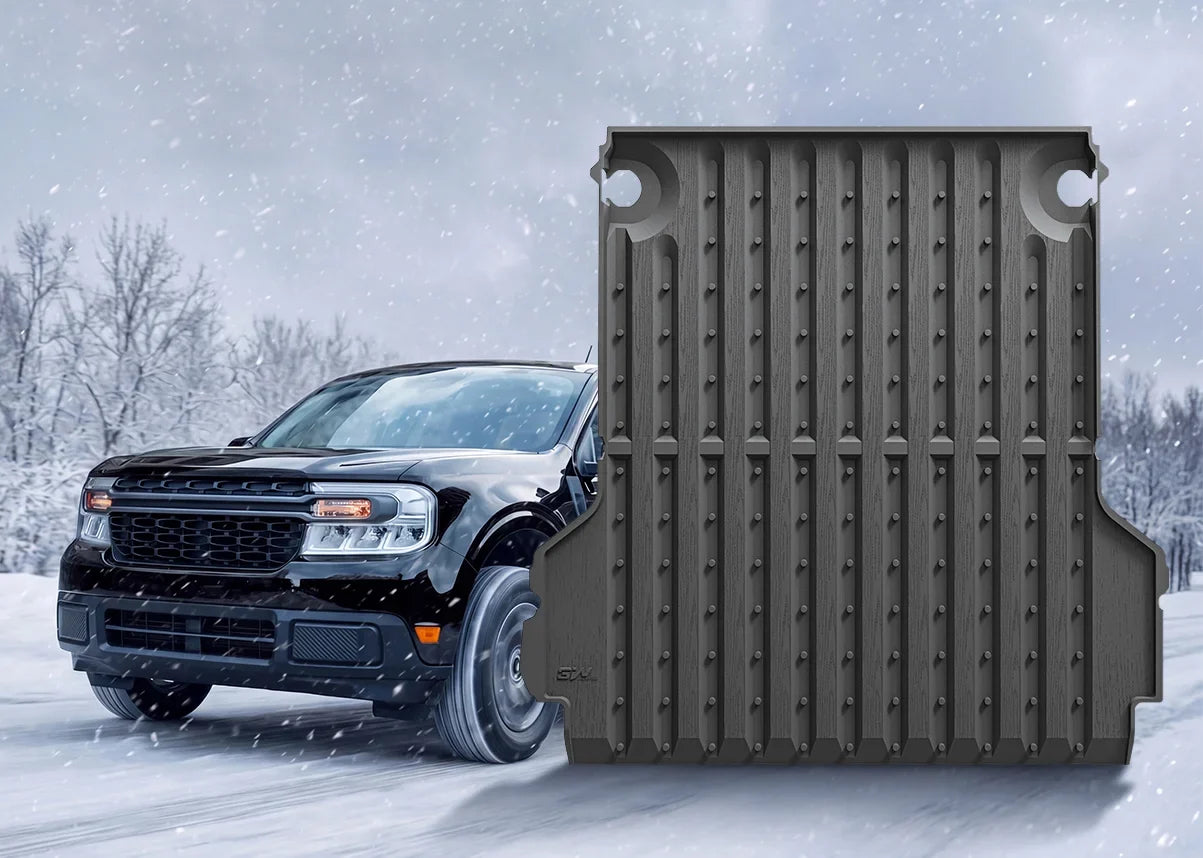
3W's Thorex™ TPE bed mats use the same principle. The mats' grip and thickness are separate properties, not one number. Each mat is 3D-scanned to the exact contours of a specific truck bed. So, the surface sits flush against the floor and wheel wells without relying on sheer bulk. [14]
Custom Contour Instead of Universal Thickness
Universal, flat-sheet anti-slip floor mats force car owners to compromise on thickness to fit a range of vehicles. A custom-molded mat doesn't carry that trade-off. It can be sized appropriately for a specific bed's clearance while still using a textured surface for grip.
Why Fit Itself Contributes to Anti-Slip Performance
A mat that shifts or bunches at the edges because it doesn't match the bed's contours undermines grip no matter the texture. Edge-to-edge coverage that locks against the bed rails and wheel wells keeps the entire mat stable. The surface texture can do its job consistently without losing contact.


Conclusion
Thickness and anti-slip performance solve two different problems. Thickness absorbs impact, whereas the anti-slip prevents cargo from sliding during braking and cornering. The science behind grip (coefficient of friction, surface texture, and moisture resistance) matters more for keeping your load in place than the raw thickness number on a spec sheet.
Even federal cargo-securement standards reinforce the importance of friction. Match your mat's thickness to your cargo and clearance. Then, prioritize a textured, waterproof material like TPE for grip. It'll get you a bed mat that performs the way its spec sheet promises. Explore 3W's Thorex™ TPE bed mat lineup to find your custom-fit option for protection and grip. [12]
Frequently Asked Questions (FAQs)
Does a thicker bed mat protect cargo better?
Thickness improves impact absorption from dropped or bounced cargo. However, it doesn't automatically improve anti-slip performance. Grip depends on surface texture and material properties, not thickness.
What is a good coefficient of friction for a truck bed mat?
Higher is better in relative terms. A textured surface with a higher COF resists sliding more effectively than a smooth surface of the same material. It's the same principle federal cargo-securement standards use for commercial friction mats.
Will a thick bed mat interfere with a drop-in bed liner?
It's possible. Stacking a thick mat over an existing drop-in or spray-in liner may cause bowing, rippling, or reduced clearance. Check your mat's listed thickness against your current bed setup before buying.
Is TPE or rubber more anti-slip?
Truck bed mats made from either material can perform well with proper texture. TPE tends to offer a strong grip-to-weight ratio and stays flexible across temperature swings. Meanwhile, rubber can match or exceed it in raw grip with more weight.
References
[1] 3Wliners: "The Truck Bed Mat Buyer's Handbook" – https://3wliners.com/blogs/car-mats/the-truck-bed-mat-buyer-s-handbook-rubber-foam-backed-and-coin-pattern-explained
[2] Best Beginner Motorcycles: "Why Every Pickup Owner Needs a Quality Truck Bed Mat" - https://www.bestbeginnermotorcycles.com/heres-why-every-pickup-owner-needs-a-quality-truck-bed-mat/
[3] 4Wheel Online: "Why Having a Truck Bed Mat is Important" - http://4wheelonline.com/Why_Having_a_Truck_Bed_Mat_Is_Important.247069.0
[4] Testing Instruments: "Coefficient of Friction" – https://www.testing-instruments.com/blog/coefficient-of-friction-importance-measurement-and-practical-use/
[5] ASTM International: "Standard Test Method for Static and Kinetic Coefficients of Friction of Plastic Film and Sheeting" – https://store.astm.org/d1894-24.html
[6] 3Wliners: "Rubber vs Carpet vs TPE Car Floor Mats" – https://3wliners.com/blogs/car-mats/carpet-vs-rubber-car-mats
[7] Presto Group: "What is Coefficient of Friction" – https://www.prestogroup.com/articles/what-is-coefficient-of-friction-units-types-and-formula-explained/
[8] e-CFR: "Parts and Accessory Necessary for Commercial Motor Vehicles" – https://www.ecfr.gov/current/title-49/subtitle-B/chapter-III/subchapter-B/part-393
[9] Federal Motor Carrier Safety Administration: "Driver's Handbook: Cargo Securement" – https://cms8.fmcsa.dot.gov/regulations/cargo-securement/drivers-handbook-cargo-securement-chapter-6-paper-rolls
[10] Ram Forum: "Best Non-Slip Bed Mat" – https://www.ramforum.com/threads/best-nonslip-bed-mat.192086/
[11] 3Wliners: "Best Truck Bed Mat" – https://3wliners.com/blogs/car-mats/best-truck-bed-mat
[12] 3Wliners: "Bed Mats for Pickup Trucks" – https://3wliners.com/collections/bed-mats-for-pickup-trucks
[13] 3Wliners: “Rubber Truck Bed Mat” -- https://3wliners.com/blogs/car-mats/rubber-truck-bed-mat
[14] 3Wliners: "Why TPE Car Floor Mats? The Complete Guide" – https://3wliners.com/blogs/car-mats/tpe-car-mats

Leave a comment
All comments are moderated before being published.
This site is protected by hCaptcha and the hCaptcha Privacy Policy and Terms of Service apply.