


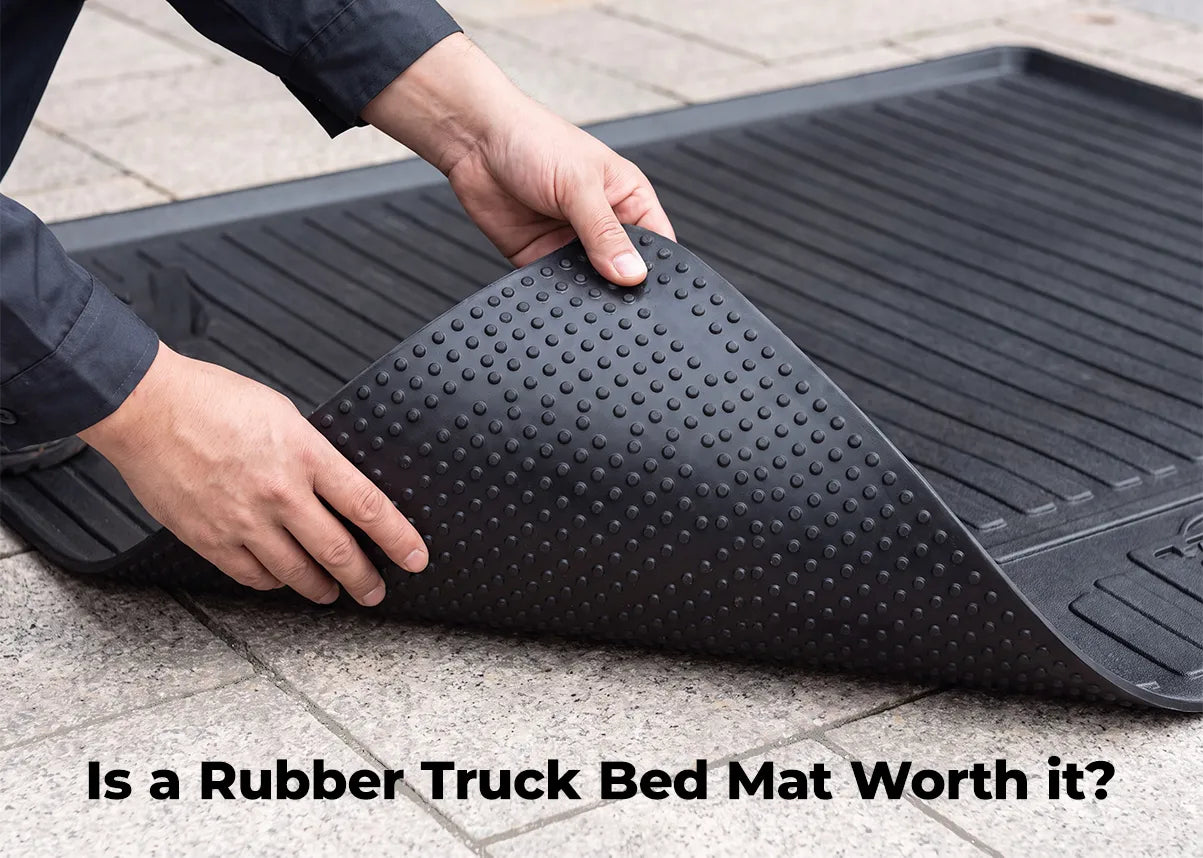
Your truck bed takes a beating via landing tools, lumber, gravel, coolers, and wet gear. They all land there, drag across the floor, and leave marks. A rubber truck bed mat is the most popular first line of defense against such damage, for good reason. It's affordable, widely available, and protective enough for most everyday use.
If you had one surviving a harsh winter or a hot summer, you've probably noticed the flaws too. There are smells, stiffness, and/or issues with never lying flat. This article offers an honest look at heavy-duty rubber truck bed mats and introduces the 3W TPE truck bed mat as a highly upgraded alternative.
What Are the Real Benefits of a Rubber Truck Bed Mat?
A rubber mat for a truck bed offers practical protection that bare metal can't match. It cushions cargo, reduces sliding, and shields the factory bed liner. Regularly hauling truck owners with a quality truck bed mat seems reassuring.
Cargo Protection and Scratch Prevention
The primary job of a rubber truck bed mat is to put a tough layer between your cargo and your truck bed. Every load you haul drags across painted or spray-in liner surfaces, leaving scratches.
A rubber mat absorbs the contact, protecting the bed floor from direct wear. For truck owners who regularly haul tools, construction materials, or heavy equipment, it surely justifies the purchase.
Anti-Slip Surface for Load Security
Rubber's natural texture creates friction between the mat surface and whatever sits on top. It keeps lighter loads (coolers, bags, boxes) from sliding around during braking and cornering.
And it reduces cargo damage and the feeling of things shifting while you drive. A heavy-duty rubber truck bed mat with a ribbed or diamond-plate surface pattern always provides a stronger grip.
Moisture and Weather Barrier
Rubber is naturally water-resistant. Rain, melting snow, or a wet cooler can drip onto a rubber mat for your truck bed. In that case, the water sits on the surface rather than pooling directly against the metal bed floor.
It reduces the risk of rust forming under the mat. It's a real concern in regions that use road salt in winter or that see frequent rain. The mat also prevents dirt and debris from grinding directly into the factory liner. Curious whether trapped moisture under a mat can actually cause rust? We covered that in detail in Do Truck Bed Mats Cause Rust?
Affordability and Availability
Standard rubber mats for pickup truck beds are among the most affordable options. A basic universal-fit mat runs for $40–$80. Even purpose-cut options for popular trucks rarely exceed $150.
They're stocked at most auto parts retailers, easy to trim, and require zero installation skills. Rubber delivers reasonable value for occasional truck use and/or basic protection at lower costs.
What Are the Drawbacks of Rubber Truck Bed Mats?
Traditional rubber truck bed mats have distinct limitations that become noticeable over time. Though those aren't deal-breakers for everyone, they're worth understanding before you commit.
Odor, Especially in Heat
It's the complaint rubber truck bed mat owners mention most. Standard rubber contains volatile compounds that off-gas when heated by direct sunlight.
A black rubber mat sitting in an exposed truck bed on a summer day can exceed 150°F, accelerating off-gassing. The smell ranges from mildly unpleasant to despicably strong depending on material quality and mat thickness.
Lower-grade rubber mats are worse. Premium options are better but rarely odor-free. It matters more while transporting pets, food, or outdoor gear for immediate use.
Stiffness and Cracking in Cold Weather
Rubber loses flexibility as temperatures drop. In sub-freezing conditions, a standard rubber truck bed mat becomes stiff and brittle. They become difficult to roll, prone to cracking at fold lines, and more likely to crack under impact.
Drivers in northern climates often find rubber mats with permanent creases or cracks within two to three winters. Once a crack forms, it becomes a dirt and moisture trap rather than a barrier. Thus, it defeats the mat's core purpose.
Weight and Handling Difficulty
A full-size heavy-duty rubber truck bed mat for a long-bed truck can weigh 50–80 pounds. That's manageable when it's in the truck, but removing it for cleaning or storage requires a physical push.
It discourages owners from removing the mat regularly. That's when moisture, dirt, and debris accumulate underneath. And they trigger rusting and liner damage against which the mat was designed.
Rolling and Folding Leave Permanent Creases
Rolling a rubber mat for transport or storage creates fold memory. It's because the mat retains its shape and never fully lies flat again. They become debris channels/pressure points under heavy loads.
The problem is worse in cold weather, when rubber is less pliable, and creases set more permanently. For a mat you might need to remove and reinstall periodically, it becomes a recurring frustration.
Universal Fit Leaves Gaps
Most rubber mats for pickup truck beds are cut to approximate sizes. They fit 5'5" to 5'8" beds instead of specific truck dimensions. It means edge gaps and wheel wells where debris accumulates and where the mat bunches or lifts.
Universal-fit rubber doesn't account for bed-specific features either. We're talking about tie-down anchor positions, drain plug locations, and tailgate step cutouts. It results in a mat that never quite fits as well as a purpose-built liner would.
Why the 3W TPE Truck Bed Mat Is the Smarter Upgrade?
A 3Wliner review indicated that the TPE truck mat exclusively addresses the frustrations associated with rubber mats. You're entitled to a truck bed mat that outperforms rubber in every perspective.
Upgraded Thorex™ TPE Material: Thicker, Tougher, Odor-Free
3W's proprietary Thorex™ TPE lays the foundation of everything the mat does better. The thermally stable material functions across a wide temperature range. Its flexibility allows it to retain its shape at sub-zero temperatures without cracking and to maintain its shape in summer without warping.
The updated formula is thicker than the previous generation. And critically: No funky smells. No off-gassing in a hot truck bed or chemical smell on transported gear, food, and pets. For anyone who deals with rubber odor in summer, the difference is immediate.
Cast Iron Texture Surface: Better Grip, Better Look
The surface of the 3W truck bed mat features a cast-iron texture pattern. The textured surface provides superior grip compared to flat rubber. It also reduces cargo movement during transit more effectively than a smooth or basic ribbed surface.
You'll have higher durability against repeated abrasion from rough cargo. And it looks better than the utilitarian black rubber. It marks an aesthetic upgrade for truck owners who care about a vehicle's overall presentation.
V-Shaped Fold Line Design: No More Permanent Creases
One of the most practical innovations in the 3W mat is the built-in V-shaped fold line. You may need to fold or roll the mat for storage or transport. And the fold follows the engineered crease line rather than creating a random bend.
It means the mat lies flat when reinstalled without ridges, bumps, or debris-catching creases. Truck owners need to remove mats regularly. And the design eliminates one of the most persistent frustrations of rubber mats.
Triangle Bracket + Fixing Points: Stays Where You Put It
Rubber mats rely solely on weight and friction to stay in place. It can be distorted by heavy braking, uneven loads, and cargo that shifts during transport. Moreover, mats tend to bunch or creep forward at the tailgate end.
The 3W mat integrates a triangle bracket with vehicle-specific fixing points. It stays flat and positioned regardless of what's loaded. The stability effectively supports heavy/shifting loads, such as gravel, mulch, or unsecured equipment.
Drainage Slope Edge Design: Keeps the Bed Cleaner
Water management in a truck bed matters more than most owners realize. The 3W mat features a drainage-slope edge design that channels liquid toward the bed's existing drain points.
It significantly reduces moisture accumulation under the liner. After a rain, a car wash, or a load of wet material, the bed drains cleanly rather than trapping water in hidden channels.
Custom Fit for Your Exact Truck Model
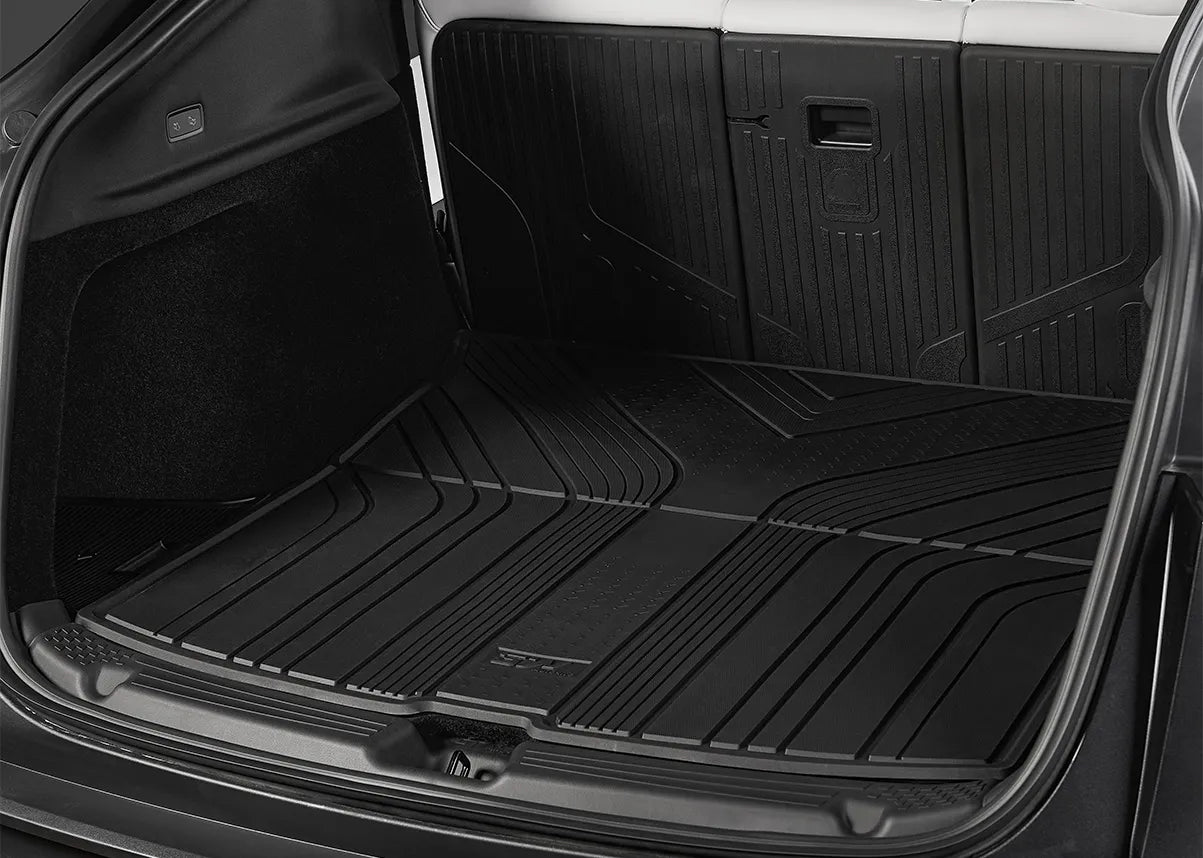
Every 3W truck bed mat fits one vehicle based on its make, model, and year. The 3W Ram 1500 truck bed mat (2025–2026, 5.7ft, without RamBox) and the 3W Ford Maverick truck bed mat (2022–2026, gas and hybrid) are two precision-fit examples.
Both come with edge-to-edge coverage, correct wheel well cutouts, and proper alignment with factory tie-down anchors and drain plugs. There are no gaps at the edges and no trimming needed. Install it once, and it fits as if it were factory-made.
Rubber Truck Bed Mat vs 3W TPE Mat: Brief Comparison
|
Mat Type |
Rubber Truck Bed Mat |
3W TPE Mat |
|---|---|---|
|
Durability |
Degrades under UV, cracks in cold, softens in heat |
UV-resistant, flexible year-round, no cracking |
|
Stability in Temperature |
Stiffens in cold, off-gasses in heat |
Stable across extremes, no off-gassing |
|
Odor in Summer Heat |
Chemical odor varies by quality |
Odor-free Thorex™ TPE material |
|
Coverage |
Universal fit, gaps at edges |
Laser-measured custom fit, edge-to-edge |
|
Weight |
Heavy (50–80 lbs) |
Lighter than rubber |
|
Storage |
Permanent creases when folded |
V-shaped fold line, no creasing |
|
Drainage |
Flat, water pools underneath |
Slope edge directs water to drains |
|
Upfront Cost |
$40–$150 |
Higher initial investment |
|
Longevity |
Shorter lifespan, replacements needed |
Longer lifespan, lower replacement cost |
Conclusion
Occasional truck users want basic scratch and moisture protection at lower costs. And a quality rubber truck bed mat seems like a reasonable choice. It does the job, is easy to find, and is affordable to replace.
Others regularly drive for work, hauling, off-road weekends, or year-round duty. And the limitations of standard rubber add up fast. Smell, cracks, creases, poor fitting, and under-mat moisture – everything becomes a mess.
The 3W upgraded TPE truck bed mat confronts each of those flaws with perfection. It comes with odor-free Thorex™ TPE, a cast-iron texture, a V-shaped fold line, triangle-bracket anchoring, drainage-slope edges, and a custom fit.
They define the differences between a tolerating mat and one that's actually built for it. Take the 3W Ram 1500 truck bed mat (2025–2026) and the 3W Ford Maverick truck bed mat (2022–2026), for instance, to find your fit.


Frequently Asked Questions (FAQs)
How do I clean and protect a rubber truck bed mat?
Simple cleaning of a rubber truck bed mat is beneficial when done consistently. Remove the mat from the bed, shake off loose debris, then rinse with a garden hose. Use a stiff brush with mild soap and rinse thoroughly for stubborn grime.
Will a rubber truck bed mat prevent rust?
A rubber truck bed mat reduces the risk of rust by protecting the bed floor from scratches. However, trapped moisture without an active drainage system accelerates rusting. It's one of the practical advantages of the 3W TPE mat's drainage-slope edge design.
What size rubber mat do I need for my truck bed?
Truck bed lengths vary by make, model, and year. A Ram 1500 comes in 5'7" and 6'4" bed lengths. A Ford Maverick has a fixed 4'5" bed. A Ford F-150 spans 5'5", 6'5", and 8' bed lengths. Universal rubber mats for pickup truck beds come in approximate ranges that may cover your bed but won't fit exactly.
Is a truck bed mat or a bed liner better?
They serve related but different purposes. A spray-in or drop-in liner protects the entire bed (walls, wheel wells, and floor) against heavy impacts and abrasion. A truck bed mat focuses on the floor surface while adding cushioning and grip. If you're still deciding between the two, our truck bed liner guide breaks down when each option makes more sense.
How long does a rubber truck bed mat last?
A standard rubber truck bed mat lasts three to five years before UV degradation, cracking, or persistent odor. Mats in extreme climates often fall toward the lower end of that range. Higher-quality rubber mats last longer, but still face the same material limitations at a slower pace.


Leave a comment
All comments are moderated before being published.
This site is protected by hCaptcha and the hCaptcha Privacy Policy and Terms of Service apply.