


A practical way to separate vehicle mismatch, installation error, temporary shipping distortion, and a genuine fit problem before you drive or request a return.
A floor mat that creeps forward, bunches near a pedal, or lifts at the edge should be checked before the vehicle is driven. Those symptoms can come from the wrong year or trim, a mat installed over another mat, retention points that were not engaged, or temporary distortion from shipping. A short, ordered inspection usually identifies which problem you are dealing with [1][2].
The Three Complaints That Show Up Most
Complaint |
Root Cause |
What Actually Fixes It |
Mat slides forward under braking |
Missing or worn anti-slip backing, no retention system |
Anti-slip studs plus retention clips anchored to factory floor points |
Mat bunches near the pedals |
Generic sizing doesn't match the vehicle's floor contour |
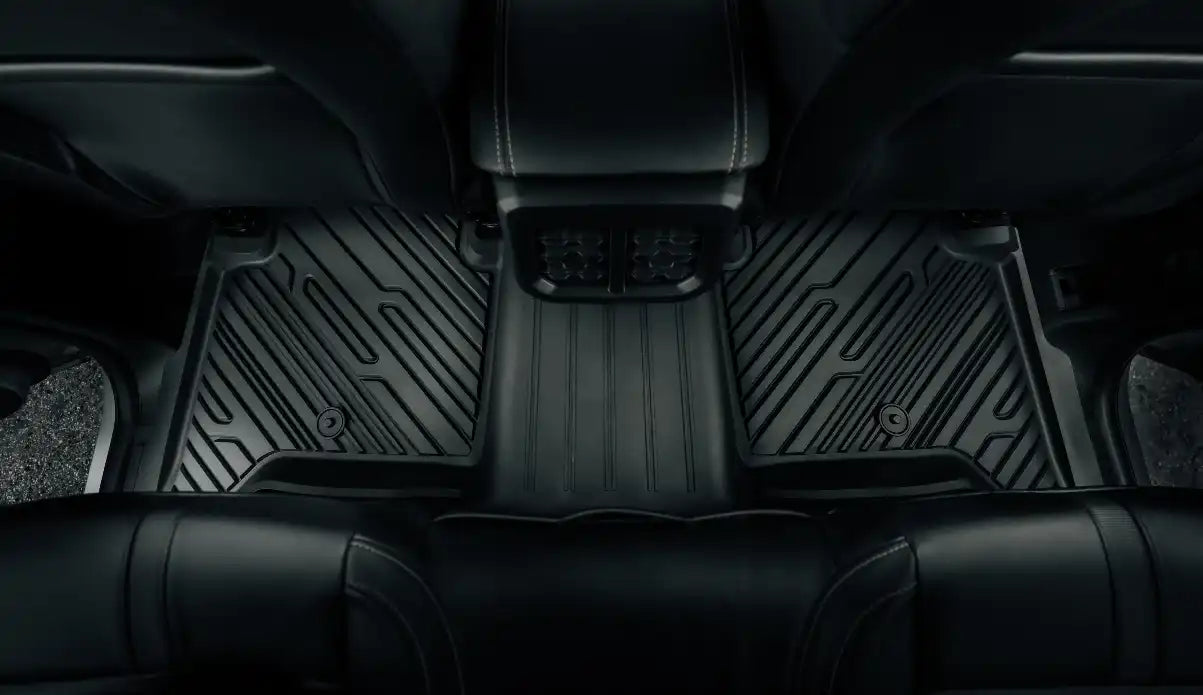
3D-scanned, vehicle-specific fit matched to pedal and console geometry |
Edges curl or lift over time |
Flat sheet material without a raised, molded edge |
Injection-molded construction with a built-in raised lip |
Why Universal Mats Cause More of This
A universal mat is sized to fit a broad range of vehicles reasonably well, which by definition means it fits no single vehicle precisely. That's the mechanical root of most sliding and bunching complaints — a mat cut a little too large or too small for one specific floor contour has nowhere to seat correctly, so it shifts every time the vehicle brakes, turns, or hits a bump [1].
What a Properly Anchored Mat Looks Like
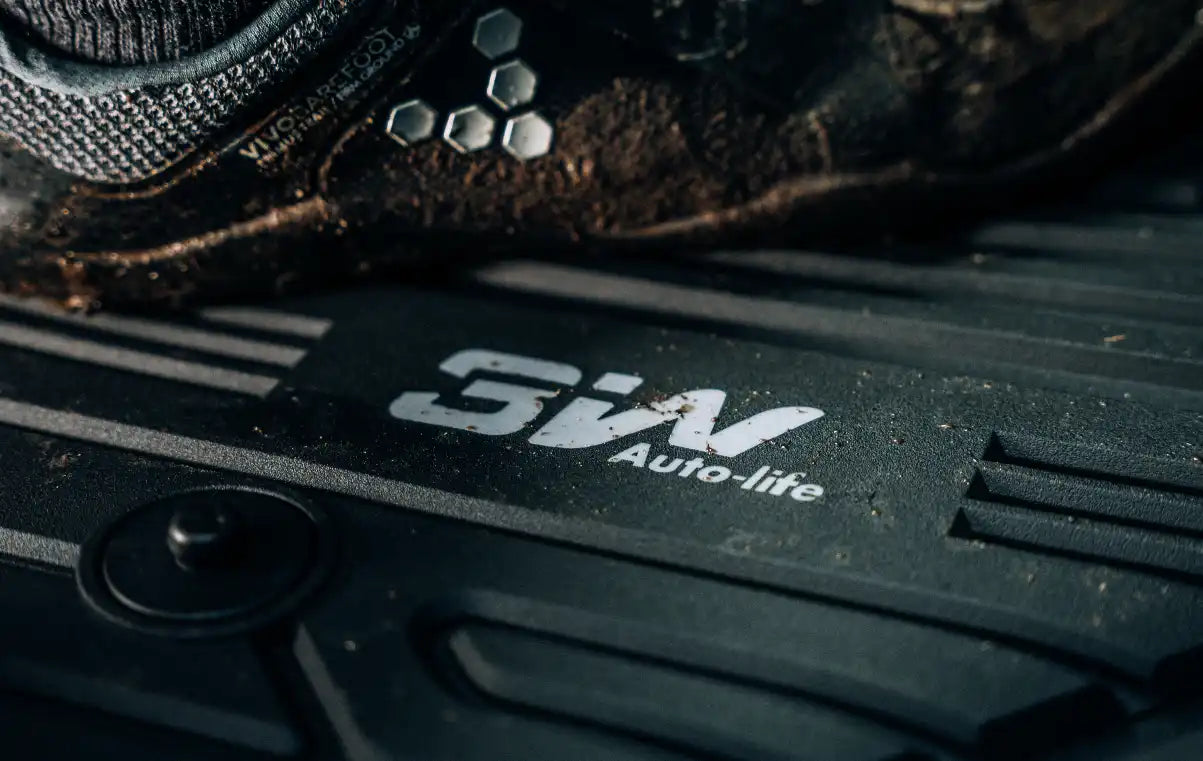
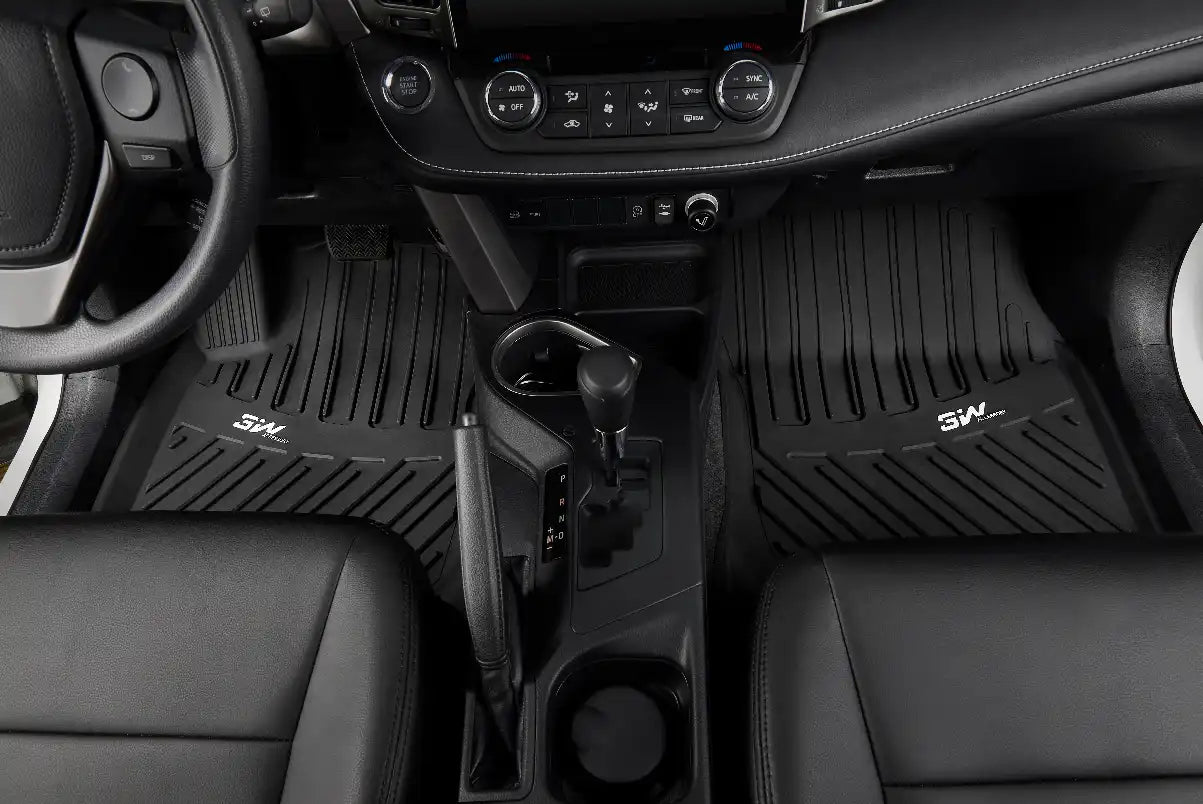
3W's mats use anti-slip backing paired with a precision fit built to stay in place, and many models include retention hooks or clips that attach to a vehicle's factory floor anchors — a mechanical safeguard that should be checked on every compatible installation
[2][3]. For vehicles without factory anchor points, the installation guidance covers alternatives too, from trimming Velcro strips to installing snap-in hooks or screw-mounted clips depending on what a specific floor supports [1].
The Installation Step Owners Skip That Causes Half the Complaints
A significant share of sliding complaints trace back to installation, not the product itself. Leaving old factory mats stacked underneath a new liner reduces grip and makes the whole setup slippery, and skipping a floor cleaning before installation leaves dust or moisture between the mat and carpet that undermines the anti-slip backing [1]. Fit problems also show up when a mat isn't placed in its labeled position — front and rear mats are shaped differently, and swapping them creates gaps that read as a fit failure when the mat is simply in the wrong spot.
How to Verify Fit After Installation
Start with the driver side on a clean, empty footwell. Confirm the part is labeled for that position, align every retention point, and check that the perimeter sits within the molded floor contour without folding. Press the accelerator and brake through their full travel while the vehicle is parked. Repeat the check after the liner has settled and again after the first cleaning, because reinstalling it slightly off-center can recreate a problem that looked resolved [2][5].
A Habit That Prevents Most Recurring Complaints
Even a well-designed mat loses grip if it's never cleaned. Removing mats every one to two weeks to wipe down the underside and vacuum the floor beneath them clears the dust and grime that interferes with anti-slip traction over time, and retightening Velcro strips or checking that retention clips are still snug prevents the slow drift toward sliding that shows up in longer-term reviews [1].
Why Fit Checks Matter Before Ordering
A listing should identify the exact model-year range and any exclusions for powertrain, floor type, cab, seat layout, or factory storage. Match those details to the vehicle before ordering instead of relying on the model name alone. If the listing leaves a configuration unclear, confirm it with the manufacturer before purchase; a close-looking liner is not an acceptable substitute in the driver footwell [2][4].
What to Do If a Mat You Already Bought Is Sliding
Work through a short sequence before assuming the mat is defective: confirm it's placed in the correct labeled position, check that old factory mats aren't stacked underneath reducing grip, clean both the mat's underside and the floor beneath it, and verify any retention clips or hooks are still engaged with the vehicle's anchor points. Most sliding complaints resolve at one of these steps without needing a return [1].
Reading a Fitment Listing Correctly
“Fits your vehicle” is only useful when the listing names the variables that change floor geometry. Look for the year range, trim or powertrain exclusions, floor material, seat count, cab type, and storage configuration where relevant. A product page that matches all of those details is stronger evidence than a generic size label, and the installed liner still needs a final pedal-clearance and retention check [2][4].
How to Judge Fit Before You Buy
- Check whether the listing specifies a 3D-scanned or laser-measured fit for your exact model and trim year, not a general size range
- Look for mention of anti-slip backing and retention clips or hooks, not just "non-slip" as a marketing word
- Read recent reviews specifically for mentions of bunching, curling, or shifting, since these issues surface within the first few weeks of use
- Confirm the mat is molded with a raised edge rather than a flat sheet, since curling at a flat edge is one of the most common long-term complaints
Frequently Asked Questions
Why do some floor mats slide even when they're the right size?
Sliding usually comes down to weak anti-slip backing or a missing retention system, not just size — a mat can be sized correctly and still shift if it isn't anchored to the floor [1].
What actually stops a floor mat from bunching near the pedals?
A 3D-scanned fit matched to the vehicle's specific pedal and console geometry, rather than a generic universal size, is what prevents bunching [1][2].
Do retention clips really make a difference?
Yes — mats with retention hooks or clips anchored to factory floor points are noticeably less likely to shift during braking or turning compared with mats relying on backing grip alone [3].
How often should I clean my floor mats to prevent sliding?
Removing and cleaning mats every one to two weeks helps maintain anti-slip traction, since dust and grime buildup gradually reduces grip over time [1].
References
[1] 3W Auto-Life — How to Keep Car Floor Mats from Sliding: https://3wliners.com/blogs/car-mats/how-to-keep-car-floor-mats-from-sliding
[2] 3W Auto-Life — FAQ: https://3wliners.com/pages/faq
[3] 3W Auto-Life — Official Site: https://3wliners.com/
[4] 3W Auto-Life — Floor Mats and Floor Liners Collection: https://3wliners.com/collections/floor-liners
[5] 3W Auto-Life — Honda CR-V 2023–2026 Custom Floor Mats: https://3wliners.com/products/3w-honda-cr-v-2023-2025-custom-floor-mats-trunk-mat-tpe-material-all-weather-protection
[6] 3W Auto-Life — Hyundai Tucson 2022–2026 Custom Floor Mats: https://3wliners.com/products/3w-hyundai-tucson-2022-2024-custom-floor-mats-tpe-material-all-weather-protection
[7] 3W Auto-Life — About 3W: https://3wliners.com/pages/about-us

Leave a comment
All comments are moderated before being published.
This site is protected by hCaptcha and the hCaptcha Privacy Policy and Terms of Service apply.