


Here is a common buying scenario: you find a floor mat that looks great in the product photos, costs less than the name brands, and has hundreds of four-star reviews. Six months later, two corners have lifted. The surface is scuffed gray. The carpet underneath has a stain that got through when the mat was not sitting flat. Few reviews cover the kind of long-term wear that would warn you early—because almost no one writes a floor mat review at the six-month mark.
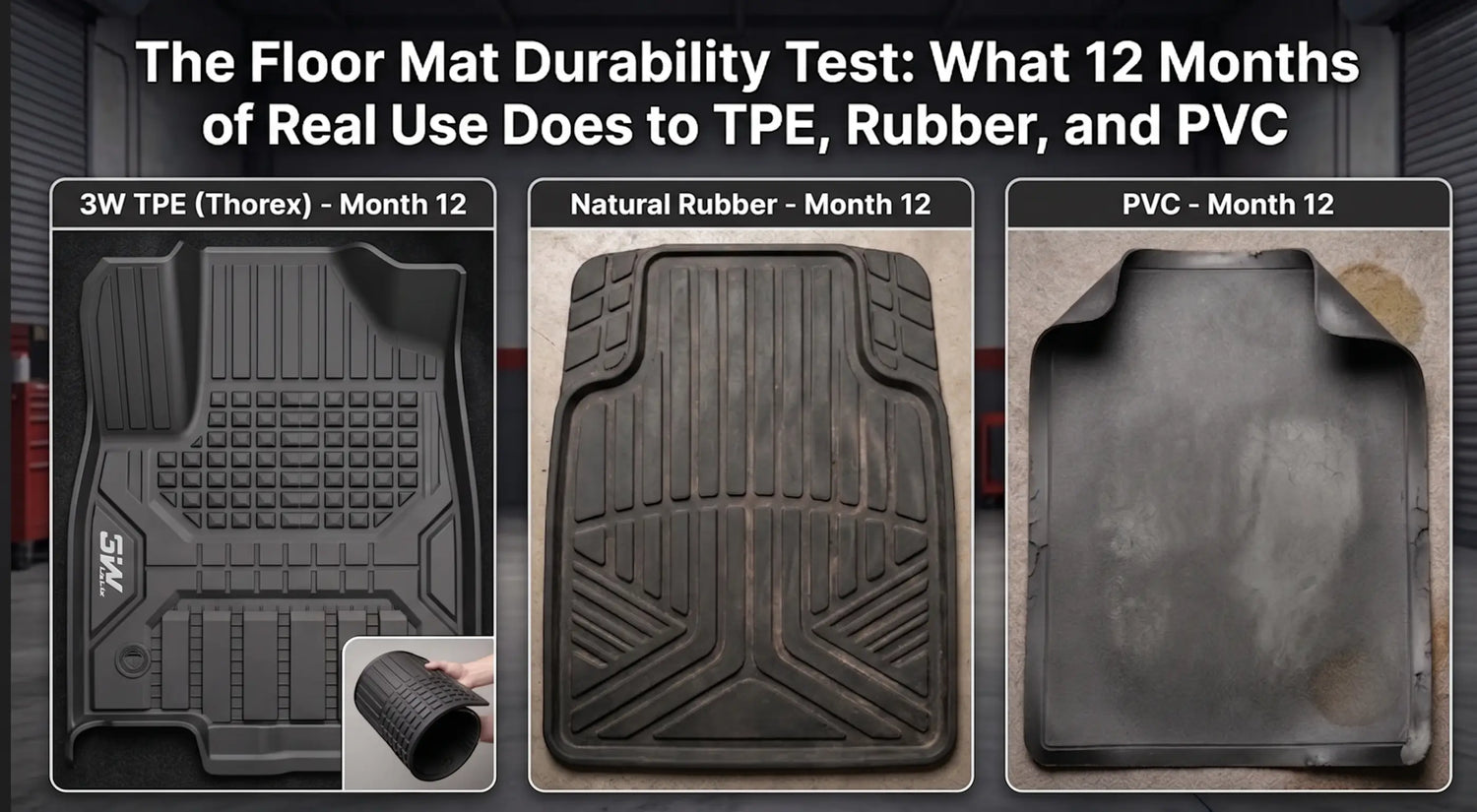
This article bridges that gap. It structures performance observations for TPE, natural rubber, and PVC across a 12-month window, drawing on third-party reviews, material science comparisons, and manufacturer specifications.
The Three Materials
TPE
Thermoplastic elastomer is a polymer blend that behaves like rubber but processes like plastic—injection-moldable with high precision, non-porous, and flexible without added plasticizers. 3W uses a branded variant called Thorex, rated functional from -4 to 167 degrees F with no odor.1 In a direct comparison test, an Active Gear Review tester noted that 3W TPE mats bent easily in hand while Husky mats felt noticeably stiffer.2 3W carries GRS (Global Recycled Standard) certification through Textile Exchange.3

Natural Rubber
Dense, heavy, high-traction. Rubber mats tolerate aggressive pressure washing, which is why they remain common in fleet and trades contexts. The trade-offs: weight, a sulfurous odor that intensifies with heat, and slower drying time. Prolonged oil and solvent exposure degrades the surface, though more slowly than PVC.
PVC
PVC requires phthalate plasticizers to stay flexible. Those plasticizers off-gas over time, producing the familiar new-mat smell.4 In heat, PVC softens and warps; in cold, it stiffens and can crack. Because PVC is inexpensive to thermoform, it dominates the budget end of the market.
12-Month Performance: Stage by Stage
Months 1 to 3: first wear and odor
All three materials perform reasonably in the first 90 days. The differences that show up early:
- TPE: Surface channels hold definition. No off-gassing reported across multiple owner reviews.1 The flexibility noted at unboxing persists.
- Rubber: Odor peaks in the first few weeks of cabin heat exposure. Texture holds. No structural concerns.
- PVC: Off-gassing peaks between weeks 2 and 6. Surface micro-compression in high-heel and lug-sole zones is visible by month 3.
Months 4 to 6: heat cycling and UV
A car parked in summer sun with windows up can reach 130 to 170 degrees F interior.5 Daily thermal cycling for three months is what separates durable compounds from budget ones.
- TPE: 3W's rated upper limit is 167 degrees F.1 At that range, the material stays flexible rather than warping.
- Rubber: UV fading on exposed surfaces is visible by month 6. Functional integrity remains.
- PVC: Corner warp is the most commonly documented failure in this window. Black PVC absorbs more heat and deforms more easily. Plasticizer migration can leave a thin oily film on the surface.
Months 7 to 12: retention system and edge integrity
A mat used five days a week has been removed and reinstalled roughly 150 times by month 7. This is where anti-slip nubs flatten and edges start lifting.
- TPE (3W): The Active Gear Review tester drove through a Michigan winter with two dogs and kids. His mats continued to sit flat without migration.2 The non-porous surface cleaned back to near-original appearance after washing.
- Rubber: Compression marks in high-contact zones are visible. Still functional, but cleaning requires more scrubbing as surface texture flattens.
- PVC: Edge cracking at corners that experienced thermal cycling. Debris embeds into surface micro-cracks and no longer wipes clean. Replacement is typically needed by month 12.
12-Month Performance Benchmark
|
Metric |
TPE (3W Thorex) |
Natural Rubber |
PVC |
|
Cold flexibility below 0F |
Rated to -4F; stays flexible |
Stays flexible |
Stiffens; may crack |
|
Heat resistance 130-167F |
No warping at rated range |
No warping |
Corner warp common by month 6 |
|
Surface fading 6-12 months |
Low per owner reports |
Moderate UV fading |
Moderate to high fading |
|
Chemical resistance |
Non-porous; resists oils and mild solvents |
Moderate; absorbs odors over time |
Poor; degrades under solvent contact |
|
Odor at 12 months |
Odor-free by material design |
Residual rubber smell in heat |
Diminished but may persist |
|
Cleaning ease at month 12 |
Rinses close to new appearance |
Scrubbing required |
Micro-cracks trap debris |
|
Structural failure by month 12 |
Not documented in reviewed accounts |
Not documented |
Edge cracking and corner lift common |
|
Custom-fit price range |
From $91.99 (3W official) |
$80-$200+ |
$30-$80 |
Where TPE Underperforms: Three Honest Cases
- Extreme cold below -20F: At temperatures significantly below the rated -4F threshold, TPE can temporarily stiffen before recovering as the car warms. Very dense natural rubber maintains more consistent flexibility at those extremes.
- High-pressure washing: 3W's cleaning guide specifies low pressure only.4 The mat-to-floor interface relies on the anti-slip backing surface, which can be damaged by direct high-pressure spray. Rubber tolerates pressure washing better.
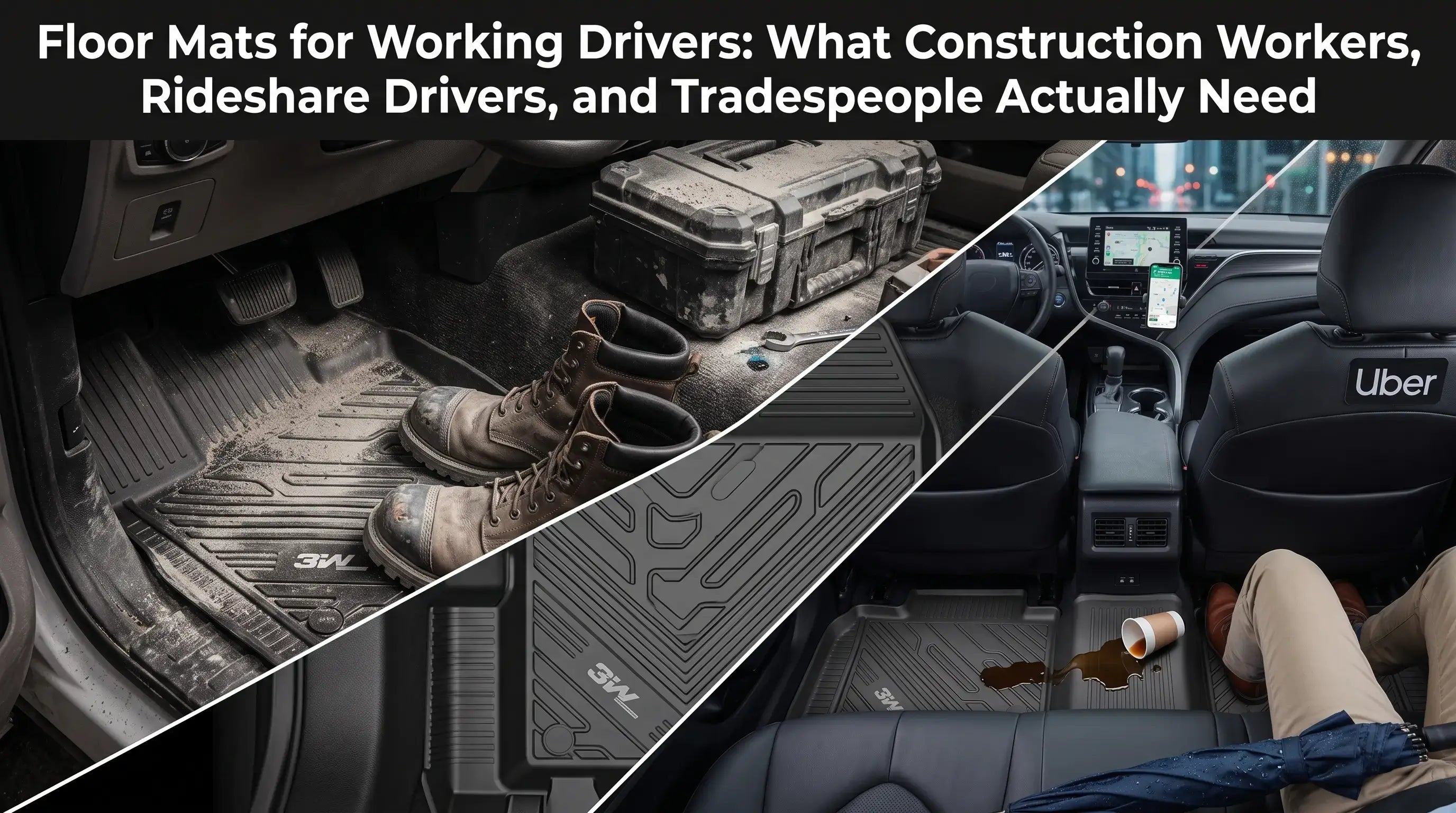
- Sustained boot abrasion: Two years of daily lug-sole boot wear will show surface compression faster on TPE than on very dense rubber. TPE's advantage is odor and cleaning ease; rubber's is surface hardness under extended boot contact.
What 3W's Lifetime Warranty Covers
Coverage applies to the original purchaser and original vehicle: manufacturing flaws, non-normal cracking or tearing, clip or retention device failure, and significant fitment errors. Not covered: surface wear from normal use, UV fading, chemical contamination (gasoline, bleach), pet damage, and damage from improper cleaning agents.6
If a mat cracks through its body at month 4 with no impact damage, that is a manufacturing defect and is covered. If the surface looks worn at year three from daily boot traffic, that is normal wear. 3W covers shipping on approved replacements.6
Buying Decision by Use Case
- Long-term cabin hygiene, odor-free priority: Custom-fit TPE. Cleans back to near-original appearance; no off-gassing.
- Fleet or trades vehicles cleaned by power spray: Dense rubber. Better pressure-wash tolerance.
- Temporary vehicle or tight budget: PVC universal mats. Functional for 12 to 18 months; replace when corner lift begins.
- High-value vehicle, multi-year ownership: Custom-fit TPE. Best combination of coverage precision and resale-protecting appearance.

Frequently Asked Questions
Which floor mat material lasts the longest?
TPE and dense rubber both outlast PVC. TPE has the cleaning and odor advantage; rubber tolerates pressure washing and sustained boot abrasion better.
Do TPE floor mats crack in cold weather?
3W Thorex TPE is rated to -4 degrees F. At significantly lower temperatures, temporary stiffening can occur, but structural cracking through the mat body is not a documented failure mode under normal use.
How long do 3W floor mats last?
3W covers manufacturing defects for the life of vehicle ownership. Reviewers testing through Michigan winters and heavy family use reported texture and clip retention intact past the 12-month mark.
Why do PVC floor mats smell?
PVC requires plasticizer chemicals to stay flexible. These off-gas over time. TPE does not use plasticizers and is odor-free by material design.
Can I pressure wash TPE floor mats?
Low pressure only. High-pressure at close range strips surface texture. Use a standard garden hose with a medium-bristle brush.
Are rubber mats better for a trades truck?
Rubber handles aggressive pressure washing better and is harder under sustained boot load. TPE is lighter, odor-free, and recovers to a cleaner appearance after washing.
References
[1] 3W Liners FAQ – Temperature range, chemical resistance, odor-free claim: https://3wliners.com/pages/faq
[2] Active Gear Review – 3W Custom Floor Mats Review (Ram 1500): https://www.activegearreview.com/travel-gear/3w-custom-floor-mats-review/
[3] 3W Liners – GRS certification and TPE explained: https://3wliners.com/blogs/car-mats/tpe-floor-mats-explained-why-the-material-matters-more-than-the-brand-name
[4] Prime EVA – Rubber mat odour and PVC off-gassing: https://primeeva.com/blogs/all/rubber-car-mat-odour
[5] Coverland – Car floor mats TPE vs rubber vs carpet durability: https://coverland.com/blog/car-floor-mats-made-of-tpe-compound-vs-rubber-vs-carpet-which-one-actually-lasts
[6] 3W Liners – Lifetime Warranty page: https://3wliners.com/pages/3w-lifetime-warranty
[7] 3W Liners – How to clean all-weather car mats: https://3wliners.com/blogs/car-mats/how-to-clean-all-weather-car-mats
[8] 3W Liners – Are 3W floor mats worth it: https://3wliners.com/blogs/car-mats/are-3w-floor-mats-worth-it-quality-vs-price-deep-dive-full-rankings

Leave a comment
All comments are moderated before being published.
This site is protected by hCaptcha and the hCaptcha Privacy Policy and Terms of Service apply.