


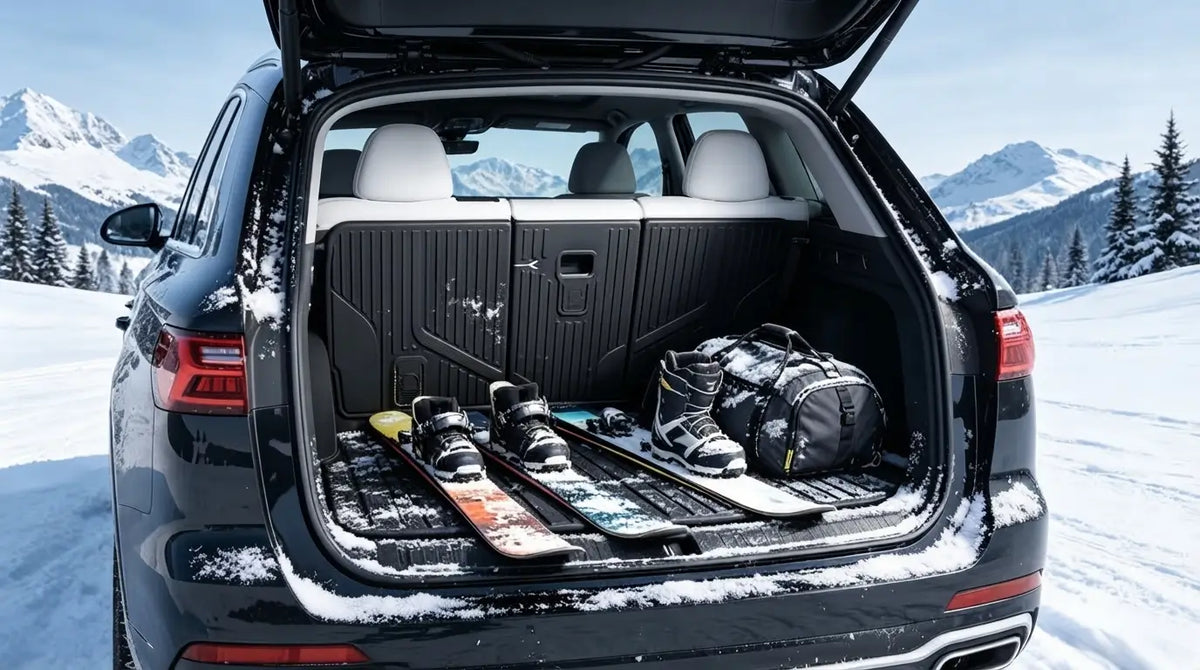
Winter sports gear can put a lot of wear on the rear seats of a SUV. When the seats are folded down, skis, snowboards, poles, hockey bags and wet boots often rest directly on the back of them.
That surface is usually covered in fabric, so sharp ski edges, bindings, dirt and melting snow can leave scratches, stains or moisture behind.
A seat back protector adds a protective layer between your gear and the folded seats. In this guide, we explain what it covers, how it compares with cargo liners and floor mats, plus what to check before choosing one for winter use.
How Winter Gear Can Damage Your Rear Seat Backs?
Most damage happens while gear is being loaded, unloaded or moved around during the trip.
Skis, snowboards, bags and other equipment can rub against the seat back, especially when the car brakes or turns. Over time, this can leave scratches, marks and signs of wear.
Wet gear can also create problems. Melted snow may leave the surface damp, while dirt and road salt can make stains harder to remove ([1]).
If you carry winter equipment often, all of this can gradually make the rear seat backs look worn or dirty.
What Does a Seat Back Protector Cover?
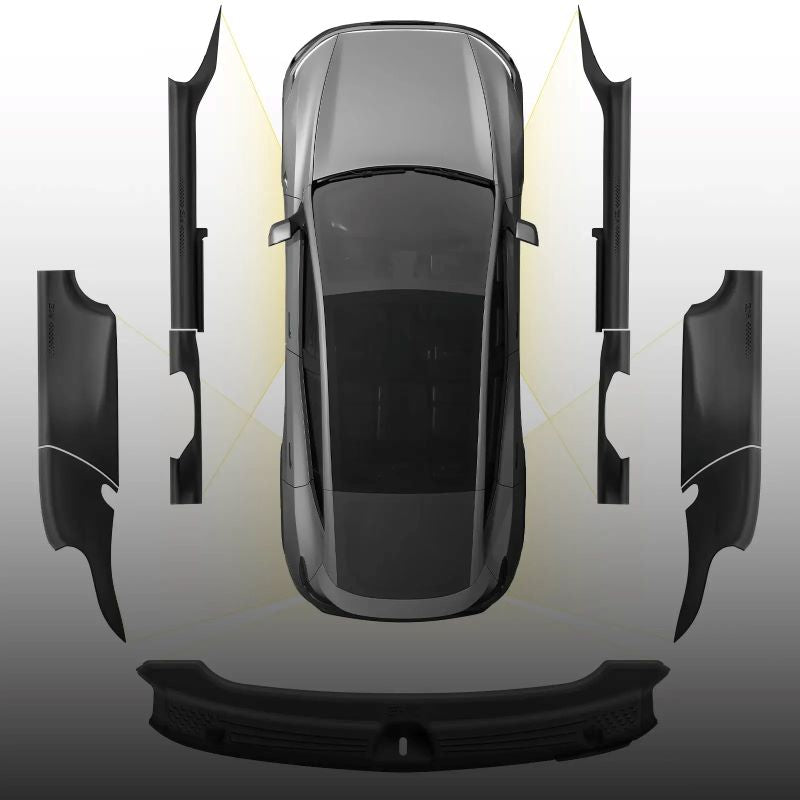
A seat back protector covers the cargo-facing side of the rear seats. Other interior products protect different areas of the vehicle.
Used together, these products extend protection across the footwells, cargo floor and rear seat backs, covering the areas most likely to come into contact with dirt, moisture and everyday cargo.
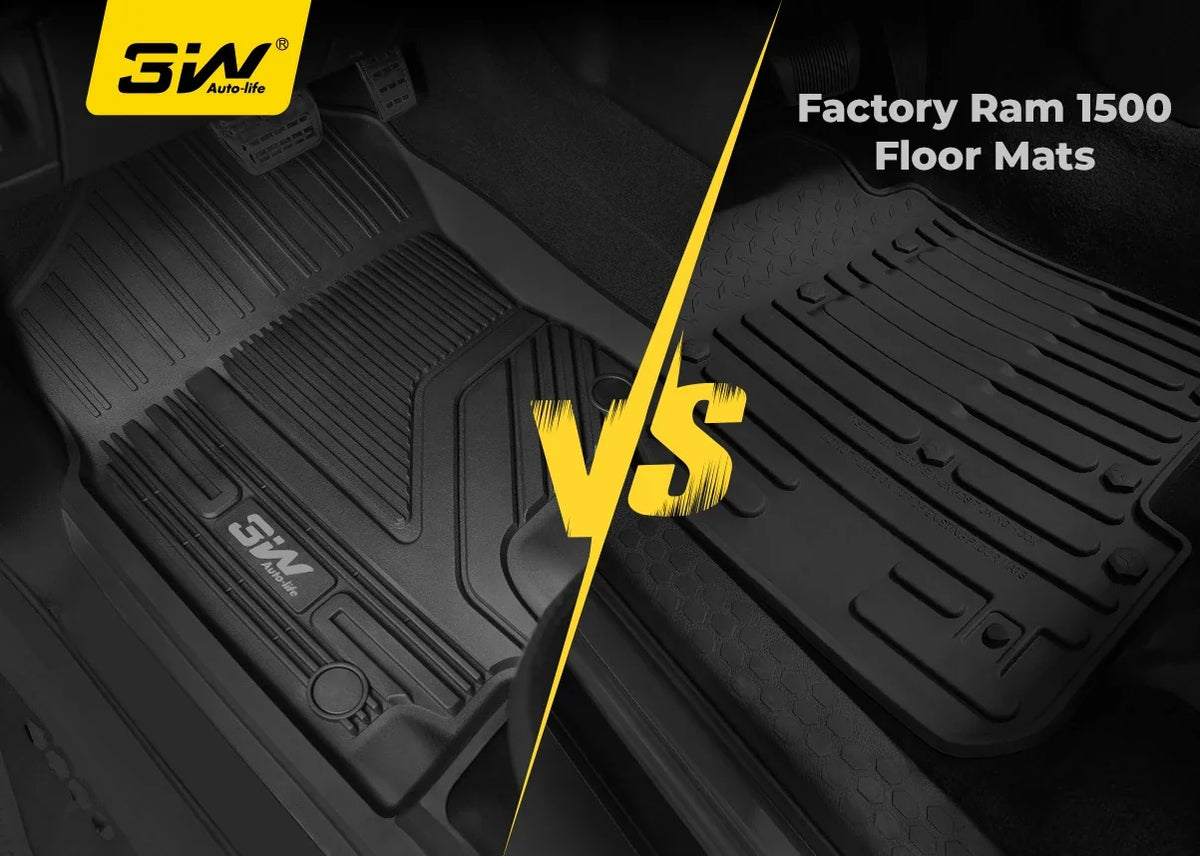
That focus on coverage also extends across the 3W product range. In MotorTrend's 2026 floor mat testing, 3W was named “Best Coverage”, with the reviewers finding that its mats covered more surface area than the other options they tested ([7]).
Do Floor Mats Cover the Seat Base?
No. The seat base is the cushion you sit on, while floor mats stay on the vehicle floor ([4]).
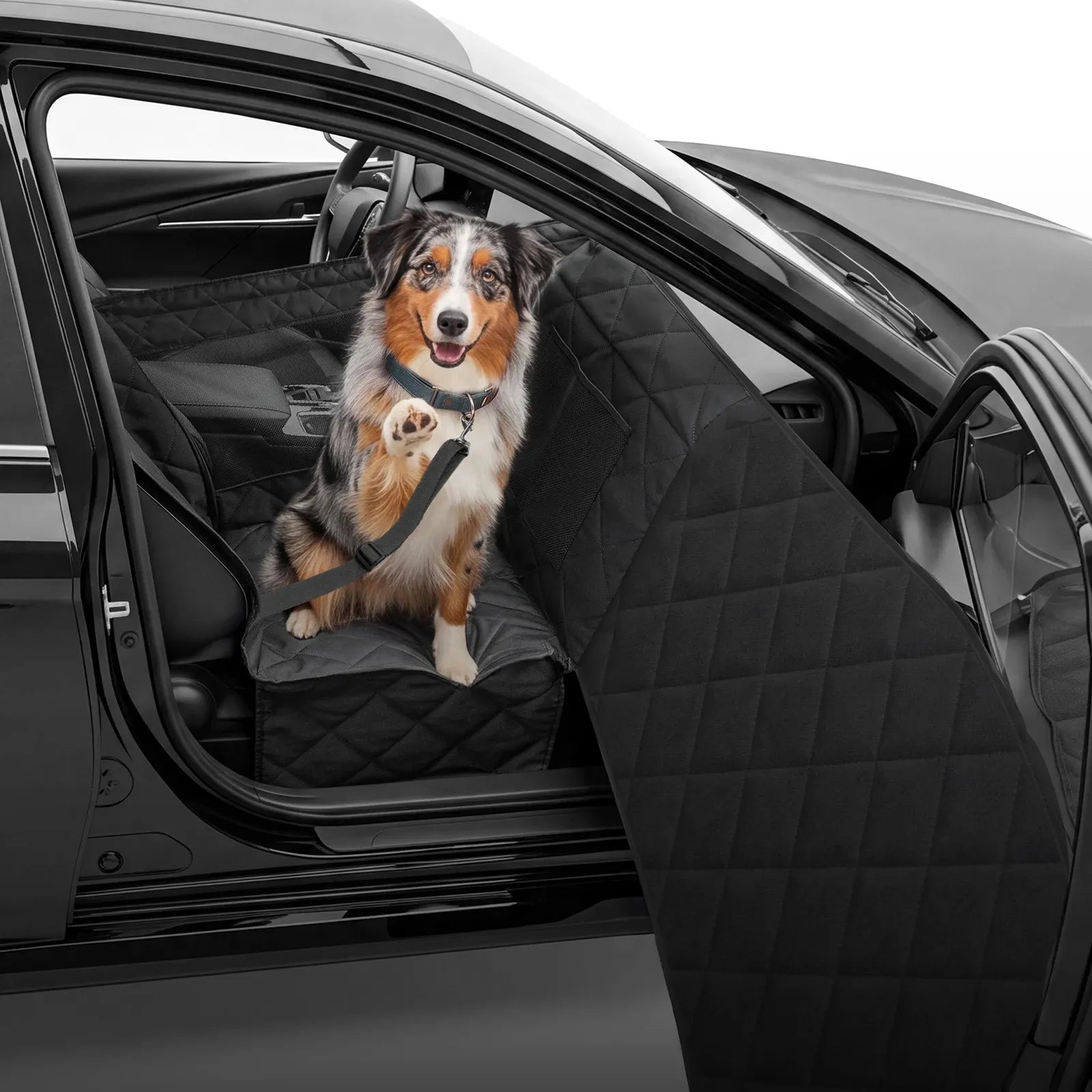
Even full-coverage floor liners stop below the seats, so a separate seat cover is needed if you want to protect the cushion itself.
Cargo Liner or Seat Back Protector for Sports Gear?
For skis, snowboards and other long equipment, the best choice depends on where the gear makes contact.
A cargo liner protects the trunk floor, while a seat back protector helps protect the rear seats. If your equipment reaches both areas, using the two together gives you more complete coverage ([1])([5]).
Whichever setup you use, long or heavy gear should still be secured with tie-down points or a cargo net. Liners protect the interior, but they do not keep cargo from moving.
Custom-Fit vs. Universal Seat Back Protectors
The main difference is how closely the protector follows the shape of your rear seats.
A custom-fit protector is designed for a specific vehicle, so it can match details such as seat contours, headrest openings and split-fold sections. We custom-fit options for a growing list of SUVs, trucks, and EVs [6].
A universal protector is made to fit a wider range of vehicles. This can make installation more flexible, but it may not line up perfectly with the edges, curves or openings of your seat backs.
For the best protection, the panel should sit flat and cover the seat back as completely as possible. Any exposed edges or corners can still come into contact with bags, skis or other cargo ([3]).
What Material Works Best in Winter?
For winter use, a seat back protector should stay flexible in low temperatures, resist moisture and be easy to clean.
3W seat back protectors are made from Thorex TPE, a non-porous material that does not absorb water. It is designed to perform in temperatures from -4°F to 167°F, making it suitable for both winter cold and summer heat ([1]).
Its cold-weather flexibility has also been tested outside the lab. During a Michigan winter, Active Gear Review found that 3W TPE floor mats remained soft and flexible while handling water, mud and melted snow from everyday use ([8]).
Because moisture stays on the surface instead of soaking into the material, snow, dirt and road salt can be wiped or rinsed away more easily ([1]).
Thorex TPE also contains at least 50% recycled material and is certified to the Global Recycled Standard. It is non-toxic, eco-friendly TPE ([6]).
For winter use, look for a material that offers:
- flexibility in freezing temperatures;
- resistance to scratches and everyday wear;
- a waterproof, non-porous surface;
- easy cleaning;
- enough flexibility to move with folding seats.
How Do You Install a Seat Back Protector?
A 3W seat back protector can be installed without tools. Before starting, make sure the back of the seat is clean and completely dry.
- Get the surface ready. Remove dust, dirt and pet hair so the fasteners can grip properly.
- Set the protector in place. Line it up with the seat back and adjust the position if needed.
- Attach it firmly. Press the hook-and-loop sections against the seat, especially around the edges.
- Make any small adjustments. Smooth out folds or areas that do not sit flat.
- Check the seat movement. Fold the seat down and raise it again to make sure the protector stays in position.
The whole process usually takes around 10 to 15 minutes. You can also remove the protector and fit it again later if needed ([3]).
Do Seat Back Protectors Work With Folding Seats and Child Seats?
Yes. Once fitted, the protector can stay in place when the rear seats are folded down ([1])([3]).
It is still a good idea to fold and raise the seats a few times after installation, just to check that everything moves freely and the edges stay secure.
On some vehicle-specific versions, openings for the LATCH child-seat anchors are already built into the design ([2]). Split-folding seats are also covered in separate sections, so you can fold one side without removing the other.
What to Check Before Buying a Seat Back Protector?
Before ordering, take a quick look at your rear seats and check a few practical details.
- How the seats fold. Some rear seats fold as one piece, while others are split into two or three sections. The protector needs to match that layout.
- The shape of the seat back. Curves, openings and cutouts can affect how well the protector sits against the surface.
- Edges and corners. These areas are easy to miss, so check that the protector reaches them without leaving large gaps ([3]).
- Winter performance. The material should remain flexible when temperatures drop and should be easy to clean after carrying wet or dirty gear.
- Temperature range. 3W TPE is designed for temperatures from -4°F to 167°F ([1]).
- Your exact vehicle. Check the model, year and trim before ordering, since the rear-seat layout can vary between versions ([6]).
Taking a minute to check these details can save you from ending up with a protector that does not sit properly or leaves part of the seat exposed.
Frequently Asked Questions
Can I leave a seat back protector installed all year?
Yes. A properly fitted protector can stay in place during everyday use and does not need to be removed after winter.
How do I clean a seat back protector after carrying wet gear?
For most dirt, snow and road salt, simply wipe the surface with a damp cloth or rinse it with water. TPE does not absorb liquids, so cleanup is usually quick ([1]).
Can I remove the protector when I do not need it?
Yes. 3W seat back protectors can be removed and reattached when needed without damaging the seat back ([3]).
Will the protector move when I load skis or snowboards?
A correctly installed protector should stay securely attached. Make sure the hook-and-loop fasteners are pressed firmly into place before loading gear ([3]).
Can I use a seat back protector with a cargo liner?
Yes. The two products are designed to protect different surfaces and can be used together for more complete cargo-area protection ([1])([5]).
How do I know if a protector will fit my SUV?
Check the exact vehicle model, year and trim before ordering. Custom-fit protectors are designed around the shape and folding layout of specific rear seats ([6]).
References
([1]) 3W - What Is a Rear Seat Back Protector? (And Why Cargo-Area SUV Owners Need One): https://3wliners.com/blogs/car-mats/what-is-a-rear-seat-back-protector-and-why-cargo-area-suv-owners-need-one
([2]) 3W - Seat Back Protector: Keep Your Rear Seats Clean and Damage-Free: https://3wliners.com/blogs/car-mats/seat-back-protector
([3]) 3W - How to Install Seat Back Protector: Your Easy 5-Step Guide: https://3wliners.com/blogs/car-mats/how-to-install-seat-back-protector
([4]) 3W - The 3W Product System: Floor Liners, Cargo Mats, Seat Protectors, and Truck Bed Mats Explained: https://3wliners.com/blogs/car-mats/the-3w-product-system-floor-liners-cargo-mats-seat-protectors-and-truck-bed-mats-explained
([5]) 3W - SUV Interior Protection: Cargo Liner, Seat Back Protector, and All-Weather Floor Mats Together: https://3wliners.com/blogs/car-mats/suv-interior-protection-cargo-liner-seat-back-protector-and-all-weather-floor-mats
([6]) 3W - Seat Back Protector for Haulers and Trades: Keeping Tools, Boxes, and Cargo From Scuffing Folded Rear Seats: https://3wliners.com/blogs/car-mats/seat-back-protector-for-haulers
([7]) MotorTrend - Best Floormats for 2026: These All-Weather Mats Will Save Your Interior: https://www.motortrend.com/gear-reviews/best-floor-mats
([8]) Active Gear Review - 3W Custom Floor Mats Review: https://www.activegearreview.com/travel-gear/3w-custom-floor-mats-review/

Leave a comment
All comments are moderated before being published.
This site is protected by hCaptcha and the hCaptcha Privacy Policy and Terms of Service apply.