



A decision framework for choosing between a bed mat and a bed liner based on what actually rides in your truck bed.
This question comes up constantly among truck owners, and the honest answer isn't a universal winner — it's whichever product matches what's actually going in the bed week to week. Bed mats and bed liners protect against different kinds of damage, so the right choice depends on your hauling pattern, not your budget alone [1].
They Protect Against Different Things
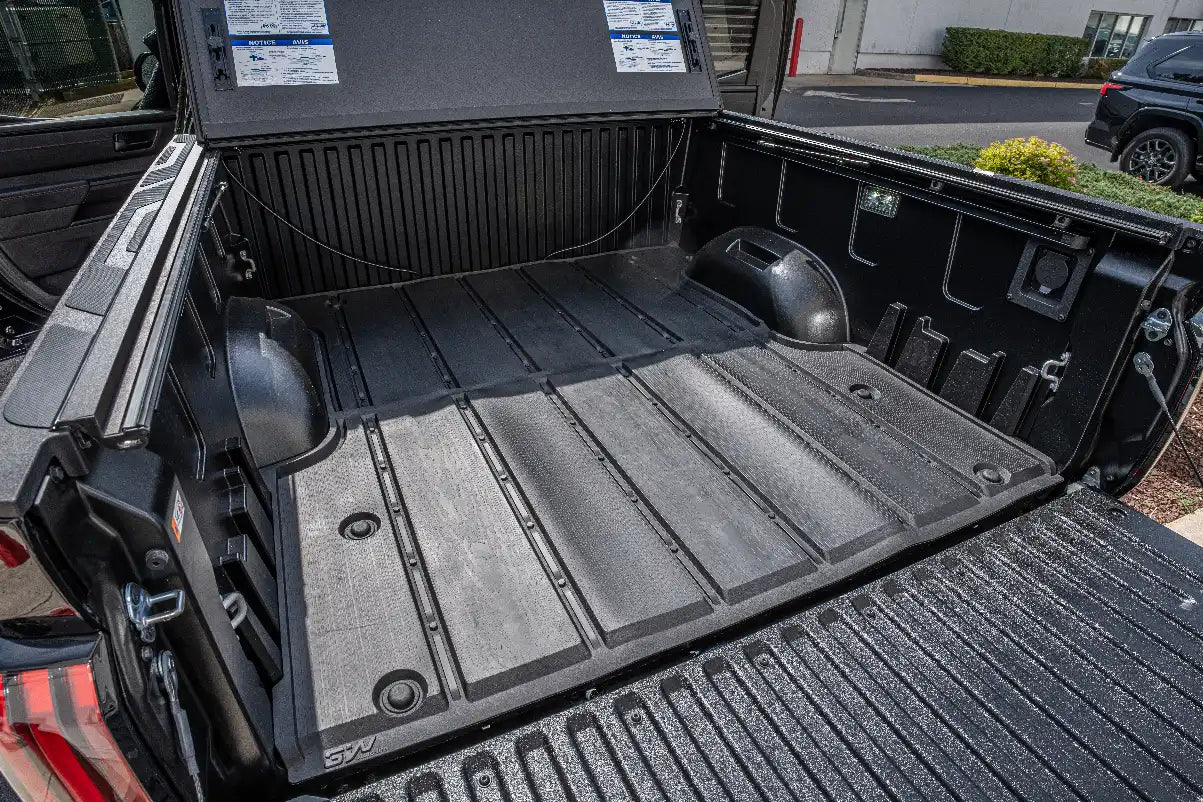
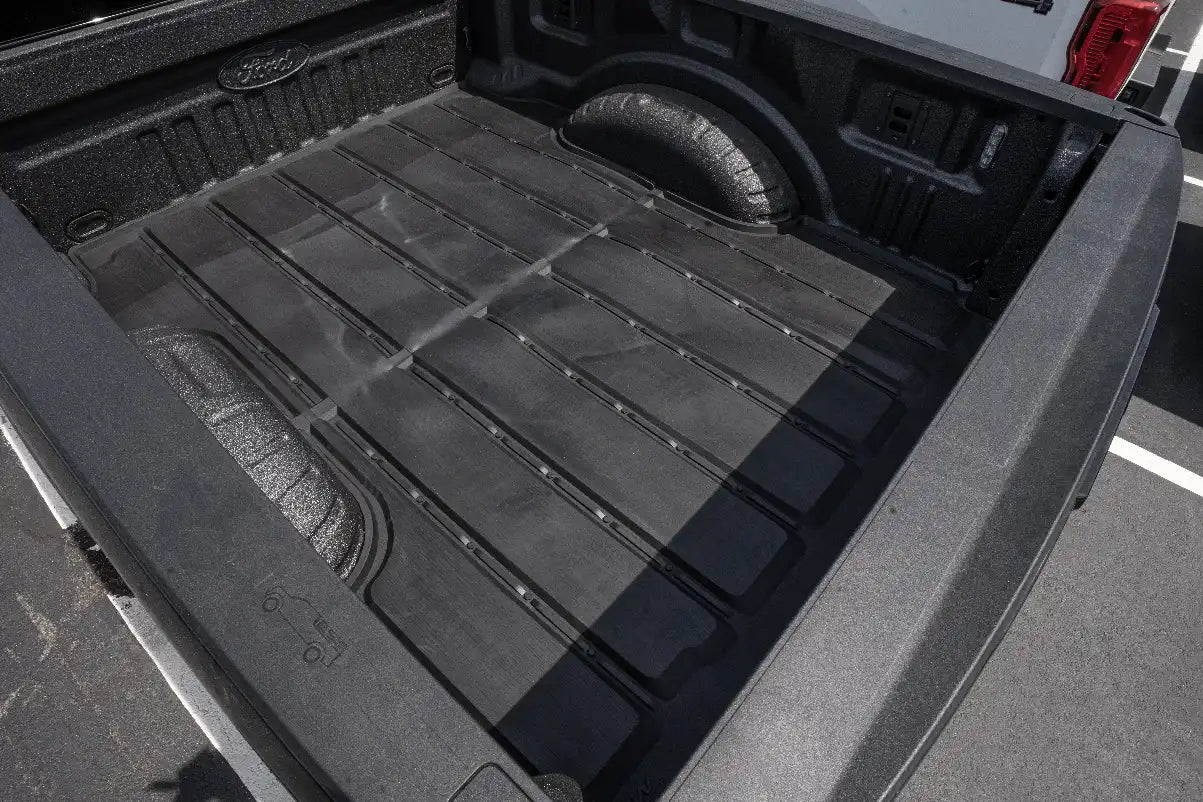
A bed liner — spray-on or rigid drop-in — covers the floor and usually the side walls, guarding against impacts, scrapes, and long-term corrosion across the whole bed. A bed mat covers the floor only, focused on cushioning cargo and resisting scratches from repeated loading. If your cargo never touches the side walls, a liner's extra coverage is solving a problem you don't have [1].
Match the Product to the Load
Hauling Pattern |
Bed Mat |
Bed Liner |
Tools and equipment, daily |
Covers the main wear point |
More coverage than needed unless tools hit the walls |
Firewood, gravel, or lumber |
Fine if load stays centered |
Better if material shifts against the rails |
Transporting pets |
Easy to hose off |
Wall coverage mostly unused for this case |
Job-site use with loose debris |
Works if debris doesn't slide under the mat |
Recommended — debris under a mat can scratch the floor |
Occasional camping or weekend gear |
Sufficient, lower cost |
Unnecessary for light, occasional use |
The Cost Difference Is Bigger Than It Looks
Bed mats run $100–$250, drop-in liners run $200–$500, and spray-on coatings run $400–$900 [1]. Spread across a five-year ownership window, that's roughly $20–$50 a year for a mat versus $80–$180 a year for a sprayed-on liner — a gap worth weighing against how much of that extra wall coverage you'd actually use.
Material Still Matters More Than the Category Choice
Within the bed mat category, TPE resists cracking in cold weather and softening in heat better than standard rubber, and it doesn't hold onto odor the way some rubber compounds can after repeated heat cycling. 3W's bed mats use the same injection-molding process applied across its floor liner lineup, built to hold a tight fit against the bed floor rather than shifting under load [3][4].
When Job-Site Trucks Need Both
Trucks hauling loose gravel, sand, or construction debris daily are the clearest case for combining the two: a liner underneath to guard against long-term wall abrasion and corrosion, with a mat on top that lifts out for a quick hose-down between jobs without disturbing the liner. This layered approach shows up specifically in truck protection planning that treats bed protection, floor mats, and mud flaps as one connected system rather than separate purchases [2].
Bed Length and Factory Liners Change the Math
Confirm bed length before ordering either product — 5.5', 6.5', and 8' configurations exist even within the same truck nameplate, and a mismatch here is the most common source of gap or overhang complaints in owner forums [5]. Also check whether the truck already shipped with a factory spray-in liner: layering a mat over factory coating is straightforward, but adding a second liner on top of an existing one rarely makes sense.
A Simple Way to Decide
If cargo mostly sits flat on the floor and rarely touches the side walls, a bed mat covers the real risk at a lower cost. If loads regularly shift against the rails or involve loose abrasive material, a liner — or a liner-plus-mat combination — is the more defensible spend [1][2].
A Mistake That Shows Up in Owner Complaints
One of the more common regrets in truck forums isn't picking the wrong product category — it's skipping the bed-length and factory-liner check before ordering. Owners who buy a liner sized for the wrong bed length, or who add a rigid drop-in liner on top of an existing factory spray-in coating, often end up with fitment gaps or a bed that sits noticeably higher than expected. Confirming these two details before ordering avoids most of the return and re-order cycle reported in these threads [5].
Who Should Skip the Liner Entirely
Owners with a truck used almost exclusively for commuting, light errands, or occasional weekend trips — with cargo that rarely exceeds what fits in a few grocery bags or a couple of duffel bags — often don't need liner-level protection at all. In these cases, a bed mat's floor-only coverage addresses the realistic wear pattern, and the added cost of a full liner doesn't translate into meaningfully better protection for how the truck is actually used [1].
What Changes If You Tow Frequently
Frequent towing adds a variable that neither product fully solves on its own: tongue weight and trailer hookups can put contact stress on the tailgate area and rear of the bed that isn't the same as general cargo wear. Owners who tow regularly should look at how well either a mat or liner holds up specifically around the tailgate seam, since this is a different stress point than the flat floor area most reviews focus on [1].
Reselling or Trading In: A Detail Worth Weighing
Bed condition is one of the first things checked during a trade-in appraisal, and a mat or liner that's been in place since near-new purchase generally preserves the factory floor better than going without either. Between the two, a liner protects a larger surface area including the walls, which can matter more for resale on trucks that see rougher use, while a bed mat protects the area that typically shows the most visible wear during a walk-around inspection [1].
Frequently Asked Questions
Can a bed mat replace a bed liner?
It can if cargo mostly sits flat on the bed floor — a bed mat protects against floor-level scratches, but it won't cover the side walls the way a full liner does [1].
Is a spray-on bed liner worth the extra cost over a mat?
It depends on your hauling pattern — liners are worth it if loads shift against the side rails or you regularly haul loose abrasive material; for centered, floor-based cargo, a mat is usually enough [1].
Do I need to know my truck's bed length before buying a mat or liner?
Yes — bed length varies within the same truck model (commonly 5.5', 6.5', or 8'), and a mismatch is the most common cause of fit complaints [5].
Can I use a bed mat and a bed liner together?
Yes, this combination is common for job-site trucks — a liner protects against long-term wall wear while a removable mat on top makes cleanup easier [2].
References
[1] 3W Auto-Life — Truck Bed Liner Guide: Protect Your Truck with the Right Liner: https://3wliners.com/blogs/car-mats/truck-bed-liner
[2] 3W Auto-Life — A Practical Truck Protection Plan: Floor Mats, Bed Mat, and Mud Flaps: https://3wliners.com/blogs/car-mats/a-practical-truck-protection-plan-floor-mats-bed-mat-and-mud-flaps
[3] 3W Auto-Life — Best Truck Bed Mat: Find the Right Fit for Your Truck: https://3wliners.com/blogs/car-mats/best-truck-bed-mat
[4] 3W Auto-Life — Bed Mats for Pickup Trucks Collection: https://3wliners.com/collections/bed-mats-for-pickup-trucks
[5] F150Gen14 Forum — 3Wliners Bed Mat Review: https://www.f150gen14.com/2025/06/18/3wliners-bed-mat-review/
[6] 3W Auto-Life — 3W Lifetime Warranty: https://3wliners.com/pages/3w-lifetime-warranty

Leave a comment
All comments are moderated before being published.
This site is protected by hCaptcha and the hCaptcha Privacy Policy and Terms of Service apply.