Difference Between Floor Mat and Floor Liner: What You Should Know
Understanding the difference between the floor mat and floor liner makes it easier to decide which kind of the interior protection is best to the vehicle. Although the floor mats provide minimal floor coverage, but the floor liners are fully protective (edge-to-edge) especially in harsh environments. If you drive through snow, rain, or have children and pets, liners will be more durable and fit.
This guide outlines both alternatives in a clear way- so you can make your mind on which is better and why custom-fit solutions offered by 3Wliners are the best choice to present-day drivers.
In order to know the difference between floor mat and floor liner, we should first understand what floor mats are. Floor mats are covers which are flat and removable made to cover the factory carpeted in your vehicle to avoid wear, moisture and dirt. There are three major types, standard, all-weather and custom-fit:
Standard floor mats:
These are entry-level mats typically made from carpet material and offer limited protection against dirt and spills. They can only be used best in dry situations lightly.
All weather mats:
Typically made from rubber or durable vinyl, these mats are designed to withstand various weather conditions and offer enhanced protection. They are waterproof and are built to hold mud, snow, and spills, perfect for wet and winter driving.
Custom-fit mats:
Designed to match the exact shape of your vehicle's footwells, these mats offer a more precise fit compared to universal options. However, they do not provide as much coverage as floor liners.
Material:
Materials vary but usually include rubber, known for durability and water resistance, or carpet, which adds a plush, OEM-style look but absorbs stains more easily.
What Are Floor Liners?
Now that we’ve defined mats, it is time to take a look at the other side of the difference between floor mat and floor liner:
Floor liners:
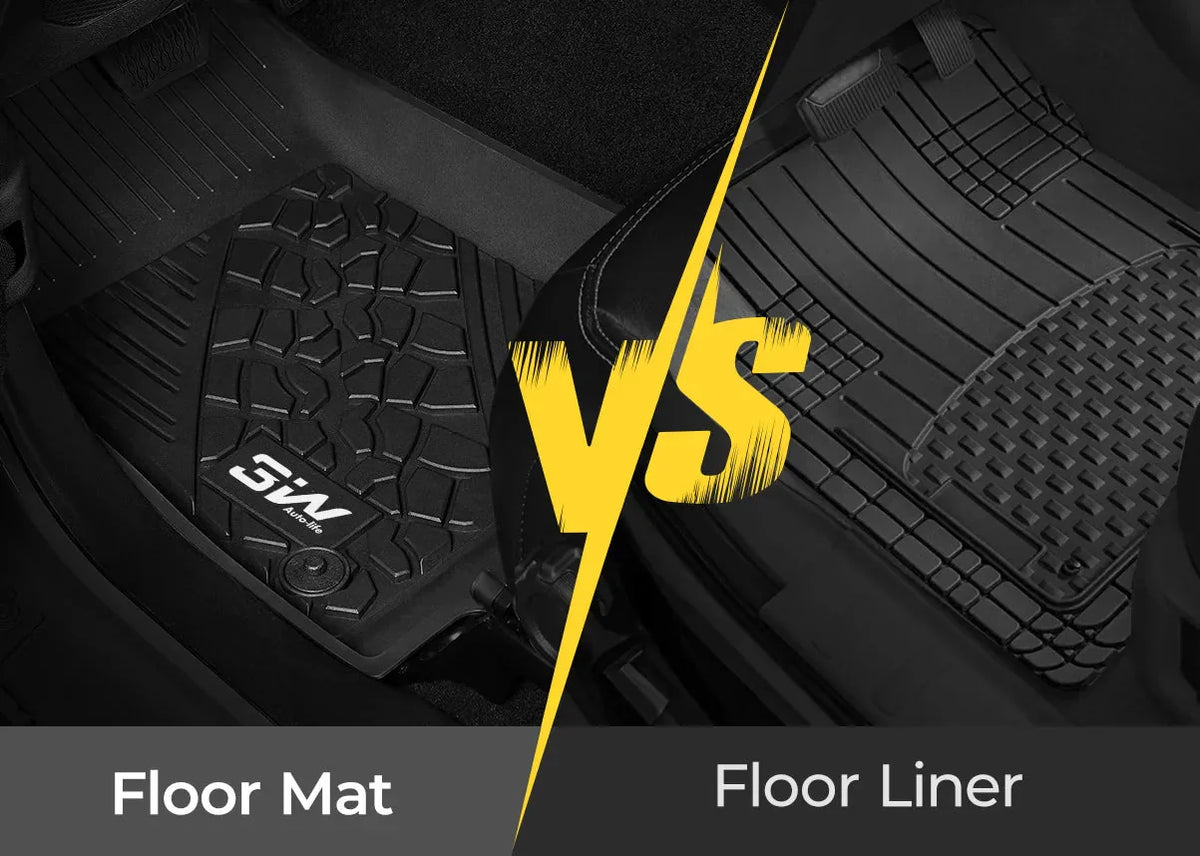
Floor liners are advanced protective covers that are shaped like the floor of a vehicle. In contrast to the flat mats, the liners have been designed to fit the footwell due to its contour-shaped feature, fitting to all the bumps, curves, and corners. The snug fit will prevent dirt, liquids and other debris reaching the carpet underneath.
A key advantage of liners is their raised edges or spill lips, which effectively trap dirt, mud, snow, and spills. This design helps avoid the spread of messes, keeping the vehicle carpet clean and dry. It is a feasible solution to keep the place clean in any weather and any drive.
Material:
Liners are typically made from high-quality materials such as TPE (Thermoplastic Elastomer) or HDTE (High-Density Thermoplastic Elastomer). They are flexible, odor-free, non-toxic, and are not prone to crack in extreme temperatures.
Most floor liners come with retention systems, clips or anti-slip backing that lock them to the floor to prevent sliding while driving. Brands like 3W liners have laser-measured technology, which guarantees optimal fit and security for each car.
Floor Mat vs. Floor Liner Comparison
This is a brief comparison table in side-by-side format that will help you to see the main differences:
Feature
Floor Mat
Floor Liner
Material & Construction
Rubber or carpet; flat and flexible
TPE/HDTE; molded to contour vehicle floor
Coverage & Depth
Covers flat floor only
Covers entire footwell with raised edges
Protection Level
Basic to moderate
High—guards against spills, dirt, and wear
Primary Use Case
Everyday driving, light messes
Harsh weather, pets, heavy-duty use
Vehicle Fit Precision
General or semi-custom
Laser-measured for exact fit
Price Point
More affordable
Slightly higher but longer lasting
Key Distinctions
Material & Construction: Floor mats are simple and flat, whereas liners have molded structures to cover and protect the entire footwell, along with maximum durability.
Coverage & Depth:Floor liners cover the sides of the footwell as well, providing more coverage than the flat design of ordinary mats.
Protection Level: Floor liners provide excellent protection against mud, water, and debris, while floor mats are ideal for light messes and everyday use in cleaner, less demanding driving environments.
Use Case: The mats are better suitable for drivers in the city or dry climates, while the liners are better adapted to rough weather, equipment, or outdoor life.
Fit Precision: Floor liners are laser-measured for an exact fit, allowing the right sizing uses, while mats usually have general sizing that does not apply to all types of vehicles.
Price: Mats are less expensive and affordable; liners are costlier, but have a longer life and represent a better long-term value.
Floor Mat vs. Floor Liner: Pros & Cons
Floor mats and liners have their advantages, which differ depending on what you need, the way you live, and what budget you can follow. Knowing how they differ enables you select the best one to use concerning protection, style, and the price. Here's a quick comparison to guide you in making the best decision for your vehicle's interior care:
Floor Mats:
Pros:
Affordable and easy to replace when worn or damaged.
Offered in various styles and materials to match preferences.
Simple to install and remove without tools or hassle.
Suitable for casual use and light-duty driving conditions.
Cons:
Less coverage around the edges and the seat mounts
Does not perform well in wet areas or muddy places.
May slip or slide when not properly fixed in place
Carpet mats may absorb stains and odors
Floor liners:
Pros:
Full edge-to-edge protection, including sides and footwell contours
Easy to clean, best against snow, mud, rain and heavy messes
Custom-fit for any model of the vehicles (e.g., 3Wliners)
Non-slip surface and secure retention features
Cons:
Higher initial cost than mats
It may feel more rugged underfoot
Design options are more utility-focused than stylish
Heavier to lift and clean as compared to mats
The decision to choose between the two depends on your environment and requirements. Foot liners obviously perform better in messy or long-term situations.
Which One is Right for Your Needs?
When you know the difference between floor mats and liners, you decide what option is most appropriate depending on your driving style and requirements, and it provides improved protection and comfort to the interior of your vehicle.
Choose floor mats if:
Mostly, you drive in the city or suburban areas
Your vehicle use is light and clean
You want a simple, budget-friendly solution
You prefer easy-to-remove, stylish options
You hardly ever have to deal with bad weather or messes
Choose floor liners if:
You live in an area with snow, mud, or rain
You often go on outdoor adventures or road trips
You have children, pets, or transport tools and equipment
You drive a work truck, SUV, or use your vehicle for heavy-duty tasks
You require maximum floor coverage and protection
In need of something durable and made to fit, 3Wliners offers laser-measured liners built for real-life messes and daily protection. Choose the option that best suits your environment and lifestyle in terms of value and cleanliness in the long run.
Can You Use Floor Mats and Liners Together?
Most drivers wonder whether it's safe or effective to use both floor mats and floor liners at the same time. While doubling up may seem like added protection, layering standard mats over liners is generally not recommended—it can cause sliding, bunching, and even interfere with pedal operation or retention hooks, posing safety hazards.
However, with specially designed products like 3Wliners, it's a different story. 3W offers custom-fit floor mats and liners engineered with interlocking systems or anti-slip clips, allowing the two to be safely used together without movement or stacking issues. This design ensures a secure fit, full coverage, and enhanced durability, giving you the flexibility of double-layer protection without compromising safety.
If you need maximum protection and modular convenience, choose a system built to work as one.
Conclusion
The difference between floor mat and floor liner comes down to fit, protection, and lifestyle. Floor mats are more suited to light, daily use, whereas floor liners, such as those provided by 3Wliners, offer full-coverage, durability, and protection built for real life. Check out custom-fit liners at 3Wliners and keep your car cleaner, longer- no matter where the road leads you.
FAQs
Are floor liners better than floor mats?
Yes, when you have to get complete protection. Floor liners can fit, cover, and last longer. They are perfect in sloppy weather, job trucks and active lives.
Are floor liners worth the cost?
Absolutely. Liners, such as 3Wliners, are more long-lasting and offer better protection compared to mats and are therefore a good long-term investment although they are expensive.
How often should I clean floor mats and floor liners?
Clean them once every 1-2 weeks, or more frequently in rainy and snow weather. Cleaning regularly keeps performance and avoids stains or smells.
What's the difference between floor mat and floor liner?
Floor mats are plain and flat, with only limited rolling functionality. Floor liners are custom-fitted molded and perfect when full-coverage rugged protection is needed.