Best Car Floor Mats for Sand: Protect the Car Interior from Damages
Driving home from a beach or desert trail often ends up in frustration with sand burrowing deep into carpet fibers. It becomes frustrating as the sand seems stuck, no matter how many times you vacuum. The right car floor mat for sand can make the difference between a 2-min rinse and a 30-min battle.
This guide pinpoints exactly what makes a floor mat effective, how to choose one, and how to get sand out of car mats. Let's start with why sand is uniquely destructive to your vehicle's interior.
Why Do Sand Damages Car Interiors Differently Than Mud or Snow?
Most drivers treat sand like any other dirt; it's not. Let's start by digging into why sand is so problematic regarding car interior damage.
Fine sand particles range from 50 to 2,000 microns. They easily embed deep into carpet fibers, going beyond any standard vacuum capability. Mud dries and loosens; snow melts and evaporates.
But sand? They don't go anywhere. Every time someone steps on the mat, the embedded grains grind against the carpet backing, gradually degrading the fiber structure and accelerating wear.
Beach sand adds another layer of damage. Salt crystals clinging to wet sand pull moisture in and hold it. They'll accelerate corrosion on the metal floor pan beneath the carpet. Over time, it leads to rust and structural weakening, which are expensive to repair. Desert sand presents a different challenge. The particles are exceptionally fine and dry, making them slip through even small gaps in poorly fitted mats. A direct settlement on the factory carpet continues to cause undetected abrasion.
What Makes a Floor Mat Work for Sand and What Doesn't
Not all floor mats are designed with sand in mind. You must get a handle on the features that actually matter, along with the common design flaws.
1. Non-Absorbent Material: Why Carpet Mats Fail Against Sand?
Carpet and velour mats seem comfortable, but they're essentially sand traps. Once fine particles settle into the weave, they act like embedded sandpaper. And the mat becomes an active abrasion source rather than a protective barrier.
Non-absorbent materials like TPE (thermoplastic elastomer) and rubber keep sand on the surface. You can easily shake off or rinse away the sand. Carpet mats take 30+ minutes of brushing and vacuuming, while cleaning a TPE mat takes less than two minutes with a garden hose.
2. Raised Edges and Deep Channels: Containment Is Everything
A flat mat, regardless of material, allows sand to spill onto the factory carpet during shifting or flexing. Raised edges and deep channeling can prevent loose material from escaping by containing it within the mat's footprint.
Look for mats with perimeter walls at least 0.5 inches thick. Channel depth also matters, as deeper channels hold more sand between cleanings. Low-profile mats that prioritize a sleek look mostly sacrifice the containment features.
3. Custom Fit Over Universal: Gaps Are Where Sand Wins
Universal mats leave gaps along the edges and around the center console. Those gaps are where sand migrates, slipping beneath your original carpet and grinding against it.
3D-laser-scanned custom-fit floor mats conform precisely to the contours of each specific vehicle model. They confine the gaps that universal designs can't address. For drivers who regularly encounter sand, it's the feature that makes everything else work.
4. Easy-to-Clean Surface: The Feature That Matters the Most
After any trip to the coast or desert, you want a bare minimum cleanup. A sand-resistant floor mat should be hoseable. Meaning it's smooth enough to flush sand out of the channels with water pressure without scrubbing. TPE, as well as rubber surfaces, handles hose-off cleaning well. Carpet does not.
TPE vs Rubber vs Carpet: Which Material Handles Sand Best?
Choosing the right material is the single most impactful decision when selecting car floor mats for sand. Take a look at the direct side-by-side comparison across the criteria that matter the most.
Feature
TPE
Rubber
Carpet
Sand Resistance
Excellent
Good
Poor
Sand Abrasion Resistance
Excellent
Good
Fails
Cleanability
Hose-off
Hose-off
Vacuum only
Heat Tolerance
High
High
Medium
Odor in Heat
Minimal
Moderate
Low
The winner is clear: TPE offers the best overall balance for sandy environments. Sand stays on the surface, cleans off with water, resists abrasive wear, and produces minimal odor, unlike rubber, which can become noticeably pungent.
Beach Sand vs Desert Sand: Do You Need Different Floor Mats?
Not all sand is the same. The conditions affect what you need from a floor mat. Time to think about each scenario.
Beach Sand: Wet, Salty, and Corrosive
Wet beach sand saturated with salt water is a two-part threat. Moisture can seep under mats onto the floor pan, while salt residue pulls more moisture. For coastal driving, you need waterproof mats with raised edges tall enough to contain wet, clumping sand. After every beach trip, rinse your TPE or rubber mats thoroughly to remove salt residue. Skipping the step allows salt crystals to build up in the channels. And they continue to attract moisture, accelerating surface degradation.
Desert and Off-Road Sand: Fine, Dry, and Penetrating
Fine desert sand is harder to manage than beach sand. Its low moisture content allows it to flow into any available gap. The small particle size (often under 100 microns) allows it to work its way past edges.
For desert use, a non-slip surface texture is essential. Shifting mats creates gaps that invite migration. TPE handles high cabin temperatures without becoming brittle or developing chemical odors. That's why it's the preferred choice over many rubber alternatives for off-road and arid environments.
How Much Coverage Do You Actually Need Against Sand?
Many drivers focus only on driver-side protection. But overlooking other areas where sand accumulates can lead to disaster as well. Check out the complete coverage checklist.
Front Row: Your Highest-Traffic Sand Zone
The front footwells accumulate the most because drivers/passengers repeatedly exit and re-enter here. The dead pedal area (flat surface to the left of the brake) is especially vulnerable. Full coverage that includes the dead pedal is a non-negotiable feature.
Rear Row: The Area Most Drivers Ignore
Kids, passengers, and gear transfer significant amounts of sand to the rear footwells. Wet bathing suits, dropped towels, and sandy shoes all contribute to rear-seat accumulation.
Cargo Area: Where Your Gear Does the Most Damage
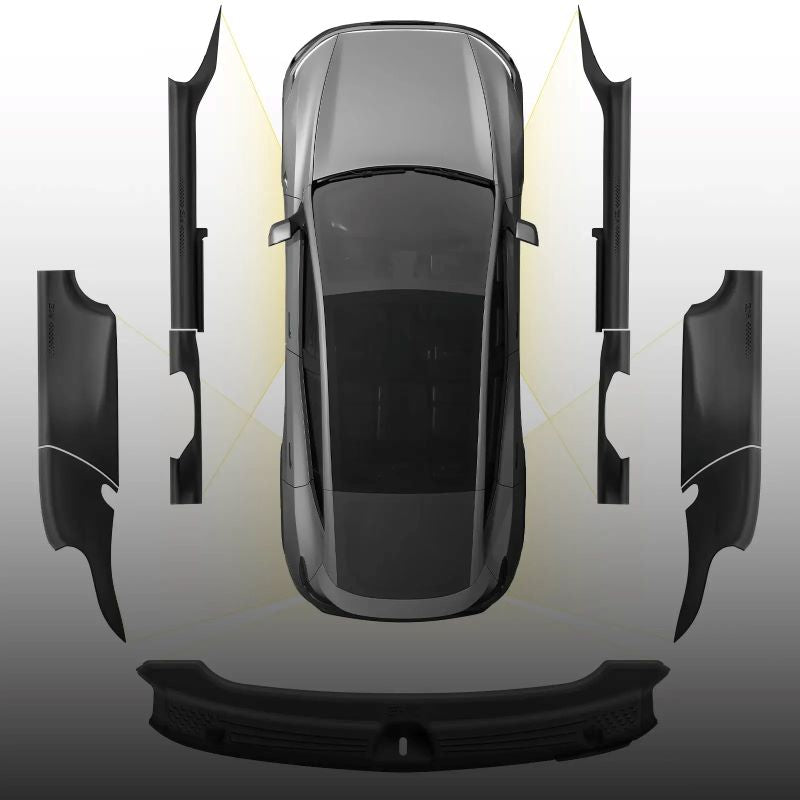
Boards, chairs, wet coolers, and bags of gear loaded into the trunk bring enormous amounts of sand. A cargo liner with wheel-well coverage prevents sand from grinding into the trunk carpet.
It can even prohibit the sand from spreading to the rest of the interior. Without cargo protection, the vehicle's rear becomes the dirtiest zone and the most expensive to clean professionally.
How to Get Sand Out of Car Mats?
If you're dealing with sand in your current mats, approach it by mat type. Know that switching to the right mat prevents most of the work in the first place. If you want a deeper guide specifically for carpet interiors and embedded sand removal, check out our detailed article on how to get sand out of car carpet.
For TPE and Rubber Mats
Remove the mat from the vehicle and take it away from the car.
Shake or beat against a hard surface to dislodge loose sand.
Rinse with a garden hose; water pressure clears sand from channels in seconds.
Allow to air dry fully in the sun before reinstalling.
For stubborn desert sand in corners, compressed air before hosing speeds the process.
For Carpet Mats
Carpet mats require a stiff brush and a shop vacuum. Work the brush against the grain to loosen the particles, then vacuum immediately. Repeat several times. Even with this, some sand will remain within indefinitely.
Practically speaking, switching from carpet mats to TPE car floor mats reduces post-beach cleanup time from 30 minutes to under 2 minutes. The material choice is the solution; the cleaning is just damage control.
Why 3W Floor Mats Work Especially Well for Sand?
Several brands hold non-absorbent floor mats. However, 3W floor mats are specifically engineered with features to address sand in all its forms.
Full-Coverage 3D-Scanned Fit Keeps Sand Off Factory Carpet
3W's vehicle-specific custom-fit floor mats are developed via 3D laser scanning of actual floor contours. It eliminates edge gaps to prevent sand from migrating under the mat. The precision fit for complex shapes around the center console and door sills leaves no openings.
Raised Outer Edges Contain Beach and Desert Sand
3W mats feature raised perimeter edges to define a sealed containment zone. Clumping coastal sand or free-flowing desert particles, those walls keep the material within the mat footprint. The raised-edge design also prevents spills when the mat flexes during acceleration or braking.
TPE Material Resists Heat, Odor, and Sand Abrasion
3W uses TPE to maintain flexibility across a wide temperature range while producing minimal odor. It further resists surface degradation caused by repeated sand abrasion.
Anti-Slip Backing, Nubs, and Clips Prevent Mat Shifting
A shifting mat during driving creates dangerous gaps to expose the factory carpet. 3W mats feature a textured, anti-slip underside and backing nubs that grip the carpet. Stable mats maintain containment geometry and prevent any sand from grinding against the original carpet.
Hose-Off Cleaning Reduces Post-Trip Cleanup to Minutes
After a beach or desert trip, 3W TPE mats can be removed, shaken, hosed down, and dried in minutes. The channel design allows water pressure to flush sand efficiently without scrubbing.
Common Sand Protection Mistakes — Even with Good Mats
Even well-chosen mats won't perform well if some common errors are made. You'd better know what to avoid.
Omitting the cargo area. Sand brought in through the trunk on gear, boards, and bags spreads throughout the vehicle. Without a cargo liner, you're leaving the most impacted zone exposed.
Skipping the post-beach salt rinse. Salt residue builds up in mat channels and continues drawing moisture. A quick rinse after every coastal visit prevents this accumulation from degradation.
Leaving mats loose instead of clipped. Unanchored mats shift with every pedal, creating gaps that let sand reach the underside. Always engage the retention clips or anchoring system included.
Cleaning only the front mats. Rear footwells and cargo areas accumulate surprising amounts of sand, and neglecting them means the problem continues even when the front mats are spotless.
Conclusion
Sand is destructive to car interiors as it grinds, hides, and never fully leaves the factory carpet. Every beach visit or desert run is a small but cumulative threat to your vehicle's interior condition (and the resale value).
The best defense is prevention with non-absorbent TPE, raised containment edges, custom-fit precision, and full coverage. For drivers who frequently encounter coastal or desert sand, investing in the best car floor mats for sand pays off quickly.
3W floor mats check all these boxes: engineered to withstand threats from sand particles. They come in a package that fits your vehicle and requires minimal cleaning effort. Protect your interior with 3W before the damage starts.
Frequently Asked Questions (FAQs)
What are the best car mats for the beach?
The best ones feature waterproof, non-absorbent TPE or rubber with raised edges, and a custom fit. They keep the wet, salty sand on the mat surface that can be rinsed clean in minutes after each trip.
Do I need custom-fit or universal mats for sand protection?
Custom-fit is strongly preferred. Universal mats leave edge gaps where fine sand migrates underneath. A 3D-scanned, vehicle-specific fit eliminates gaps, keeping the containment edges correctly positioned.
How do I get sand off before getting in a car?
Shake your shoes vigorously before entering the vehicle. Keep a small brush or towel to wipe down feet and legs. A mat in the garage reduces the amount of sand that gets back into the car. For cargo items, shake or brush off bags and gear before loading.
How often should I clean floor mats after beach trips?
Clean TPE or rubber floor mats after every trip. The process takes only a few minutes with a hose. Letting sand and salt sit between trips compounds the problem significantly.
Do I need a cargo liner for sand protection?
Yes. The cargo area is often the entry point for the heaviest sand loads. Without a cargo liner, sand spreads throughout the vehicle and embeds in the trunk carpet, which is difficult and expensive to clean.